April 11, 1973: Return of the King

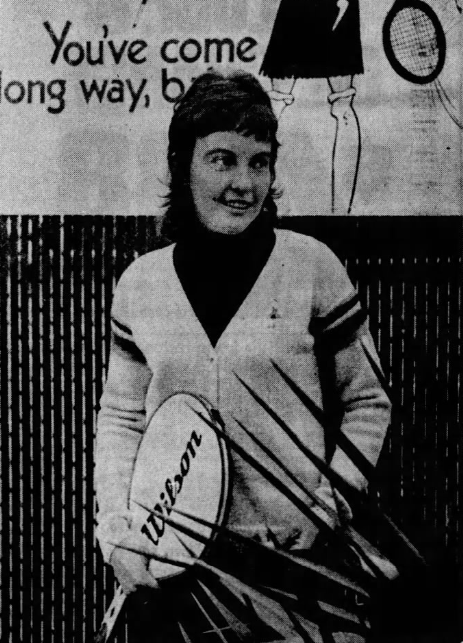
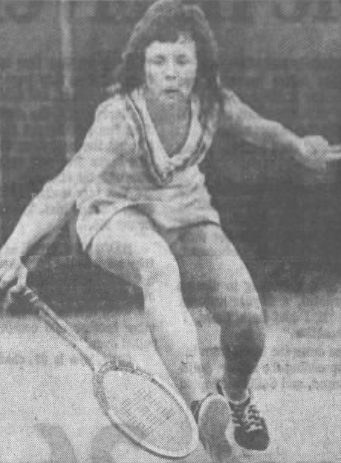
Billie Jean King in early 1973

No one could begrudge Billie Jean King a rest. She played 127 matches in 1971 and 103 more in 1972, winning 27 singles titles in that two-year span. She entered the doubles every week, and she was the face of the budding Virginia Slims tour, besides.

King wasn’t the sort to take a personal day, or even sit out an event on a doctor’s recommendation. But in March 1973, after a three-set final against Margaret Court in Chicago, a stomach injury knocked her out of competition. She could barely serve for a month and the Slims circuit was forced to proceed without her. Court was both beneficiary and victim. The Australian continued to dominate in Billie Jean’s absence. But as the biggest star in the draw, she was also called upon to take over King’s media duties, a full-time job for a lesser woman.

Tournament promoters coast to coast breathed a sigh of relief on April 11th, when Billie Jean returned to action at the Boston Marina Harbor, brushing aside American veteran Farel Footman. King felt like she was “starting on the circuit all over again,” but after dropping the first two games to Footman, she lost only two more for a 6-3, 6-1 victory. Her serve was surprisingly steady for a stroke she had resumed practicing only a few days earlier.

For the famously energetic serve-and-volleyer, one month on the sidelines was enough. “The first week, while difficult to coordinate,” she told Boston Globe columnist Peter Gammons, “is also easier because one is so enthusiastic.” (Gammons is better known as a baseball writer. True to form, he made sure to ask Billie Jean about her younger brother, San Francisco Giants pitcher Randy Moffitt.)

Still, the 29-year-old King recognized that another 100-match season could do more harm than good. “In a way, being off the tour for awhile may have been beneficial,” she said after her first-round victory. “I’m usually pooped by October, and the rest could help.”

Billie Jean would struggle to stay healthy throughout the season, playing barely 70 singles matches. But when she was able to take the court, she remained one of the most fearsome women on the circuit. And when the world tuned in to watch her in late September, she would prove to have plenty left in the tank.

* * *

This post is part of my series about the 1973 season, Battles, Boycotts, and Breakouts. Keep up with the project by checking the TennisAbstract.com front page, which shows an up-to-date Table of Contents after I post each installment.

You can also subscribe to the blog to receive each new post by email:
 

April 8, 1973: 78-2

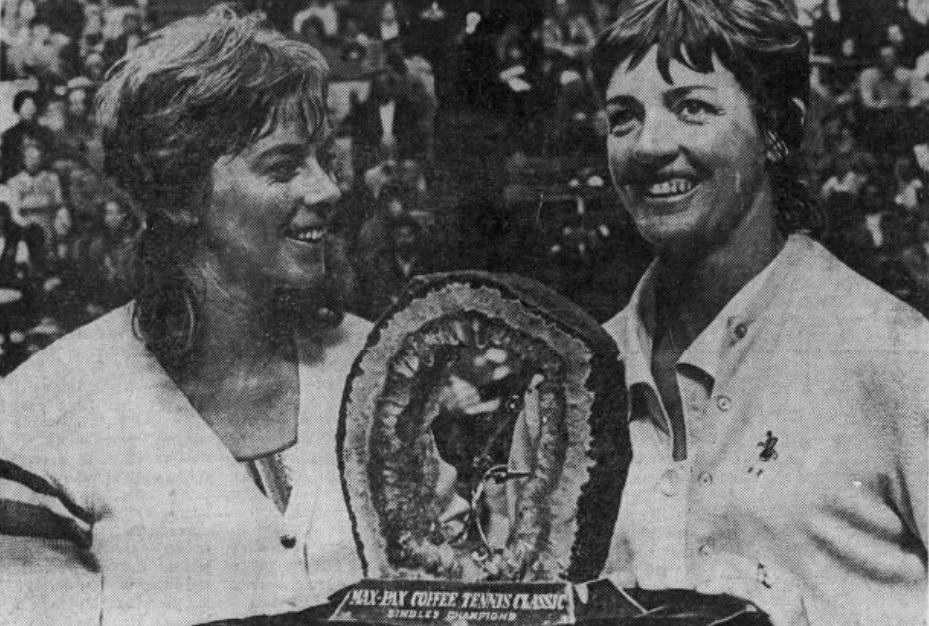
Margaret Court (right), with Max-Pax Coffee Classic runner-up Kerry Harris

The Philadelphia Daily News called Margaret Court “the siege-gun of women’s tennis.” It was a useful way to visualize the the Australian’s attack, but most siege victims lasted far longer than Court’s opponents ever did.

On April 8, 1973, Court secured the title at Philadelphia’s Max-Pax Coffee Tennis Classic, the first professional women’s tennis tournament ever held in Philly. The feel-good story of the week was Kerry Harris, a 23-year-old Aussie who came through qualifying to reach the final. No woman had ever done that on the Virginia Slims tour, and Margaret ensured that she went no further.

The final lasted all of 38 minutes. Harris won the fourth game, and that was it. The tournament experimented with no-ad scoring, which might have shaved a couple of minutes off of the championship match, but let’s be honest: Kerry didn’t make it to deuce very often.

Yes, it was brutal. “At your average execution,” wrote Tom Cushman of the Daily News, “they at least blindfold the victim.” At the same time, it was typical. Court won her first-round match in 41 minutes; her second-rounder against Val Ziegenfuss took just 32. After that match, Ziegenfuss spotted Margaret’s husband Barry and teased that he wasn’t doing his job. Court had too much energy.

The Philly champ was unusual in that her family traveled with her; even more so that the entourage included her infant son, Danny. She had stepped away from the tour after discovering she was pregnant in the summer of 1971. She returned a year later and won a title as a mother on her first try, beating Evonne Goolagong in Cincinnati. She finished 1972 with an Australian Open crown and a 29-match winning streak.

Embed from Getty Images

The Court family in March 1973

The rest of the 1973 Virginia Slims circuit didn’t stand a chance. The Max-Pax was Margaret’s tenth event on the tour. She won eight of them. The dismantling of Harris was her 78th victory in 80 matches. She was as strong as ever–Rosie Casals dubbed her “The Arm,” for the oversized limb that did so much damage–and she somehow came back from childbirth lighter and faster than before. Out of ideas, her opponents were reduced to joking about kidnapping Danny to distract her.

The danger of Court’s dominance was that it could verge on the boring. Billie Jean King was injured, so Margaret had little competition among the Slims group. Women pros were split into two factions; Goolagong and Chris Evert headlined the rival USLTA circuit, and functionaries threatened to keep the “semi-outlaw” Slims players out of the grand slams, too. Political maneuvering made for better stories than Margaret’s perfunctory victories.

Another subplot loomed over the Australian’s season, too. She had accepted a challenge from Bobby Riggs to play an exhibition match in Ramona, California, on Mother’s Day, now barely a month away. Neil Amdur of the New York Times reminded his readers of that date on the Philadelphia champ’s calendar. Court was more than just a slugger, Amdur wrote. She “also is a thinker, which some people seem to be forgetting as they forecast doom for her in the much-publicized May 13 match.”

Margaret’s mental strength has always been a subject of debate, and many contemporary pundits were not as kind as Amdur. Would Riggs, the puff-balling veteran, expose her tendency to choke? At the very least, the Mother’s Day clash promised something that the Slims tournaments rarely delivered: a Court match without the certainty of a lopsided victory.

* * *

Elsewhere this week:

  • Stan Smith won his third consecutive tournament as his half of the World Championship Tennis troupe moved to Europe. In Munich, he straight-setted Cliff Richey in the final. The victory moved him ahead of Rod Laver in the WCT point standings.
  • The other WCT event of the week, in Houston, gave 38-year-old Ken Rosewall his first title of the year. He avenged his Vancouver loss to Jan Kodeš in the semi-finals, then defeated Fred Stolle for the championship.
  • The European clay circuit also got underway in Barcelona. Ilie Năstase collected the trophy with a final-round win over Adriano Panatta, who knocked out 16-year-old Björn Borg in the third round.
  • Chris Evert cruised to another title on the USLTA circuit, picking up a $5,000 check in Sarasota by brushing aside Evonne Goolagong. She lost just five games. Martina Navratilova made her first appearance in a stateside title match, partnering countrywoman Marie Neumannová to a runner-up finish in the doubles.

* * *

This post is part of my series about the 1973 season, Battles, Boycotts, and Breakouts. Keep up with the project by checking the TennisAbstract.com front page, which shows an up-to-date Table of Contents after I post each installment.

You can also subscribe to the blog to receive each new post by email:
 

April 6, 1973: The Designated Hitter

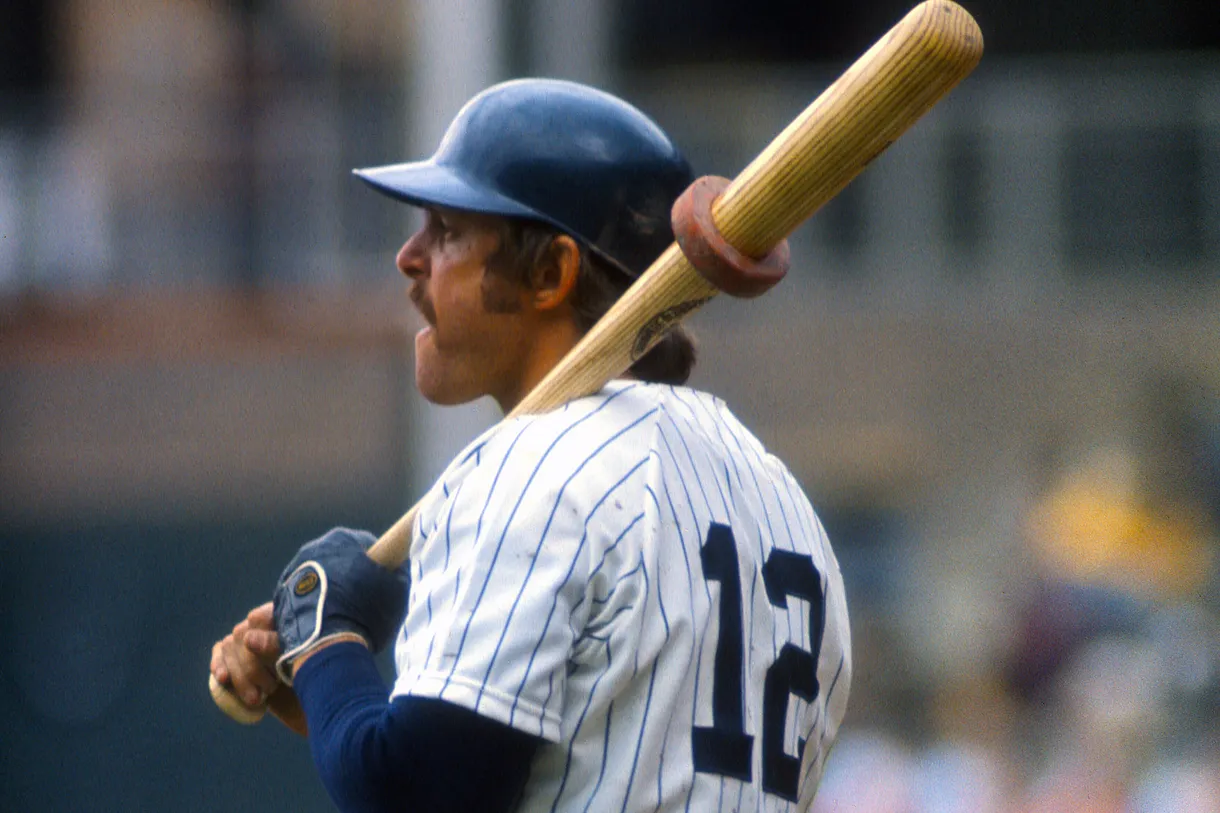
Ron Blomberg

Many major sports have no compunctions about changing the rules on a nearly constant basis. Too much scoring? Give the defense more freedom. Too little scoring? Unleash the offense. Games too long, or too boring? Stick a clock on the court and force teams to maintain a quicker pace of play.

The two exceptions are baseball and tennis. Both games have been notoriously, persistently reluctant to change in their 150-or-so years as spectator sports. Occasionally, though, circumstances converge to make change possible.

In the early 1970s, a lot of circumstances converged. New leagues sprouted, competition flourished like never before, and–most of all–television forced each sport’s leadership to consider exactly what its product was, and what it should look like.

Baseball’s American League responded to a spate of low scoring seasons and weak attendance by introducing the designated hitter rule. The National League had more history and more stars, but beginning in 1973, the American League–thanks to its willingness to experiment–added more offense. By the end of the decade, it had closed much of the attendance gap.

New York Yankee Ron Blomberg became baseball’s first designated hitter on April 6, 1973. The bat he used for his first time at the plate was sent to the Hall of Fame, even though it barely left his shoulder. In that first appearance of a designated hitter, Blomberg came up with the bases loaded and walked.

Matty Alou, the Yankees veteran who scored on the play, cracked: “See, it’s added offense to the game already.”

* * *

What strikes me about the designated hitter rule is how closely it parallels the adoption of the tiebreak. I’ve already written a few times about the tiebreak in this series about 1973. The now-familiar method of ending sets was still new, and it was still weird.

“Those tie-breakers are such bullshit,” said Raymond Moore after a win in Vancouver in March. “None of the players know how to play them yet.”

Embed from Getty Images

John Newcombe (left) and Stan Smith were considered in 1973 to be among the best tiebreak players in the game. The secret, clearly, was in the mustache.

Some players didn’t like it, but the sport needed to evolve. Jimmy Van Alen had pushed for tie-breaks as part of his “Simplified Scoring System” since the 1950s. We tend to think of long sets as epic, memorable moments. Not so in those days: The typical 12-10 set consisted of two guys who couldn’t return serve for 75 minutes. It wasn’t much fun to watch, and it would never fit into a two-hour slot on network television.

So, nearly a century after competitive tennis began, the sport finally embraced a new idea. The US Open adopted Van Alen’s nine-point “sudden death” tiebreak in 1970, and Wimbledon began playing breakers at 8-all in 1971. World Team Tennis would experiment even further beginning in 1974. While tennis–like designated-hitter baseball–remained easily recognizable, the new rule was a belated acknowledgement that even the most hidebound sports need to change with the times.

For nearly a half-century, purists in both baseball and tennis were left with something to cling to. Pitchers batted for themselves in National League games until 2021, and a first-round match at that year’s French Open ran to 10-8 in the fifth. But the traditionalists could hold out no longer. The designated hitter is now universal in American baseball. Both the grand slams and the Davis Cup have adopted rules to decide every deadlocked set with a tiebreak. The rule changes that represented such a shift 50 years ago finally won the day.

* * *

This post is part of my series about the 1973 season, Battles, Boycotts, and Breakouts. Keep up with the project by checking the TennisAbstract.com front page, which shows an up-to-date Table of Contents after I post each installment.

You can also subscribe to the blog to receive each new post by email:
 

April 4, 1973: Arthur Ashe, Acing Alone

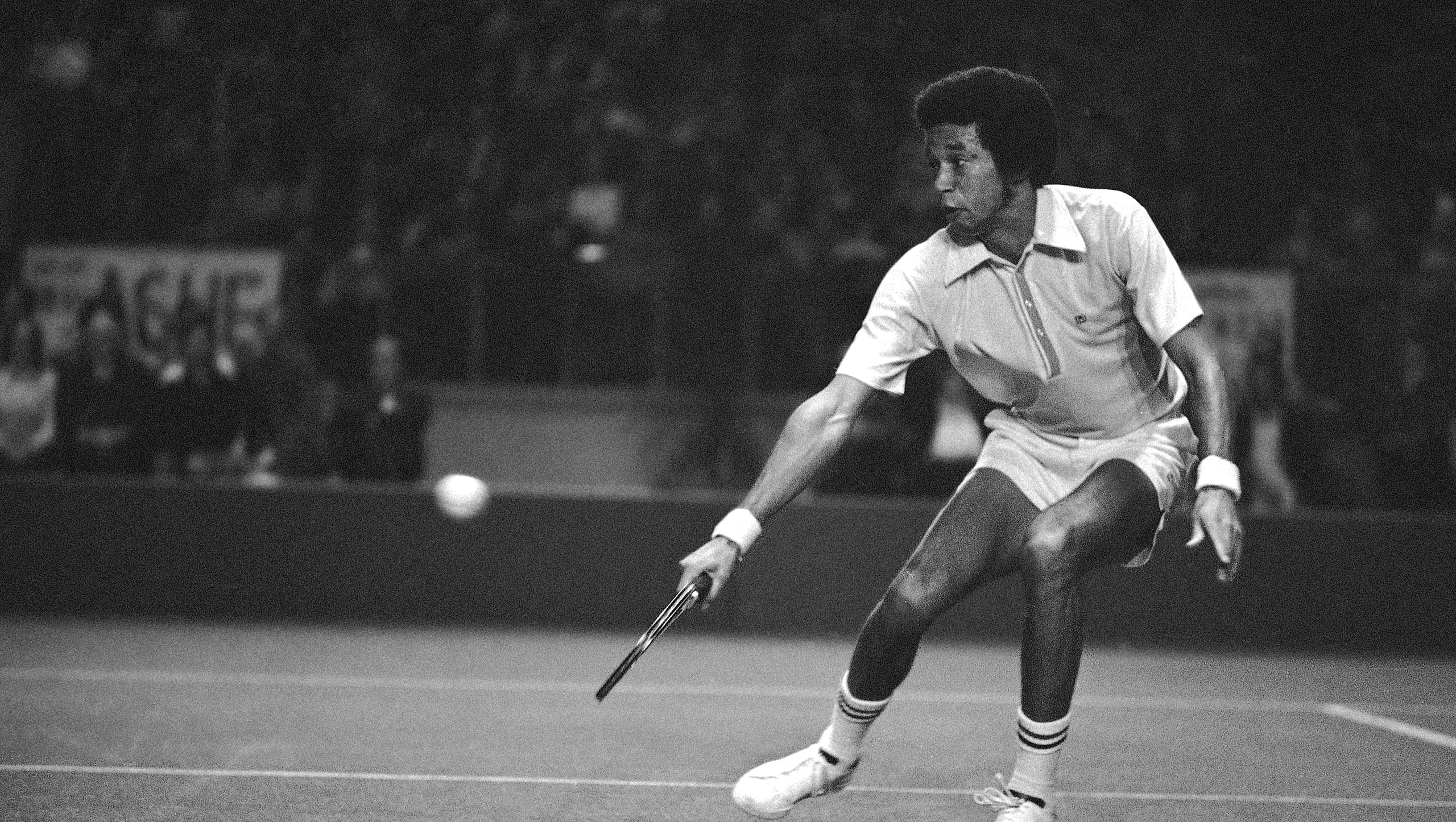
Arthur Ashe in late 1972

The knock on Arthur Ashe was always that he was erratic. At his best, he made flashy shots that no one else would even attempt. At his worst, those same shots would go wild, one after another. Early in his career, he lost a lot of matches when his focus betrayed him and he couldn’t recover in time.

Even at his most uneven, though, Ashe could usually hang in there. He owned a big serve, perhaps the most potent first strike on tour. When other shots betrayed him, he could reel off one ace after another and keep things close. Arthur won the 1968 US Open final on the back of a 14-12 first set. In a Davis Cup match a few weeks before that against Manolo Santana, two sets reached 11-all.

Arthur Ashe was not responsible for the introduction of the tiebreak, but he certainly played some sets that made fans wish for a quicker way of wrapping things up.

On April 4, 1973, Ashe met 21-year-old Roscoe Tanner in the second round of the World Championship Tennis event in Houston. Tanner was another cannonballer, the sort of opponent who would have guaranteed a marathon set or two against Ashe under traditional rules. But the WCT tour was all-in on the tiebreak.

In their best-of-three match, Ashe and Tanner didn’t play one tiebreak… they didn’t play two tiebreaks… they played three tiebreaks. Arthur earned a 5-2 lead in the first-set breaker, but Tanner charged back and took over, 10-8. The second set didn’t feature the same self-assured serving, and both men broke three times. But the end result was nearly the same. They reached a tiebreak, which Ashe won 7-2. The American pair deadlocked another 12 games before Ashe clinched his place in the quarter-finals with another 7-2 decision.

As far as I know, nobody counted aces. Safe to say there were a lot.

The oddest thing about the match, however, wasn’t the slim margin of victory. It was the crowd. Every single face in the gallery was a member at the River Oaks Country Club, the tournament venue.

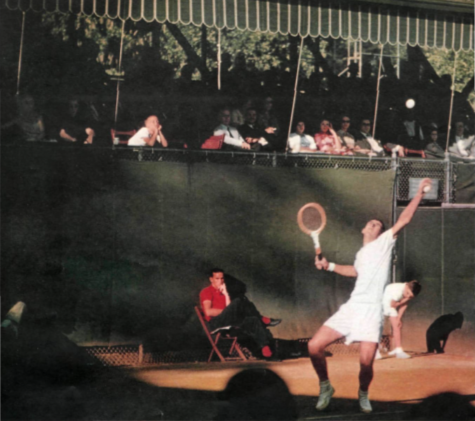
Barry MacKay at the River Oaks event in 1959

River Oaks had staged an event since 1931, when Ellsworth Vines won the inaugural title. It consistently attracted top American talent: Between 1931 and the end of the amateur era, eleven of the men in my Tennis 128 hoisted the trophy. Bobby Riggs won it in 1940. Rod Laver beat Roy Emerson for the title in both 1961 and 1962, and Laver came back as a pro to hold off Ken Rosewall in the 1972 final. The arrival of world-class tennis players was a highlight of the Houston social calendar, an annual tradition that survived into the Open era.

But in 1973, a change in the tax code prevented the non-profit River Oaks club from charging the public for admission. The club failed to find a workaround, funded the event itself, and held the matches behind closed doors.

The players, understandably, didn’t like it. The tournament had long boasted the exclusive sobriquet of the River Oaks Invitational, but times had changed. This was the era of Open tennis, and that applied to fans as well. Ashe, who served as a kind of elder statesman among the pros through his role in the burgeoning players’ union, was the most outspoken of the group. “I don’t think the W.C.T. will play here [again],” he told reporters. “They’d be nuts if they did. They aren’t in the business of promoting closed tournaments.”

Ashe didn’t mention another offense, though many newspapers did. River Oaks was exclusionary on a full-time basis: The club had no Black or Jewish members. Arthur, however, picked his spots. He was more focused off the court than he was on it. In 1973, he fought harder for his fellow players than he did for racial justice. That would change over time, a shift accelerated by his November trip to apartheid South Africa.

Back in Houston, the closed doors of 1973 proved to be nothing more than a blip. River Oaks sorted out their tax issues and the public was welcome when the WCT troupe came through in 1974. In fact, they couldn’t have opened their doors any wider. When Laver returned and defeated Björn Borg in the final, he did so on national television.

* * *

This post is part of my series about the 1973 season, Battles, Boycotts, and Breakouts. Keep up with the project by checking the TennisAbstract.com front page, which shows an up-to-date Table of Contents after I post each installment.

You can also subscribe to the blog to receive each new post by email:
 

April 1, 1973: Kerry Melville, Finally

Kerry Melville at the 1973 Virginia Slims Conquistadores of Tucson

There wasn’t much room at the top of the Virginia Slims circuit. Kerry Melville could have told you all about that.

One knock on women’s tennis was a supposed lack of depth. There were undeniable stars–Margaret Court, Billie Jean King, Evonne Goolagong–and a few more credible contenders, like Virginia Wade, Rosie Casals, and now Chris Evert. That coterie hogged the limelight; everyone else merely crossed their fingers when each week’s draw came out and hoped they’d find a path to the quarters. Lance Tingay ranked Melville fifth at the end of the 1972 campaign, but no one figured she was going to crack the inner circle.

The Australian earned her 1972 ranking by playing some of the best tennis of her career, picking up tournament victories on two continents with wins over Wade and Casals. She reached the final of the US Open, where she beat Evert before falling to King. Her runner-up status became a full-blown jinx in early 1973. She lost four finals in a seven-week span, every one of them to Court. Then she missed two weeks with a torn calf muscle.

Things finally began to go Melville’s way in Tucson, the last week of March. The winter circuit was mostly played indoors, but despite unusually chilly, damp weather, the event in Arizona was held in the open air. Other players, including Casals, griped about the inconsistent conditions, but Melville (known as Kerry Reid after her 1975 marriage) preferred her tennis without a roof.

The second round brought the shock of the tournament. Court, who had lost just one match in nine 1973 tournaments, fell to an unheralded South African named Laura Rossouw. The wind and cold that affected Court’s concentration didn’t appear to trouble the second-seeded Melville: Kerry breezed through three rounds with the loss of only 13 games. Her semi was just as easy: Casals delivered “one service fault after another” and the Australian beat her, 6-1, 6-2.

The Tucson final, on April 1st, was no laughing matter. Nancy Gunter (formerly Nancy Richey) was one of the hardest hitters on tour. Both women aimed for the baseline and stripped any advantage from the server: No one held until the fifth game of the match. Gunter’s weaponry kept misfiring, and what could have been a lengthy war of attrition ended as a brisk, 6-3, 6-4 victory for the Australian.

Skeptics had reason to discount Melville’s title: King was out with a stomach injury, and Court lost early. But with a $6,000 winner’s check in her pocket, Kerry had an answer ready: “I suppose there will be people like that, but it still goes up on the board, doesn’t it?”

* * *

Elsewhere this week:

  • In St. Louis, Stan Smith beat Rod Laver for the second straight week. This time it took three sets, but he finished the job with a break to love for a 6-4, 3-6, 6-4 victory.
  • At the Lady Gotham Classic in New York, Chris Evert cruised to a 47-minute victory over Katja Ebbinghaus of West Germany. Looking on was Vice President Spiro Agnew, one of 2,401 spectators at Madison Square Garden’s Felt Forum. The $8,000 first prize increased Chrissie’s haul to $26,350 after just one month as a pro.
  • Pakistan clinched its Davis Cup tie after squeaking through a five-set doubles rubber against South Vietnam. The victory earned them in a place in the Eastern Zone semi-finals against India, with the winner advancing to a likely clash with Australia.
  • Bobby Riggs told a reporter that women players shouldn’t get as much money as men, “because they’re not as good.” He also said that a no top woman had had a chance against a top man since Maureen Connolly in the 1950s.

* * *

This post is part of my series about the 1973 season, Battles, Boycotts, and Breakouts. Keep up with the project by checking the TennisAbstract.com front page, which shows an up-to-date Table of Contents after I post each installment.

You can also subscribe to the blog to receive each new post by email: