May 29, 1973: The Super-Swede

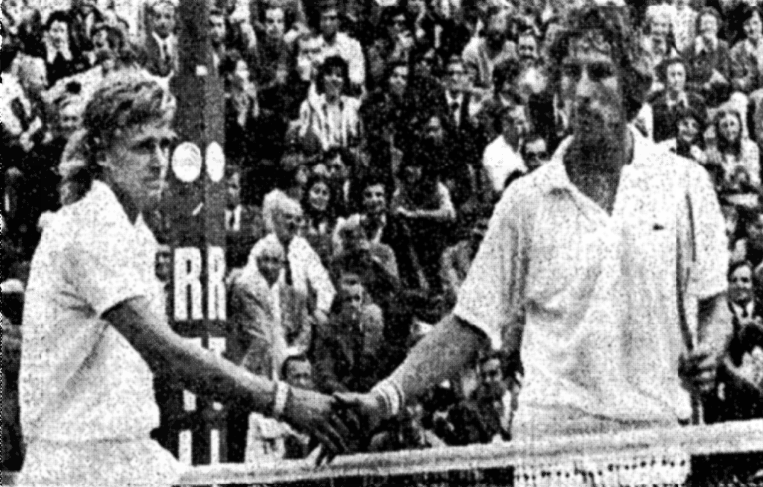
Björn Borg shaking hands with Dick Stockton after their 1973 French Open match

The 1974 World of Tennis annual noted in its capsule biography of Björn Borg that the Swede had never been beaten by a younger player. That was hardly a surprise. He didn’t turn 17 until June 1973, so he didn’t face many younger players. And he wasn’t in the habit of losing to anybody.

Still, the adult game had its learning curve. Borg won the Orange Bowl junior event in both 1971 and 1972, and he picked up the Wimbledon boys’ title in 1972. He made his Davis Cup debut as a 15-year-old and upset New Zealand’s veteran Onny Parun. He was less consistent on tour, reaching the Monte Carlo final one week, losing a first-rounder in straight sets the next. He made his share of youthful mistakes, but the signature two-handed backhand and the unnaturally calm demeanor were already in place.

The 1973 French Open was his coming-out party. Borg began the event with a 6-2, 6-3 defeat of 9th-seeded American Cliff Richey. In the second round, he outlasted the veteran Frenchman Pierre Barthes, 3-6, 6-1, 8-6. “I didn’t expect to even win today,” said the young man. “He should have beat me.”

When Borg took the court for his third-round match against Dick Stockton on May 29th, he already had a fan club. The “long, fair hair flopping round his neck” won over scores of young women, and his acrobatic game appealed to the rest. Parisian fans were treated to a hard-fought battle in the first best-of-five-set round. Stockton was steadier, but Borg snuck away with the big points.

The 16-year-old advanced with a four-set victory, 6-7, 7-5, 6-2, 7-6. Stockton had four set points in the final tiebreak. Borg needed to run down a smash to save the second one. He awed the crowd one more time on his own match point at 10-9, which he secured with a lob winner.

No young player had a brighter future than the Swede. Adriano Panatta, the flashy Italian waiting for him in the fourth round, had beaten him twice already in 1973. Borg would be the underdog in that encounter, but he was playing the long game. “Now it all depends on me,” he said. “I think I can go all the way.”

* * *

The day was not so rewarding for Virginia Wade. Though the third seed wasn’t known for her clay-court prowess, she had reached the quarter-finals the year before. There was no reason she couldn’t do it again.

She lost anyway, to little-known Frenchwoman Odile de Roubin, 1-6, 6-2, 6-3. “I hate playing bad players and she was so bad,” Wade said. “Then the stadium was empty and there was no atmosphere and I played so stupidly.” No one was prepared to argue the point.

* * *

This post is part of my series about the 1973 season, Battles, Boycotts, and Breakouts. Keep up with the project by checking the TennisAbstract.com front page, which shows an up-to-date Table of Contents after I post each installment.

You can also subscribe to the blog to receive each new post by email:
 

May 27, 1973: Behind the Scenes

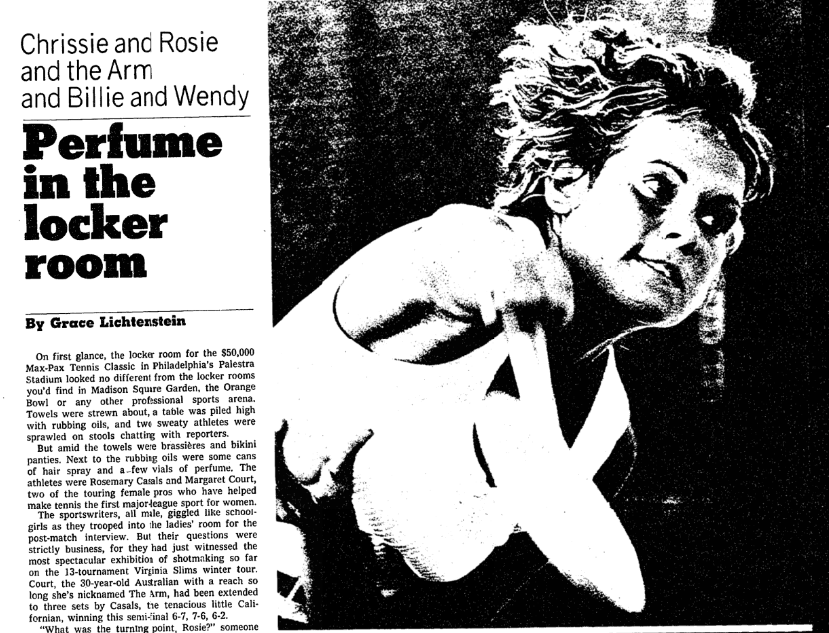
From the May 27, 1973 New York Times Magazine

The rapid growth of women’s tennis was about more than sport. Everybody knew that. The burgeoning Virginia Slims tour was dubbed “women’s lob.” Equal prize money, once unthinkable, was now a proposition that had to be taken seriously. Whatever Bobby Riggs might have to say about it, these ladies were damn good athletes, and their prominence had ripple effects across the culture.

It wasn’t just die-hard fans who wanted to know more. Press coverage of tennis had always tended toward the matter-of-fact: A recap of a notable match or two–usually between men–followed by a long list of results in microscopic print. Only in the 1960s did newspapers begin to venture the occasional feature story about a rising star or local hero of the courts. Diligent readers would learn that Margaret Court was a mother and that Chris Evert wore pigtails, but not much else.

An article in the May 27, 1973 New York Times Magazine was one of the first efforts to turn women’s tennis stars into multi-dimensional characters. Baseball had Jim Bouton’s 1970 tell-all, Ball Four, and Sports Illustrated employed a team of adventurous journalists filing features about football, basketball, and even–occasionally–men’s tennis. Grace Lichtenstein’s piece for the Times, “Perfume in the locker room,” did the same for the Slims.

Lichtenstein took the reader into the locker room after the final of the Max-Pax Classic in Philadelphia, where Rosie Casals puffed a cigarette and Court sipped a beer. She described life on the road, where players stayed with local families and some–like newcomer Martina Navratilova–struggled with the temptations of fast food.

It was easy to see athletes as a single movement. But as the article was quick to point out, “The players themselves were thoroughly individualistic.” They “never seemed to forget their dual roles as women and athletes,” even if each one handled the balance differently. The young Evert claimed, “No point is worth falling down over,” and she never took the court without makeup. Evonne Goolagong, on the other hand, earned the respect of her male colleagues with a different sort of attitude. One of them said, “she’s the only one [of the women] who wears a jock.” It was a compliment.

In this first major effort, Lichtenstein had to grapple with the relationship between the men’s and women’s games. But as she expanded the article to a season-chronicling book, A long way, baby: Behind the scenes in women’s tennis, the men–apart from husbands, boyfriends, and hangers-on–increasingly disappeared from the picture. Women’s tennis could stand alone. It was time for sportswriters to catch up, and Lichtenstein showed the way.

* * *

This post is part of my series about the 1973 season, Battles, Boycotts, and Breakouts. Keep up with the project by checking the TennisAbstract.com front page, which shows an up-to-date Table of Contents after I post each installment.

You can also subscribe to the blog to receive each new post by email:


The Highest-Ranked Slam Qualifier

Today, Aslan Karatsev plays for a place in the French Open main draw. He is the top seed in qualifying on the strength of his ATP ranking of 62. A top-70 ranking would normally guarantee main draw entry with room to spare. But when the list was finalized about six weeks ago, Karatsev lingered outside the top 120. Since then, he reached the semi-finals in Madrid.

It is rare for such a high-ranked player to appear in qualifying. (Or to put it another way, it is unusual for a player outside the top 100 to make such gains in just a few weeks.) But it is not unprecedented. Here are the 13th highest-ranked top seeds in men’s slam qualifying since 2000:

RANK  Year  Tourney        Player              
57    2013  US Open        Federico Delbonis   
59    2017  US Open        Leonardo Mayer      
62    2009  Roland Garros  Fabio Fognini       
62    2023  Roland Garros  Aslan Karatsev      
67    2004  Roland Garros  Albert Montanes     
68    2000  US Open        Harel Levy          
69    2007  US Open        Frank Dancevic      
69    2009  US Open        Thomaz Bellucci     
70    2015  Roland Garros  Hyeon Chung         
75    2005  Roland Garros  Andreas Seppi       
75    2008  Roland Garros  Eduardo Schwank     
75    2022  US Open        Constant Lestienne  
77    2007  Wimbledon      Nicolas Mahut

I extended the list to 13 for a reason: to include Wimbledon. The top 12 spots are monopolized by the French and US Opens, because there are so many ranking points available in the weeks leading up to those events. We have to go much further down the list to find someone at the Australian Open: Taylor Fritz was ranked 91st when he played 2018 Aussie qualifying.

While Karatsev has progressed smoothly this week, a high rank is no guarantee of success. Federico Delbonis was ranked 57th when he began qualifying rounds at the 2013 US Open. He was fresh off a run to the Hamburg final the month before. He lasted just 55 minutes against Mikhail Kukushkin, then headed home a first-round loser.

Vijay!

I’ve only gone back to 2000 because I don’t have full qualifying results for tournaments before that. But we can find some qualifiers from earlier years, because we know which main draw players came through the preliminary rounds.

Peter Wetz ran this query for me and found a surprise. In 1982, 35th-ranked Vijay Amritraj reached the Wimbledon main draw as a qualifier. 35! Arguably, he was even better than that. He had finished the 1981 season ranked 20th, in large part on the strength of a quarter-final showing at Wimbledon, where he couldn’t convert a two-sets-to-love lead on Jimmy Connors. Amritraj was considered one of the best grass-court players in the world.

The 28-year-old Indian star was stuck in qualifying because he was at odds with the tennis establishment. The men’s Grand Prix–roughly speaking, the equivalent of today’s ATP tour–established a new rule, that players must commit to at least ten Grand Prix events in order to be eligible for the slams. Another protester was Björn Borg, who wanted to keep playing only if he could pick his spots more carefully.

Amritraj had a lot of things going on, and he didn’t like being “press-ganged” into playing all those events. He was pursuing an acting career and would appear in the 1983 James Bond film Octopussy. Still, this was Wimbledon. He claimed he had received hundreds of letters from fans begging him to play. In India, he said, the only two events that mattered were Wimbledon and Davis Cup.

So Vijay went to qualifying. He was the biggest story of the event, which typically didn’t make headlines at all. He opened his campaign with a win, something he had waited 11 years for. He hadn’t entered qualifying since 1971, when he was 17 years old and failed to clear the first round.

He won his second match with ease as well, straight-setting Christo van Rensburg. He learned that day that he had already earned a main draw place thanks to a withdrawal. In those days, there was no lucky loser lottery. When a main draw position opened up, the highest-ranked loser from the final round got in. So Amritraj would make the 128-man field either way.

As it turned out, he earned his ticket–but just barely. Vijay overcame an unheralded American, Glen Holroyd, 6-7, 3-6, 6-4, 7-5, 6-2. “I will need to be better than this,” he said, “if I am to do anything at Wimbledon.”

He did something, but not as much as he would’ve liked. The 35th-ranked qualifier came back from a two-set disadvantage in the first round to beat Jeff Borowiak, then he straight-setted Pascal Portes to reach the round of 32. There, he capitulated to Roscoe Tanner in what must have been a fine display of grass court tennis. Tanner, the 14th seed and 1979 finalist, beat him, 6-4, 6-4, 4-6, 4-6, 6-3. For the fifth year in a row, Vijay exited the Championships after a five-set loss.

Amritraj never did give up on his favorite event. He returned to the main draw for the next five years, reaching the fourth round in 1985 when he upset Yannick Noah. In 1988, his streak came to end when he lost in the final qualifying round to Heiner Moraing, 7-6(3), 4-6, 6-7(3), 7-5, 8-6. Players didn’t call qualifying “heartbreak valley” for nothing.

In 1990, he came back one more time. 19 years after his first attempt to crack the main draw, Vijay got through. Ranked outside the top 300, the 36-year-old was lucky to have a place in the field at all. But he beat Éric Winogradsky, Stéphane Grenier, and Stephen Botfield to qualify. He lost in the first round, but as usual, it took five sets to stop him.

May 25, 1973: Unbroken

Ion Țiriac in the 1972 Davis Cup Finals

Here’s a trivia question for you: What was the first grand slam singles match without a break of serve?

In 1973, it hadn’t been possible for long. The US Open was the first major to adopt the tiebreak, in 1970. Before that, every set would continue until someone broke serve and established a two-game lead. Only in 1973 did the other slams follow suit. There weren’t any zero-break matches at the Australian Open, just as there hadn’t been in the first three years of tiebreak tennis at Forest Hills. Even with sudden death shootouts in place, it would be unusual for two men to string together a minimum of three unbroken sets, 36 consecutive holds of serve.

The 1973 French Open made it easier. The tournament experimented with best-of-three-set contests for the first two rounds. Now 24 holds would be enough, even if the slow Parisian clay worked in the returner’s favor.

On May 25, Roland Garros delivered such a match. Two veterans–31-year-old American Frank Froehling and 34-year-old Romanian Ion Țiriac–locked horns for a second-round baseline slugfest that, somehow, never resulted in a break. Froehling advanced, 7-6(3), 7-6(3).

It was a strange outcome. Froehling, like most Americans of his generation, served big. Țiriac, despite his barrel chest and “Brașov Bulldozer” nickname, did not. When the two men faced off in a decisive 1971 Davis Cup match, only one of five sets reached 6-all; two others finished at 6-1. The Romanian had played both Olympic ice hockey and international-level rugby, yet on the tennis court he was a jackrabbit. He realized he didn’t have the strokes of a champion, but he was smart, he was stubborn, and he could run.

And if he couldn’t break your serve, Țiriac could usually break your spirit. No one in the sport practiced more gamesmanship, a polite term for what was often outright cheating. The Romanian’s antics in the 1972 Davis Cup final were flagrant enough that the ILTF suspended him. So obnoxious were the hosts in Bucharest that the United Nations gave a “Fair Play” award to Stan Smith, one of the Americans who withstood it all. Smith’s citation: sportsmanship “in the face of a hostile, chauvinistic public, irregularities in the scoring and aggressive behavior by one of his opponents.” The UN was calling out Ilie Năstase, but Țiriac was probably worse.

By May 1973, the Brașov Bulldozer was wondering if it was worth it anymore. For eight years, he had mentored Năstase, now the best clay courter in the world and the top seed in Paris. Now, they were no longer on speaking terms.

“Năstase was becoming impossible,” Țiriac told a British journalist. “I am the sort of competitor who plays to win but, in doubles, Năstase just wanted to clown about. He let me down badly in the French Championships last year when we were the favorites to win the title. We lost in the first round.”

After the 1972 Davis Cup finals, the Romanian quit the national team. He told the same journalist that he’d retire after the 1974 season. It was clear to another spectator at the Froehling duel that “his heart was clearly not in the match.”

No one knew what Țiriac would do once he gave up full-time competition, but he was always a man to watch. Behind his perpetual glower was a brilliant mind, capable of idiosyncratic conversation in six languages. He had raised Năstase up from what he called “a nothing in the streets of Bucharest.” Perhaps he could do it again.

* * *

Coincidentally, Țiriac’s next project was also in action on May 25th, 1973. 20-year-old Guillermo Vilas of Argentina was little known outside of South America, but that was about to change.

In the second round, the young left-hander drew seventh seeded Spaniard Andrés Gimeno. A year before, Gimeno had become the oldest first-time major champion when he won the French at age 34. This isn’t to say he was a late bloomer: He signed up for the professional ranks when he was 23, after a sterling amateur season in 1960. He held his own against Rod Laver, Ken Rosewall, and the rest for seven years before the start of the Open era. He faced Laver at least 120 times between 1960 and 1971, winning nearly one in three.

But after a four-title 1972 season, Gimeno suffered a meniscus injury. He was a meager 5-4 on the season coming into the French Open, fading as fast as Vilas was rising.

The inter-generational battle was a dramatic one. The Argentinian finally triumphed, 6-2, 5-7, 8-6. Țiriac would later say that Vilas lacked a killer instinct–“This guy not capable in life to kill a fly”–but he was always able to exhaust opponents into submission. For the second year in a row, the lefty had reached the third round in Paris.

Soon, Vilas’s accomplishments would be measured not in match wins, but in finals–often against rival Björn Borg. The coincidences multiply: Yet another match on May 25th was a delayed opening-round tilt, 16-year-old Borg’s first-ever appearance at the French. He, too, made a statement that day, handing a routine defeat to 1971 Roland Garros quarter-finalist Cliff Richey, 6-2, 6-3.

While Țiriac’s two-tiebreak loss to Froehling was the quirkiest result of the day, tennis history was in the making all over the grounds.

* * *

This post is part of my series about the 1973 season, Battles, Boycotts, and Breakouts. Keep up with the project by checking the TennisAbstract.com front page, which shows an up-to-date Table of Contents after I post each installment.

You can also subscribe to the blog to receive each new post by email:
 

May 24, 1973: All Together Now

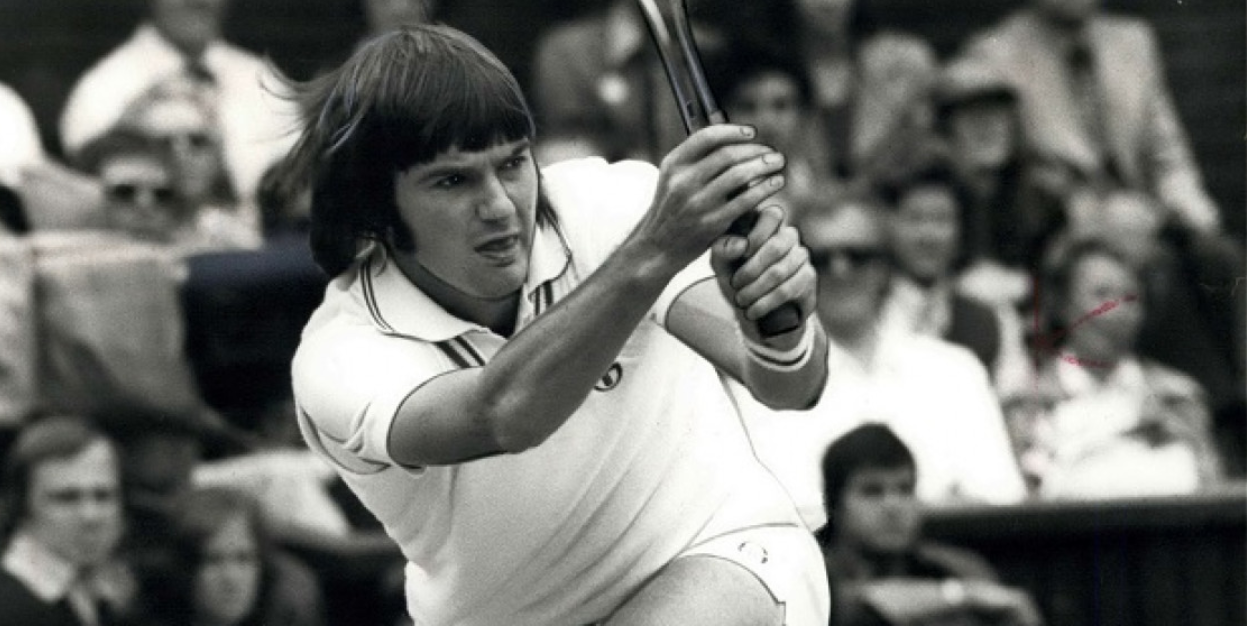
Jimmy Connors

It was even more exciting than usual to look over the draw for the 1973 French Open. 128 men, 64 women, and no senseless divisions. Margaret Court, queen of the Virginia Slims circuit, in the same bracket as Chris Evert and Evonne Goolagong for the first time all year. Ilie Năstase and Jimmy Connors, flashy standouts of the USLTA’s winter indoor circuit, alongside Stan Smith and the pros of the World Championship Tennis tour.

“This is the way it should have been all the time,” said Jimbo. “We should all be together to find out the best in the world.”

The field wasn’t quite complete. Billie Jean King and Rosie Casals stayed home and would headline an event in Alabama instead. Rod Laver was injured. Ken Rosewall opted to rest, saving energy for what the 38-year-old believed would be his final shot at a Wimbledon title.

On the other side of the ledger was a surprise: Niki Pilić, suited up and ready to play. Suspended by the Yugoslavian federation for missing a Davis Cup tie, the French Open allowed him to enter while he waited for the ILTF to decide on his appeal. Most insiders just wanted the problem to go away. One journalist suspected that the tournament committee “will probably root for him to lose.”

Pilić was drawn to face Connors, the 12th seed, if both men reached the round of 32. On May 24th, they began their campaigns. Pilić had little problem with Hungarian qualifier Géza Varga, winning 6-4, 6-4. The tournament was experimenting with the rules: The first two men’s rounds were best-of-three, and for the first time, French Open sets would be decided by tiebreaks at 6-all.

Connors, however, wouldn’t last long enough to meet the Croatian. Making just his second appearance in Paris, Jimbo drew a tricky first-round opponent. Raúl Ramírez, a 19-year-old Mexican who had upset Tom Gorman to open a recent Davis Cup tie in Mexico, was probably no secret to Jimbo–he was the star freshman for the University of Southern California Trojans–and his comfort with the slow Parisian clay was enough for an upset. Ramírez played hard, competing for every point. Connors reached 5-3 in the second-set tiebreak, but a string of errant forehands gave away the lead and the match, 6-4, 7-6.

At the top and bottom of the draws, though, there were no surprises. Năstase, who was already 25-1 on clay courts for the season, straight-setted Chilean Jaime Pinto-Bravo. Smith overcame an early stumble to advance against Frenchman Georges Goven.

For Court, Goolagong, and Evert, the early going was a mere formality. None of the trio lost more than two games in a first-round set. Chrissie, making her first appearance at Roland Garros, was the most impressive of all. She disposed of Australian Marilyn Tesch, 6-1, 6-0, missing a double bagel only because of a pair of double faults.

Connors would have to wait to prove his mettle against the established order. But a long-awaited Evert-Court showdown was shaping up nicely.

* * *

This post is part of my series about the 1973 season, Battles, Boycotts, and Breakouts. Keep up with the project by checking the TennisAbstract.com front page, which shows an up-to-date Table of Contents after I post each installment.

You can also subscribe to the blog to receive each new post by email:
 

May 20, 1973: The Early Life of Brian

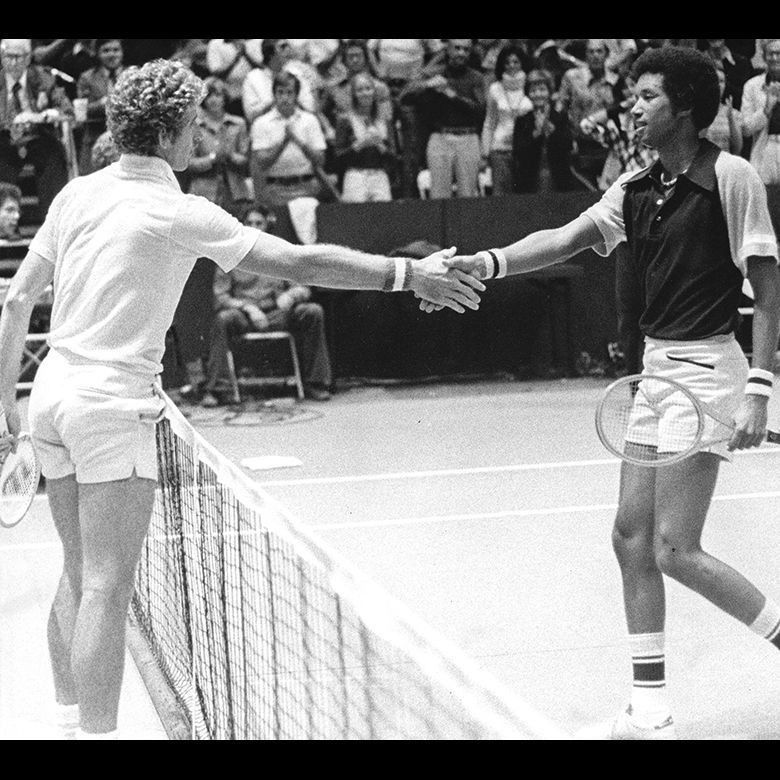
Brian Gottfried and Arthur Ashe

Whether it was the money, the climate, or the awkward spot on the tennis calendar, the $150,000 Alan King Classic at Caesar’s Palace in Las Vegas was a goldmine for underdogs. Top seeds Stan Smith and Rod Laver lost their opening matches. Numbers three and four, Ken Rosewall and John Newcombe, fell in the second round. Only two top-ten seeds reached the quarter-finals, and one of them–Cliff Drysdale–went no further.

The desert heat–often touching 95 degrees–favored the biggest hitters in the game. Laver lost to six-foot, four-inch Dick Crealy, and Newcombe went out to another Australian, Colin Dibley, who once cracked a 148 mile-per-hour serve. Roscoe Tanner, owner of the liveliest arm among the Americans, ousted both Rosewall and Drysdale.

The tournament, along with its record-setting $30,000 prize, seemed to belong to Arthur Ashe. The last seed standing, he was coming off a near-miss to Smith at the previous week’s WCT Finals. Having learned the game in Virginia, he had no problems with a blistering sun. His serve could be every bit as unhittable as Tanner’s.

Just when the resident gamblers thought they had figured out the pattern of the Alan King Classic, Brian Gottfried screwed it all up. A curly-haired 21-year-old counterpuncher from Trinity University in Texas, he moved quietly through the draw, beating Clark Graebner, Charlie Pasarell, and Dibley to reach the semis. He straight-setted another veteran, Cliff Richey, for a place in the final.

What Gottfried lacked in power and pizzazz, he made up for in other ways. His second serve was only slightly weaker than his first. He executed well at the net, even if he didn’t come in behind many serves. Until recently, he had been the third-ranked player on the Trinity squad; he was already gaining a reputation as one of the circuit’s hardest workers.

Ashe liked to joke that after Gottfried skipped practice for his wedding, he doubled his workout the next day to make up for it.

On May 20th, it wasn’t just hot, it was windy. The finalists coped with gusts up to 25 miles per hour. Ashe was never known for playing with a wide margin of error, and it cost him. The favorite double-faulted twice on break point in the second set.

Across the net, Gottfried was unfazed. He broke serve twice in the first set and three times in the second. “I just decided to keep banging the ball hard against his serve… and it worked out,” said the new champion, who won the match, 6-1, 6-3.

It was, by far, the biggest title of Gottfried’s young career. He had won the Johannesburg WCT event, another upset-ridden week, but that championship didn’t quite count: He won the final by walkover when Jaime Fillol was ill. Gottfried won the Vegas doubles, too, for a one-week take of $35,000, more than doubling his career earnings. He had turned pro just nine months earlier.

Arthur, as usual, was eloquent in defeat. “He was hitting out there like there was no wind,” he said. “I wasn’t.”

* * *

Also this week:

  • You didn’t think they would hold a tournament in Las Vegas without an appearance by the king of the hustlers, did you? Bobby Riggs took part in a one-day “Hall of Fame” doubles tournament played in conjunction with the Alan King Classic. With partner Gardnar Mulloy, Riggs beat Don Budge and Dick Savitt in the opening round, but lost the one-set final to Richard González and Frank Parker, 6-2. “What did you expect?” Bobby chirped. “Those guys had 12 years on us, 103 to 115.”
  • Evonne Goolagong picked up her fifth title of the year at the Mercedes Benz Open in Lee-on-the-Solent, England. It was a minor event against primarily British competition. The rewards were even less distinguished: The day before Gottfried collected his $35,000, Goolagong received her winner’s check for $312.

* * *

This post is part of my series about the 1973 season, Battles, Boycotts, and Breakouts. Keep up with the project by checking the TennisAbstract.com front page, which shows an up-to-date Table of Contents after I post each installment.

You can also subscribe to the blog to receive each new post by email:
 

May 18, 1973: Missing in Action

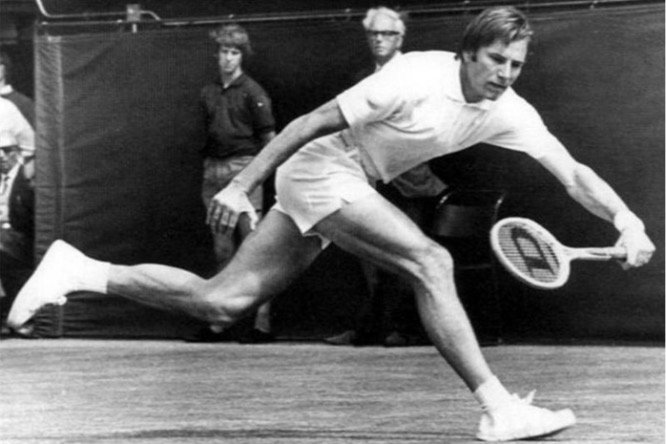
Niki Pilić

The week before the French Open, the 1973 Davis Cup really got rolling. 16 European Zone nations and a passel of famous names squared off in head-to-head ties scattered from Cairo to Oslo.

Many stars made their first Cup appearances of the season when the ties opened on May 18th. Ilie Năstase won in straight sets as Romania took on Tom Okker and the Netherlands. Czechoslovakia’s Jan Kodeš made quick work of his Egyptian opponent, Ibrahim Mahmoud. Manuel Orantes of Spain turned in the best performance of the day in Båstad, Sweden, defeating 16-year-old Björn Borg with the loss of just four games.

There were surprises, too. Great Britain boasted two standouts from the World Championship Tennis circuit, Roger Taylor and Mark Cox. Yet on clay in Munich, they fell to a 0-2 deficit against West Germany. The British stars lost to Karl Meiler and Jürgen Fassbender, respectively.

The day’s heroics belonged to the overlooked Soviet player Teimuraz Kakulia, who outlasted his Hungarian foe, Balázs Taróczy, 1-6, 6-0, 6-8, 7-5, 7-5. Alex Metreveli made progress on the Soviet Union’s second victory, but Kakulia’s three-and-a-half-hour struggle had pushed it so late that his teammate wasn’t able to complete the second match until the next day.

At the start of the weekend, the tie between Yugoslavia and New Zealand seemed to be one of the least important of the lot. (Countries who didn’t belong to an existing geographical zone could choose which one to enter, which is why the Kiwis were competing in Europe.) Neither nation boasted any big-name stars, and whichever side advanced would almost certainly lose to Romania in the next round.

Of course, the two squads themselves didn’t see things that way. The Yugoslavians had looked forward to the return of 33-year-old left-hander Niki Pilić, a Croatian who ranked as his country’s best. Pilić had been a Cup stalwart from 1961 to 1967, helping his team to a zonal final in 1962 and quarter-finals in the three following years. But in 1968, Pilić had signed on with the WCT circuit. That made him a “contract professional,” ineligible for Davis Cup play.

Only in 1973 did that rule finally change. The Australians could once again use Rod Laver, and the Yugoslavians regained their own lefty star, Pilić. Or so they thought. The Yugoslavian captain was under the impression that Pilić had committed to play–or perhaps he simply assumed that every one of his country’s players was at his disposal. Niki would claim that he never made any promises. He entered the Alan King Classic in Las Vegas instead. He lost early and, in theory, could have made it to Zagreb in time for the tie. But he cabled team officials to confirm that he wouldn’t be there.

The hosts could have used him. On the 18th, Boro Jovanović lost a four-setter to Onny Parun. Željko Franulović, the last-minute Pilić replacement, pulled out a five-set victory over Brian Fairlie to even the tie. The Kiwis won the doubles in a rout, and Parun beat Franulović to clinch the victory.

The same day that the Yugoslavians lost the doubles rubber, the federation hit back at its wayward star, suspending him for his “refusal” to play the tie. It was a serious penalty: Without the blessing of his national association, Pilić wouldn’t be allowed to enter the French Open, Wimbledon, and many other prestigious events. His only recourse was to appeal to the International Lawn Tennis Federation, which he quickly did.

Ironically, Pilić, with his competing loyalties, was one of the few top men to enjoy several days of rest before play began at Roland Garros. He didn’t even know whether he would be allowed to enter, but at least he didn’t have to make a mad dash from Las Vegas or Båstad for his first-round match.

While Yugoslavia was out of the Davis Cup, l’affaire Pilić would cast a long shadow over tennis’s summer of 1973. For 70 years, young men had dreamed of one day playing Davis Cup for their countries. Now, as professionals, they would fight for the right not to.

* * *

This post is part of my series about the 1973 season, Battles, Boycotts, and Breakouts. Keep up with the project by checking the TennisAbstract.com front page, which shows an up-to-date Table of Contents after I post each installment.

You can also subscribe to the blog to receive each new post by email:
 

May 15, 1973: Changing of a Guard

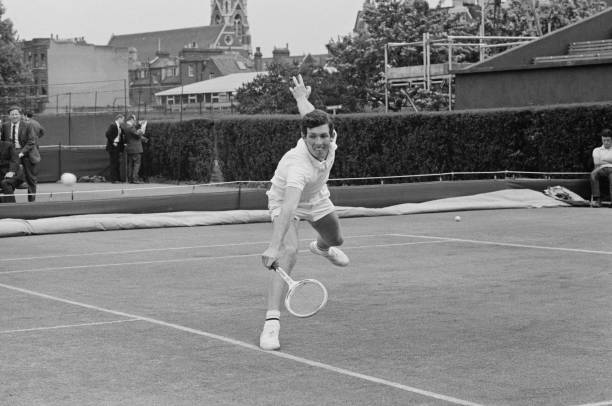
Dick Crealy in 1968

The pace of the tennis calendar in 1973 was unremitting. After the Australian Open, most of the best men played the 15-week World Championship Tennis slate. While the WCT point leaders convened for the tour finals in Montreal and Dallas, many of the others scattered around the globe to play Davis Cup. With one week to go before the start of the French Open, a bit of rest and recuperation must have been in order.

Except… Tennis-loving comedian Alan King set up a tournament at Caesar’s Palace in Las Vegas, to be run by the semi-retired Richard González. Glitz, glamour, and–oh yes–a record-setting $150,000 in prize money. The winner would walk away with $30,000.

Who could say no to that? Aside from European stars committed to play Davis Cup on the Continent, the answer was, approximately, no one. Stan Smith and Arthur Ashe, the last two men standing at the WCT Finals in Dallas, showed up. Rod Laver and Ken Rosewall, too. John Newcombe, who had skipped the WCT circuit in favor of leading the Australian Davis Cup team through its preliminary rounds in Asia, rejoined the fray.

The Vegas event marked a transition for the men’s tour. It was the first tournament run under the auspices of the Association of Tennis Professionals (ATP), the players’ organization founded the previous September. Until that point, the best players typically competed under contract to a circuit, like billionaire Lamar Hunt’s WCT tour. The alternative was to register as an independent pro and play at events sponsored by national federations around the world. The latter course offered more flexibility, but the real money was in the contracts. Thanks to WCT, Laver was a millionaire, and Smith was $50,000 richer after winning the 1973 Finals.

The ATP didn’t set out to displace the WCT, and it wouldn’t do so anytime soon. The primary goal was to give athletes a bigger say in the running of the sport. It would shift the balance away from the national federations that had controlled players’ fates in the amateur era. Those organizations, together with their parent group, the International Lawn Tennis Federation (ILTF), clung to whatever authority they could.

No federations were involved in the making of the $150,000 Alan King/Caesar’s Palace Tennis Classic.

Whatever independence players could achieve, they could not free themselves from the realities of the calendar. On May 15th, top seed Smith lost his opening match to journeyman South African Ray Moore. The same day, second seed Laver fell to big-serving countryman Dick Crealy, crashing out in a 6-0 third set.

“It’s like playing Forest Hills the week after Wimbledon,” Smith said of the Dallas-to-Vegas transition. It was worse than that: Most of the events of the previous four months had been held indoors. Matches in Vegas were outdoors in 95-degree heat.

Laver had an even better excuse. The 34-year-old was physically spent. After coping for weeks with a back injury that hampered his normally awe-inspiring serve, he didn’t trust his body to make his usual service motion. Against Crealy, he missed more first serves than he made.

For the first time in 15 years, the man needed a break. He told the press after the match that he would take “a few months off.” He would miss the French, the Italian, and quite possibly Wimbledon as well.

The Las Vegas first round claimed one more victim of note: Niki Pilić, the 33-year-old veteran from Yugoslavia. He had opted to chase the $150,000 instead of playing Davis Cup against New Zealand in Zagreb. When Pilić lost in straight sets to American Cliff Richey, no one paid much heed. There wasn’t much interest in the new players’ association, either.

That would change. Within a month, the Yugoslavian and the rebels of the ATP would be the biggest names in tennis.

* * *

This post is part of my series about the 1973 season, Battles, Boycotts, and Breakouts. Keep up with the project by checking the TennisAbstract.com front page, which shows an up-to-date Table of Contents after I post each installment.

You can also subscribe to the blog to receive each new post by email:
 

May 13, 1973: Man Wins Tennis Match

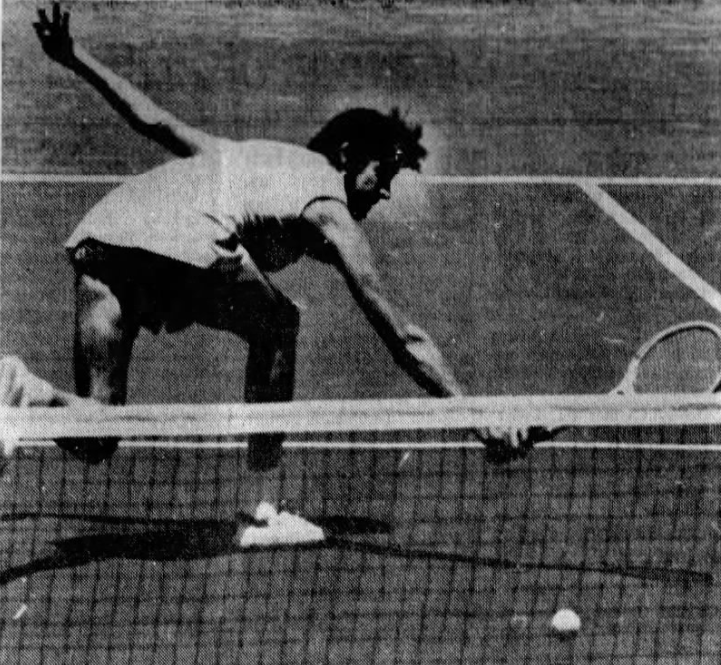
A tough day at the office for Margaret Court

In one version of the story, the idea of Bobby Riggs challenging a leading woman player dated back five years or so, to a casual conversation with Billie Jean King. Riggs, the 1939 Wimbledon champion, and King, the best American woman, thought it would be a lark that they might be able to arrange someday.

By the time Bobby got serious about it, Billie Jean was no longer game. What was in it for her, aside from the $5,000 that Riggs was willing to post? If she won, all she’d establish is that she could beat a pint-sized 55-year-old. If the queen of the Virginia Slims circuit lost, the result would reflect badly on the fledgling women’s tour. Riggs could be a gentleman at close quarters, but when he set out to promote the Battle of the Sexes, he claimed that women’s tennis “stinks. A Riggs victory, he said, would prove that the ladies didn’t deserve anywhere near equal prize money.

Margaret Court accepted the challenge instead, agreeing to a best-of-three match at the remote outpost of Ramona, California. It was slated for Mother’s Day: May 13th, 1973. The clash immediately captured the public’s imagination, and not just within the tennis world. Real estate developers in Ramona kicked in another $5,000 to double the winner-take-all prize pot, and CBS television agreed to broadcast it live.

“This match is unbelievable,” said Riggs. “The eyes and ears of the world are on me. I am the greatest money player in history. I am the finest defensive player in the game. Margaret is the biggest hitter of the girls. What a match! Nobody has a clue how it will go. The mystery of the age. What a deal!”

Riggs was right about one thing: It really did seem up for grabs. Men tended to pick Bobby and women–especially fellow players–lined up behind Court. There were few precedents for a match like this. Don Budge claimed that he made quick work of Maureen Connolly when Little Mo was in her prime. Pauline Betz recalled beating a 55-year-old Bill Tilden. Fred Perry predicted that Court wouldn’t win a single game.

Billie Jean was uncertain. “If Margaret loses,” she said before the match, “we’re in trouble. I’ll have to challenge him myself.”

It was all over in 57 minutes. The kindest analysts said that Court had an off day. Riggs became a “soft wall” and junkballed his way to a 6-2, 6-1 victory. Margaret landed fewer than half of her first serves, and she struggled to generate pace against Bobby’s devilish mix of off-speed stuff. Her forehand was particularly vulnerable. Just a few days before, Budge had told Riggs to attack that wing, as Court’s style of “shoveling” that shot was unorthodox and incorrect.

The result made the front page of the New York Times, a one-paragraph item headlined, “Man Wins Tennis Match.”

For weeks, well-wishers had warned Margaret to ignore Riggs’s chatter and stay wary of his “hustle tricks.” Billie Jean suggested “psychedelic ear plugs.” In the end, none of that mattered. Bobby played his usual game of deadly dinks, and Court collapsed under the pressure. She has been criticized for unwise preparation–she practiced with hard-hitting Tony Trabert before the match–but she spent the entire week before that with coach Dennis Van der Meer, who fed her a Riggs-like mix of junk.

Bobby was gracious in victory. After accepting the winner’s check from John Wayne, he said, “If the match were played on another day under different circumstances, Margaret might easily win by the same score.”

Translation: “Please let me do this again! Please!”

Court said she was up for a rematch. The man-versus-woman concept had proven to be more compelling than anyone had hoped, and Riggs gained a type of celebrity that barely existed when he won the 1939 Wimbledon title.

King caught the match in Hawaii, on her way back from winning a title in Tokyo. When she saw how the spectacle played out, she could only groan. She didn’t trust Court to even the score with Bobby. The next day, she publicly challenged Riggs to a match for $10,000 at her club, the Shipyard Plantation at Hilton Head.

“A match with Mrs. King,” wrote Neil Amdur of the Times, “could rekindle some interest in this format.”

The circus was just getting started.

* * *

This post is part of my series about the 1973 season, Battles, Boycotts, and Breakouts. Keep up with the project by checking the TennisAbstract.com front page, which shows an up-to-date Table of Contents after I post each installment.

You can also subscribe to the blog to receive each new post by email:
 

May 12, 1973: The B Team Heads South

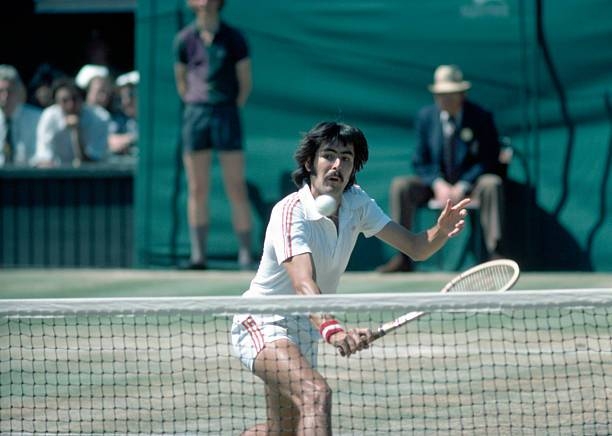
Raúl Ramírez

When the United States opened its 1973 campaign in Mexico City on May 11th, it was already the tenth weekend of the year that featured, somewhere around the globe, a Davis Cup tie. Regional zones around the world progressed on different schedules, and the 53-nation draw made substantial demands of weaker countries. Canada and Colombia held an opening-round tilt in February, and when the Colombians took on Mexico a month later, it was already their third round.

The Americans, by comparison, had it easy. As defending champions, they received multiple byes. A few other countries did as well. The Romanians, among other European squads given first-round passes, wouldn’t get going for another week.

The byes carried a disadvantage, however. Once they took the court, there was no coasting past uncompetitive squads like Canada or Venezuela. The byes also cost Dennis Ralston’s US team the advantage of playing at home. They hadn’t played in the United States for two and half years, and they planned to host Mexico in Little Rock, Arkansas. Mexico protested to the ILTF, which sided with the underdogs. The Americans would head back to Mexico City, where they had swept the 1972 zonal finals just eleven months earlier.

The team that flew south in May 1973 was not the same one that had made the previous trip. Stan Smith, linchpin of the US side, was top seed at the World Championship Tennis Finals in Dallas, contested over the same three-day weekend as the Davis Cup tie. Arthur Ashe and Marty Riessen, the next-best American players, were also in the eight-man WCT draw. 27-year-old Cup veteran Tom Gorman would lead the team instead. Ralston was lucky that Gorman hadn’t played a little better in March and April, or else he might have been in Dallas as well.

In 1972, Gorman had straight-setted Mexico’s Joaquín Loyo Mayo. This year, he found himself opening the tie against a fresh face, 19-year-old Raúl Ramírez. Ramírez had blasted his way through the American Zone, winning four singles and two doubles matches for his country in March. His Davis Cup momentum, combined with his proficiency on clay courts, carried over into the Gorman match. The newcomer made it look easy, defeating the American 6-4, 6-2, 6-3. It was over in less than two hours.

The upset drastically changed the outlook of the tie. Gorman was expected to win both of his singles rubbers. The other American singles options–20-year-old Harold Solomon and 22-year-old Dick Stockton–were less accomplished. Doubles stalwart Erik van Dillen mixed brilliance with a puzzling inconsistency. Suddenly, the Mexicans had a path to victory.

Coach Ralston didn’t relax for three more sets, until Solomon had polished off Loyo Mayo, 7-5, 6-4, 7-5. Solomon’s two-handed backhand and heavy spin were ideal for the surface, his attitude even more so. “He doesn’t have a big serve or volley,” said Ralston. “He’s just tough from the back and he never gives up.”

Knotted at one-all, the visitors were back in the driver’s seat. On May 12th, Gorman and van Dillen beat Ramírez and Vicente Zarazúa, dropping a 14-12 second set en route to a four-set victory. The next day, overshadowed by the exploits of Smith in Dallas and Bobby Riggs in California, Team USA would sweep the rest of the tie. They clinched when Solomon outlasted Ramírez, 8-6, 7-5, 7-5. They would face Chile in the American Zone finals in August.

Having cleared the initial hurdle, Ralston had plenty to look forward to. Smith would likely suit up for the next round, and best of all, they’d finally get a chance to play on home soil.

* * *

This post is part of my series about the 1973 season, Battles, Boycotts, and Breakouts. Keep up with the project by checking the TennisAbstract.com front page, which shows an up-to-date Table of Contents after I post each installment.

You can also subscribe to the blog to receive each new post by email: