May 11, 1973: Meet the New Boss

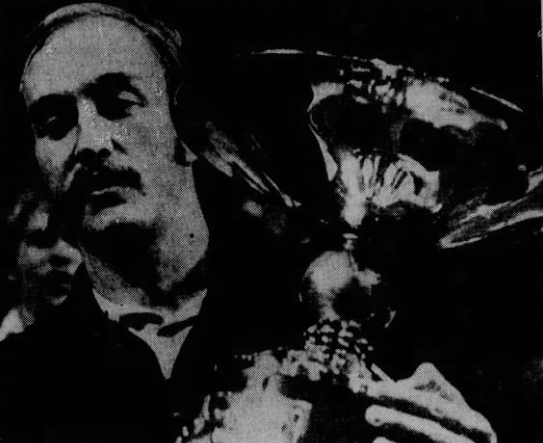
Stan Smith with the WCT Finals trophy

On the rare occasions that Rod Laver lost his cool, he channeled his anger into the ferocious serve-and-volley game that made him the best who ever lived. Imagine the crowd’s surprise, then, when after making 33 errors in a single set against Stan Smith, Laver smacked a ball into the ceiling of Dallas’s Moody Coliseum.

Despite failing to win a major title since his 1969 Grand Slam, Laver was still considered the strongest player in the world by many pundits and fellow players. But the 1973 World Championship Tennis circuit had dented that reputation. Smith beat Laver for just the third time in ten career tries when they faced off in Atlanta in March. Stan did it again a week later. Two weeks after that, the American made it three in a row.

The Rocket won four titles on the 1973 WCT circuit, but none since mid-March. In the meantime, he struggled with a nagging back injury and watched his rival rack up six titles of his own. Smith headed to Dallas as the top seed and prize money leader of the eight-man field. The draw lined up the two men for a semi-final showdown; after perfunctory defeats of Roy Emerson (by Laver) and John Alexander (by Smith), a best-of-five clash was set.

The WCT Finals didn’t have quite the stature of the majors, but the event was getting there. Ken Rosewall had won classic duels from Laver in each of the last two years. More importantly, both were televised. Perhaps more than any other match, the 1972 title bout, with its fifth-set tiebreak, had established tennis as a made-for-TV sport. The veteran Aussies were more concerned with prestige than ratings, but there was a happy medium: The event was probably the fourth- or fifth-most important on the men’s calendar.

Before Laver could play for the elusive title, he’d have to get past Smith. On May 11th, the American started slowly, double-faulting on set point to give the first set to Rocket, 6-4. In the second, though, he once again showed that he could break the Laver serve. Smith made his move in the seventh game and won the set, 6-4. The third frame was the one that drove the Australian over the edge. After Laver vented his frustration, Smith took the tiebreak, 7-2. The two men traded breaks in the fourth, then the American attacked again in the 12th game to break again and take the match, 7-5.

Two days later, Smith finished the job–on national television–by defeating Arthur Ashe, who had knocked out Rosewall in the semis. Stan’s haul for the four-month circuit reached $154,100.

“I don’t know if I’ll ever have another 17 weeks like this,” he said.

The championship, combined with the defeat of Laver, put to rest any doubts that may have lingered after Smith won the 1972 Wimbledon title. Laver, Rosewall, and others were kept out of the 1972 Championships because of their status as contract professionals. (Smith only joined the WCT tour in 1973.) The Wimbledon field was plenty strong, but no competition was truly complete without the Australian superstars.

“Before today I thought Rod was the best and then Kenny had won the other two WCTs so he had to be right up there, too,” Smith said after securing the title. “Today is the first time I feel comfortable saying I’m maybe the best in the world.”

* * *

This post is part of my series about the 1973 season, Battles, Boycotts, and Breakouts. Keep up with the project by checking the TennisAbstract.com front page, which shows an up-to-date Table of Contents after I post each installment.

You can also subscribe to the blog to receive each new post by email:
 

May 9, 1973: Side Action

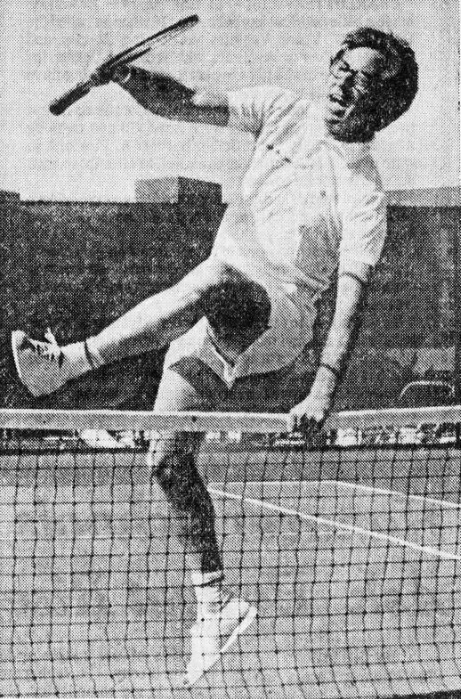
Oh, to be young again

On May 9th, 1973, tennis was four days away from what one Los Angeles-area columnist called the sport’s “biggest day ever.” Fans across the United States could watch the World Championship Tennis final match from Dallas–featuring, perhaps, Stan Smith and Ken Rosewall–on NBC. A few hours later, they could tune into CBS and watch 55-year-old Bobby Riggs challenge Margaret Court in the much-hyped “Battle of the Sexes.”

Riggs called it “the match of the century.” He had ballyhooed the date so relentlessly that he might have believed it.

Everyone knew that the Riggs match didn’t really matter, that a contest between a male has-been and a female superstar wouldn’t settle anything. One Wisconsin newspaper urged its readers to watch the WCT final–that would be real tennis. But no matter how big Smith served, or how beautifully 30-somethings Rosewall and Rod Laver continued to play, the Battle of the Sexes was the event on everyone’s lips.

So, with the big day in sight, what was Bobby doing? At home in Newport Beach, he could’ve walked to a half-dozen tennis courts. But he preferred to drive 120 miles into the desert to the La Costa Racquet Club, where his long-time buddy Pancho Segura was the resident pro. The five-foot, eight-inch Riggs–Court was an inch taller–did a bit of running and played a few sets of tennis, preferably for money. When Bud Collins called for an interview, Bobby offered him a match with “two chairs”–Bud could put two chairs anywhere on Riggs’s side of the court to slow him down.

Most of all, the long-ago Wimbledon champ spent his time working the phones. After retiring as a full-time pro two decades earlier, he had tried his hand at promotion. Results were mixed, but never for a lack of effort. Riggs had a minute for anyone who asked.

If you wanted to bet against him, look no further: Bobby had “plenty of side action” on the match, though he questioned the odds out of Las Vegas that made him a 7-5 favorite. He claimed it was a tossup. “She plays like a man, I play like a woman,” he said. “She’s younger and stronger, bigger and faster. She’s got a better serve, a better volley and a better overhead. She’s got me beat in every department except, maybe, thinking, strategy, experience.”

It was true: Riggs’s brain was the only thing that could keep up with his mouth. “He has one of the quickest, most fertile minds I’ve ever seen,” said Bill Talbert, a former US National doubles champion. “His mind is always darting from one thing to another.”

“Half the time,” added Segura, “I don’t know what he is saying.”

Court, for her part, was lying low in San Francisco. She practiced with coach Dennis Van der Meer and got daily treatments on her legs, which had cramped up the week before at Hilton Head.

One reporter, seeking a fresh angle on the most-covered tennis story of the year, called up Richard González, the 45-year-old legend who had had his share of encounters with Riggs. González was busy preparing for a tournament at Caesar’s Palace in Las Vegas, the Alan King Classic. The event was just a week away. Its purse of $150,000 was yet another prize money record for 1973.

Gorgo’s take on the exhibition that was hogging all the publicity? “I couldn’t care less.”

But like everyone else, González had an opinion. “I sort of think Margaret can win it,” he said. “But I still couldn’t care less.”

* * *

This post is part of my series about the 1973 season, Battles, Boycotts, and Breakouts. Keep up with the project by checking the TennisAbstract.com front page, which shows an up-to-date Table of Contents after I post each installment.

You can also subscribe to the blog to receive each new post by email:
 

May 6, 1973: It Takes Two

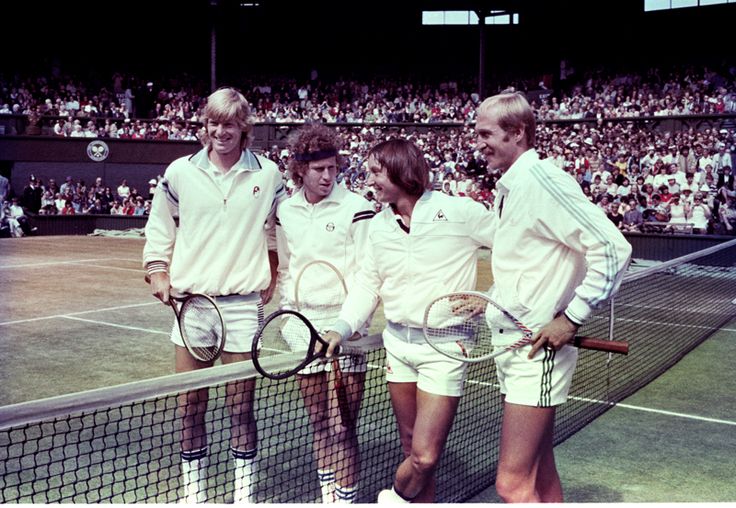
Left to right: Peter Fleming, John McEnroe, Bob Lutz, and Stan Smith

For the May 1973 issue of Tennis magazine, five-time US national doubles champion George Lott rated the ten best doubles teams in history. He had plenty of respect for his pre-war peers–Vinnie Richards made the list with two different partners–but he wasn’t afraid to give credit to the strongest lineups in the modern game.

Atop Lott’s list was the Aussie duo of John Newcombe and Tony Roche, winner of ten major titles up to that point. Four more contemporary Aussies made the list: Rod Laver and Roy Emerson came in at sixth, while Ken Rosewall and Lew Hoad ranked tenth.

Missing from the table–an omission Lott might have corrected had he revisited the list a few years later–was the American pair of Stan Smith and Bob Lutz. The two men had led USC to national championships the late 1960s, then burst onto the pro scene with a title at the 1968 US Open. They missed a few years’ worth of opportunities to team up–especially in Davis Cup–because Lutz joined the World Championship Tennis circuit before Smith did. When Stan finally switched sides for the 1973 campaign, the duo could reunite on a full-time basis.

WCT didn’t just have a tour-ending championships–coming up in the second week of May–it had a wholly separate doubles event. This one was held in Montreal, and the winning team would collect $40,000, the richest-ever prize for a doubles-only tournament. Smith and Lutz, with two tournament victories on the season, were the top seeds in their group.

On May 3rd, the American duo overcame a barrage of bad line calls to defeat Niki Pilić and Allan Stone in a four-set first rounder. Two days later, Lutz took the starring role over his better-known partner as the team withstood Laver and Emerson in a four-set match that went through three tiebreaks.

The title match, on May 6th, was a cakewalk by comparison. The challengers, Marty Riessen and Tom Okker, had played well past midnight to defeat Rosewall and Fred Stolle in the semis. Less than 12 hours later, they were back at it. But not for long: Smith and Lutz took the final, 6-2, 7-6, 6-0. Riessen and Okker had to settle for a mere $8,000 apiece.

Where, George Lott might have asked, were Newk and Roche? Roche was coming back from injury, playing a minor-league circuit in the States. Newcombe had taken a break from the weekly grind of World Championship Tennis, so he was ineligible for the big bucks in Montreal. Instead, he was spearheading a group of countrymen in Asia as they fought to regain the Davis Cup. Laver, Emerson, Rosewall, and Stolle were probably more concerned with the action half a world away in India than they were with their own results in Canada.

Concerned–but not worried. After a scare in Hong Kong a couple of weeks earlier, the Aussies were ready for Vijay Amritraj, the dashing Indian youngster. Amritraj and his teammate-brother Anand had the home court advantage in Madras, but not much else. On the first day of play, Newcombe and Mal Anderson conceded just seven games in six sets. While the doubles rubber was closer and the humid conditions favored the hosts, Newk and Geoff Masters sealed the tie in four sets.

The Australians’ relief was two-fold. Indian security forces were concerned that Pakistani terrorists would attempt to kidnap the athletes, a particularly vivid threat just eight months after a massacre of Israeli Olympians in Munich. The visitors were guarded by machine gun-wielding troops, so Newcombe and his teammates spent the trip hunkered down in their hotel rooms. Somehow they managed to muster the focus to get through the tie.

Now, both groups of Aussies–Newk and his buddies at home in Oz, and the WCT crew in North America–could sit back and wait. They had a place in the Inter-Zonal semi-finals, to be contested in November. They wouldn’t even know their opponent for months. Davis Cup ties were spread all over the Continent this weekend: Bulgaria beat Belgium, Norway stopped Denmark, and New Zealand snuck past Austria, to name just three. It was just the beginning: There were three more rounds to go before a European side earned a place against Australia. Davis Cup wasn’t just a measure of skill, it was a test of commitment.

That test was a little tougher to pass each year. Who–aside from Newcombe–would pass up a shot at $20,000 to play a Davis Cup zonal tie in India? Smith captured the ambivalence in a post-match interview. “I suppose it’ll be kind of nice,” he said, “to tell our grandchildren some day that we won the first doubles championship.” After all, the poor kids will be begging for something different after the 100th telling of how Grandpa and his friends won the Davis Cup.

* * *

This post is part of my series about the 1973 season, Battles, Boycotts, and Breakouts. Keep up with the project by checking the TennisAbstract.com front page, which shows an up-to-date Table of Contents after I post each installment.

You can also subscribe to the blog to receive each new post by email:


May 5, 1973: The Drop Shot Queen

Can’t tell what Rosie Casals will do next? You are not alone.

The 1973 Virginia Slims tour got some criticism for being so top-heavy. Margaret Court won nearly everything. When Billie Jean King was healthy, it could be a two-woman show. Rosie Casals was perhaps third in line, but even she was a tier below the headliners. In eleven events before the Family Circle Cup, she had reached the semi-final at each one. She went 2-9 in those semis. She was 0-2 in finals–against, of course, Court and King.

Rosie was a shotmaker without compare, a skill that made her and Billie Jean the best doubles team in the world. What held her back–and she readily agreed with this–was the mental side of things. (It didn’t help that she was 5-feet, 2-inches tall, either.) But with a record-setting prize at the $100,000 tournament in Hilton Head, she was able to focus. “You’ll go a long way for $30,000,” she said of the first-place check, “even to the point of concentrating.”

The first sign of the improvement came in the semi-finals, against King. Rosie had lost to her long-time pal 14 times in a row, apart form the famous double default at the 1971 Pacific Southwest. Five of their last seven meetings had come in semi-finals, in which Casals had failed to win a set. This time, however, Rosie kept her concentration and took advantage of a subpar Billie Jean. King acknowledged that she had never really gotten going in 1973.

That set up a final with Nancy (Richey) Gunter, who upset an ailing Court in the quarter-finals. The crowd couldn’t have asked for a better contrast. Gunter was a slugging baseliner; Casals was the creative netrusher. The New York Times called it “a marvelous final that dispelled notions over the inability of women to generate excitement on slow clay courts.”

(That’s what passed for a compliment in the early days of professional women’s tennis.)

It was a high-quality match from start to finish. The fifth game of the first set ran to 14 points, 8 of which were ended by winners. Gunter seized the opener, 6-3, before Rosie’s drop shots took their toll. Casals ultimately hit 30 of them, dragging her opponent into unfamiliar territory at the net–and taking advantage of Nancy’s fatigue from the rapid-fire, four-day event. Gunter spent most of the second set guessing wrong, losing 6-1 as Rosie unleashed droppers off of both her forehand and backhand wings.

Still, Gunter nearly claimed the $30,000. She came within two points of victory at 5-4, 30-15 in the decider. Casals evened the game with a chalk-spitting drop shot, then took the advantage with a passing shot winner when a befuddled Gunter came forward of her own accord. Rosie held for 6-5, then triumphed in a remarkable 43-stroke rally at 30-all in the 12th game. Gunter missed a forehand to give Casals the set and the match, 7-5.

“I didn’t want a tiebreaker,” said the champion. “I don’t think I could have made it.”

Rosie more than doubled her prize money on the year to a total of $58,500. Only Court had won as much in 1973. Only a handful of women had ever done so well from a single year of tennis, and it was still May.

With the match behind her, Casals could finally relax. The wisecracking Californian was as good an interview as ever. Asked who she would like to thank, she had a list ready: “Nancy, Margaret, Billie Jean–and everyone else who lost.”

* * *

This post is part of my series about the 1973 season, Battles, Boycotts, and Breakouts. Keep up with the project by checking the TennisAbstract.com front page, which shows an up-to-date Table of Contents after I post each installment.

You can also subscribe to the blog to receive each new post by email:
 

May 4, 1973: A British Disgrace

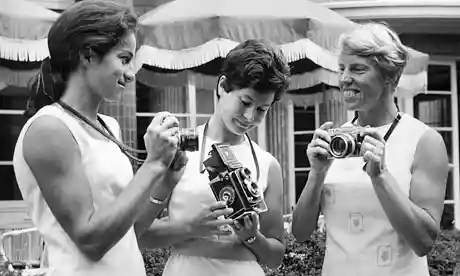
Virginia Wade, Joyce Williams, and Ann Haydon Jones at Wimbledon in 1969

The Federation Cup barely registered on the packed tennis calendar. The international women’s team competition was still relatively new: The ILTF launched it in 1963. The arrival of the Open era almost immediately shunted it to second-tier status, as the game’s stars increasingly focused on prize money, none of which was available here.

1973 couldn’t have driven the point home any more clearly. At the same time that women’s teams from South Africa to Norway to Korea competed for the Cup, $100,000 was at stake in Hilton Head, South Carolina. Needless to say, plenty of stars were missing at the quaint, old-world club in Bad Homburg, Germany where the one-week event was held.

Virginia Wade, however, was always ready to wear the colors. She had played every installment of Federation Cup since 1967. She led the British squad to runner-up finishes in each of the previous two years, falling to the hosts–Australia in 1971, South Africa in 1972–each time. Aside from another Cup stalwart, Evonne Goolagong, Wade was the best player there.

She had extra motivation, as well. The British team was well-financed, with cash prizes for players who recorded wins. The arrangement was not entirely novel, but the fact that it became public–even discreetly–was rare.

The Brits knew there were no guarantees, especially if it came down to a final against Goolagong and the Aussies. But Wade’s side had never, in a decade of Federation Cup play, failed to reach the semi-finals. With so much top-tier talent missing, anything less was unacceptable.

The 30-country field was whittled down to eight in a just a few days of best-of-three-match ties. Two nations didn’t play at all: Poland refused to compete because of South Africa’s participation, and Chile’s team didn’t show up at all. (It’s possible they stayed home for the same reason.) There were few early surprises. The United States needed a deciding doubles rubber after an unknown Korean named Jeong Soon Yang upset Patti Hogan. But the Americans weren’t expected to make a deep run anyway: The four-time champions were missing a football team’s worth of stars. Billie Jean King, Rosie Casals, and Nancy Gunter were at Hilton Head, and Chris Evert was finishing her senior year of high school.

On May 4th, Great Britain took on Romania in the quarter-finals. Romania was well-known for its exploits in the men’s game: Ilie Năstase was arguably the best player in the world, and with Ion Țiriac, he had made his country a perennial Davis Cup contender. The women had no such résumé. Veteran Judith Gohn was no threat against someone like Wade, and unknowns Mariana Simionescu and Virginia Ruzici were 16 and 18 years old, respectively.

Embed from Getty Images

Simionescu (left) and Evert in 1980, when both were married to fellow tennis pros

Wade dispatched Gohn with ease, handing off the baton to Joyce (Barclay) Williams, a 28-year-old Scot who had reached the quarter-finals of the US Open two years earlier. Alas, the British number two had no way of preparing for this crucial rubber. Lance Tingay captured the youthful verve of Simionescu:

She exploded into action, this strong, jolly lass of only 16, who laughed when she hit winners, laughed when she had winners hit against her and laughed when she fell over. And what fine winners hers were!

Simionescu’s forehand was “forked lightning,” the best weapon off that wing of any of the women in Bad Homburg. While she was every bit as inconsistent as you’d expect of a hard-hitting, inexperienced teen, she pulled out the victory, 6-3, 6-8, 6-3.

That left the stage open for Virginia Ruzici. Veteran journalist David Gray, who sang Simionescu’s praises nearly as heartily as Tingay did, judged Ruzici to be even more talented. The Romanians played as if they had nothing to lose, and the attack of Gohn and Ruzici snatched the deciding doubles rubber from Wade and Williams, 7-5, 6-2.

More than anything else, the British defeat was a reminder that women’s tennis was–finally–truly global. A dozen years earlier, the only international women’s competition was the Wightman Cup, which pitted the Brits against a United States squad each year. Now there were 28 more nations to contend with, most of them outside the Anglosphere. Romania hardly had a presence in the women’s game just a few years earlier; now they were two rounds away from a Federation Cup title.

This being 1973, though, it wasn’t that simple. Romania, like Poland, objected to the inclusion of South Africa in international sporting competitions. All of the sudden, the surprise victory against the UK set up a semi-final against South Africa. The Romanian coach had instructions from the upper reaches of his government to default such a tie if it arose. The country’s Davis Cup team had done so just five years earlier.

ILTF and federation officials spent the rest of the day in a flurry of diplomacy. For five hours, phone calls and telegrams bounced back and forth between Bad Homburg and Bucharest. The semi-final was rescheduled from Saturday morning to Saturday afternoon to give the negotiations more time. At last, the Romanians agreed to play. The potential for glory was, at least this time, on this stage, greater than the implicit approval of the apartheid regime.

The unexpected political brouhaha had at least one positive effect: It pushed the British loss out of the UK papers. No one was happy about the early exit, but it was easy to forget. This was, after all, just the Federation Cup. There were bigger events in tennis happening around the world, and the next two months would bring a crop of exploits and controversies guaranteed to keep British tennis fans focused elsewhere.

* * *

This post is part of my series about the 1973 season, Battles, Boycotts, and Breakouts. Keep up with the project by checking the TennisAbstract.com front page, which shows an up-to-date Table of Contents after I post each installment.

You can also subscribe to the blog to receive each new post by email:
 

May 3, 1973: Chasing $30,000

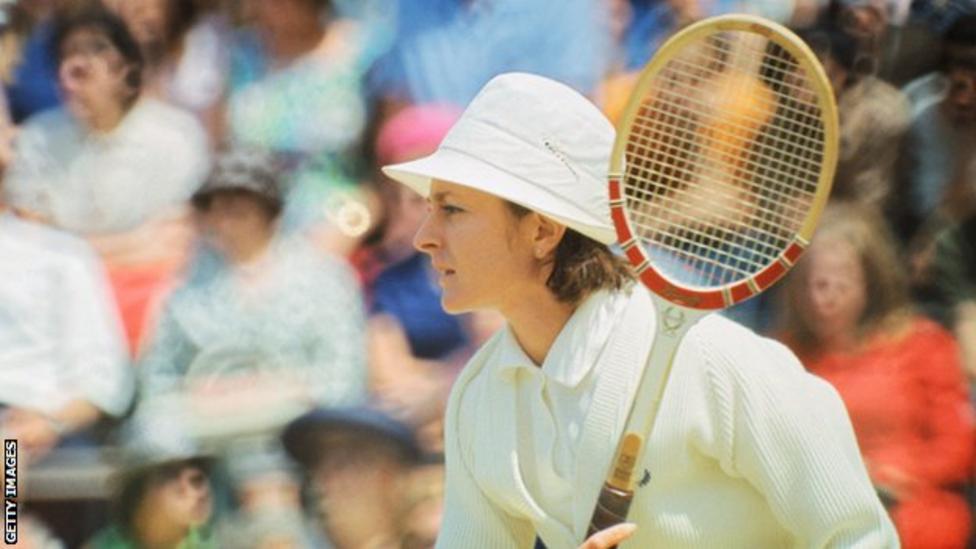
Nancy (Richey) Gunter

The Family Circle Cup wasn’t officially a circuit-ending championship, like the men’s WCT doubles finals in Montreal the same week, or the WCT singles finals in Dallas the week after. But it might as well have been. The Virginia Slims women’s tour settled its conflict with the USLTA just in time for 16 of the best players in the world to compete for record-setting prizes.

For Margaret Court, it was her final tournament before taking on Bobby Riggs in a much-anticipated exhibition. Billie Jean King was healthy again, and she no longer had to worry about fighting an international legal battle just to enter Wimbledon. Chris Evert and Evonne Goolagong remained outside the Slims fold, but this week even offered an apparent Evert clone: 17-year-old Floridian Laurie Fleming. Fleming won four qualifying rounds, then demolished veteran Julie Heldman for a place in the quarter-finals.

A likely Court-King final was nothing new: The two women had been facing off for more than a decade. This week’s story was the prize pot that one of the stars would take home. This wasn’t just the Family Circle Cup, it was the $100,000 Family Circle Cup, with a $30,000 check for the singles winner. No women’s tennis tournament had ever offered such a rich reward. In fact, it was the biggest prize in the history of women’s sports altogether.

Most of the 16 ladies in Hilton Head had been competing for years with five-figure stakes on the line. But this was something different. They could be forgiven a few jitters this week.

On May 2nd, the first day of play, the nerves-of-steel award went to Nancy (Richey) Gunter, a 30-year-old veteran with two major titles to her name. In the first round, she drew Frenchwoman Françoise Dürr. Dürr had come through qualifying and had vast experience on slow surfaces like the South Carolina clay. After a see-saw battle, Dürr reached match point in the third set. Gunter saved it–and two more–to force a tiebreak. The Frenchwoman came close again in the sudden-death, first-to-five-pointer, taking a 4-2 lead. But Gunter, perhaps the strongest baseliner in the women’s game, cracked three winners in a row to fend off Dürr and advance to the quarters.

Not for nothing did Cliff Richey–Gunter’s brother and a top player himself–say that Rafael Nadal reminded him of Nancy.

Waiting in the round of eight was top seed Margaret Court. The Australian had dominated Gunter for years, winning 11 of 12 since 1965, including their last five meetings. But after dispatching 16-year-old Kathy Kuykendall in the first round, Court came down with a cold. Three victories away from a financial windfall and ten days ahead of her match with Riggs, Margaret’s body betrayed her.

On May 3rd, a sluggish Court dropped the first set to Gunter, 7-5. She mustered the energy to even the score with a 6-1 second set, then grabbed a 2-0 edge in the third. Just when she had secured the momentum, leg cramps struck. She stalled so much that umpire Mike Blanchard threatened a default. Margaret’s husband Barry told a reporter, “She’ll stay in there until she gets cramps on her hands.” He recommended that she play without shoes to improve her circulation. Through some combination of socks, stalling, and sheer stubbornness, Court reached 5-2, 40-15 on her own serve.

For the second day in a row, Gunter played her best with her back to the wall. She saved the match points, and after breaking the Australian’s serve, didn’t allow her another game. Court was in no shape to compete; it just took Nancy a little while to react appropriately. The American took the match by a final score of 7-5, 6-1, 7-5.

Gunter’s victory earned her a substantially bigger chunk of that $100,000 prize pool, along with a semi-final date with third-seed Kerry Melville. King and Rosie Casals comfortably advanced to fill out the final four. While Court was optimistic that her illness would pass, she would have to head to California–and her date with Bobby Riggs–on a losing streak.

* * *

This post is part of my series about the 1973 season, Battles, Boycotts, and Breakouts. Keep up with the project by checking the TennisAbstract.com front page, which shows an up-to-date Table of Contents after I post each installment.

You can also subscribe to the blog to receive each new post by email: