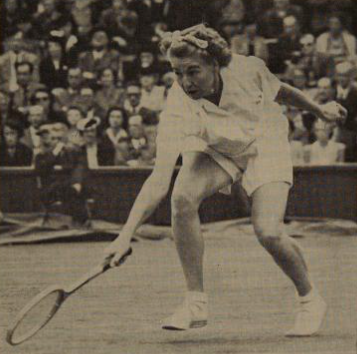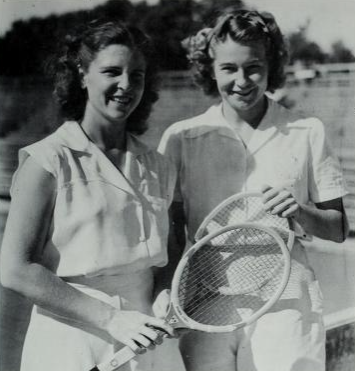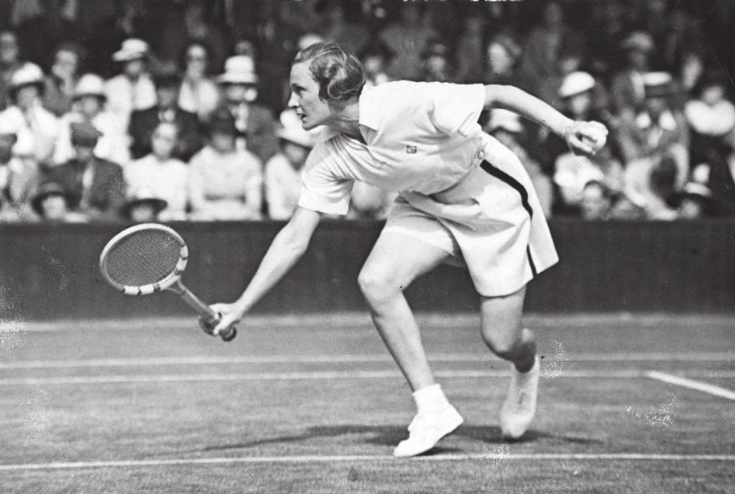
The Tennis 128: No. 51, Hana Mandlíková

Hana Mandlíková in 1980

In 2022, I’m counting down the 128 best players of the last century. With luck, we’ll get to #1 in December. Enjoy!

* * *

Hana Mandlíková [CZE/AUS]
Born: 19 February 1962
Career: 1978-90
Plays: Right-handed (one-handed backhand)
Peak rank: 3 (1984)
Peak Elo rating: 2,316 (3rd place, 1986)
Major singles titles: 4
Total singles titles: 27
 

* * *

7-6, 3-1, 40-15. Hana Mandlíková’s second time in the Wimbledon round of 16, and she was only a few volley winners away from a place in the quarters. Across the net was the veteran Evonne Goolagong, a player just as graceful as Hana, but with considerably less of the youthful fire that made the 18-year-old Mandlíková the most watchable woman on tour.

The fourth-round contest could have represented a passing of the torch from one generation’s most stylish one-handed backhand to another. Instead, it degenerated into a farce. Mandlíková missed serves, biffed volleys, and double faulted to let her opponent back into the match. From 2-3 in the second set, Goolagong won ten of the next eleven games and a spot in the final eight.

A collapse of that magnitude at Wimbledon would have been enough to make a reputation for years. Indeed, six years later, Mandlíková would say, “Every player has a label; one is a choker, one is a quitter…. Sometimes, I don’t think I get enough credit.”

She may have been right about that. But if anyone ever deserved the “choker” tag–or the less loaded version, that of a “talented flake”–it was Hana.

The week before the Wimbledon loss to Goolagong, Mandlíková fell apart in even more shocking fashion against Tracy Austin at Eastbourne. She won the first set 6-1 and held a game point for 4-0 in the second. After losing that game, she failed to convert another three chances to go up 4-1, then another three opportunities for 4-3. She never did win that fourth game of the second set, and she went out limply in the third, 6-2.

“She can go through a streak of form when I don’t really know what to do, so I just hang in there,” Austin said after the match. “This was the best comeback I have ever made.”

Hana had a knack for helping her peers achieve memorable comebacks. The Eastbourne defeat was already her fourth loss of the season to Austin, all of them in three sets. Only a few months past her 18th birthday, she had already lost 12 professional matches after winning the first set.

* * *

A lot of ink would be spilled over the following decade in an attempt to explain the perplexing Miss Mandlíková. She would struggle with injuries while still in her teens, and no matter how much she matured, the dominant duo of women’s tennis–Chris Evert and Martina Navratilova–would make it impossible for her to get a handhold at the top of the ranking ladder.

The raw talent was never, ever in doubt. The International Tennis Federation introduced their world junior rankings in 1978, and Hana was its inaugural number one. She won her first adult tournament in Europe the same year, at age 16. In 1979, she needed just three events on the Avon Futures circuit before winning one and gaining promotion to the top level of tournaments in North America.

Mandlíková made her first big move at the end of the 1979 campaign. She claimed three titles in four weeks leading up to the Australian Open, knocking out veterans Sue Barker, Dianne Fromholtz, Virginia Ruzici, and Wendy Turnbull. In early 1980, she took a set from Navratilova in the Amelia Island final, then pushed Evert to three sets at both the Italian and the French.

Embed from Getty Images

17-year-old Mandlíková at Wimbledon, in 1979

The Roland Garros semi-final against Evert was, for many, the introduction to Czechoslovakia’s latest star. For the Washington Post, Barry Lorge wrote of Hana’s “great athletic gifts … bursts of inspiration and mental lapses.” He continued, “She has so many shots, she sometimes doesn’t seem to know which to call on, and seems to have little concept of percentage play.” As in so many matches that season, Mandlíková seemingly disappeared. She won a topsy-turvy first-set tiebreak, then managed only four games the rest of the way. Evert ran off 16 points in a row to open the deciding set.

Regardless of outcome, Hana’s game was immensely appealing. She reminded fans of Goolagong and Maria Bueno, two of the most popular players of the previous two decades. She showcased immense variety, especially off the backhand side. Her netrushing came naturally–her father was an Olympic sprinter–and she pulled off shots at net that even Navratilova didn’t dare dream of.

What neither the press nor Mandlíková’s growing legion of fans recognized was the difficulty of life on the circuit for a teenager from the Eastern Bloc. Jan Kukal, a former tour player and Czech Davis Cup coach, worked with Hana in the early 1980s. He told Peter Bodo in 1984:

She had trouble with the language and, of course, the way of life was to her very strange. To me, it isn’t fair when people speak of Hana as a great talent who is weak or who doesn’t have good discipline for tennis. It makes it sound like she came up easy, like she had no problems to reach a high position. Actually, survival was difficult for her even before her trouble with injuries or motivation.

Kukal’s comments don’t entirely explain why the talented teenager was so strong early in matches and so weak when victory neared. But on a tour dominated by Americans and Australians, held mostly in English-speaking countries, Mandlíková faced challenges much more vexing than finding someone to restring her racket.

* * *

If Hana was indeed a choker, she didn’t seem to suffer any aftereffects. The collapse against Goolagong would’ve destroyed many careers. It was a mere stepping stone for Mandlíková.

In 1980, the teenager began working with Betty Stöve, the Dutch player who had reached the Wimbledon final in 1977. Stöve provided tactical savvy and training advice. Perhaps more importantly, she was a friend who helped Hana navigate life on tour.

The breakthrough came just two months after Wimbledon, at the US Open warmup in Mahwah. The Czech won her first title of the season, defeating Navratilova and Andrea Jaeger in three sets apiece. She took the first set from Martina, dropped the second, yet somehow held on for the victory.

For a player of Hana’s flightiness, such a win might have proved as meaningless as the collapse at the All-England Club. Instead, she built on it. Seeded ninth at the US Open, she drew Navratilova in the round of 16 and beat her in straights. Another narrow escape against Jaeger earned her a place in the final. Playing for the title against Evert, it was the French Open all over again. Mandlíková won the first set, then Chrissie took over. Final score: 5-7, 6-1, 6-1.

The pattern was remarkable. Between Roland Garros and Flushing Meadows, the two women met three times. Hana won the first set of each contest. Evert swept the rest, never losing more than two games per set.

Embed from Getty Images

Mandlíková in 1984 with Stöve, whose
expertise went beyond the tennis court

Still, the US Open final represented a step forward for the 18-year-old. She finally beat Chrissie (in straights!) a month later in Atlanta and piled up four more titles before the end of the year. One of them was the Australian Open, marking her first major championship just a few months after her debut appearance in a grand slam final.

* * *

Hana continued her fine form at majors into 1981. She won the French, beating Evert in the semi-finals. It was Chrissie’s first loss at Roland Garros in eight years. The final, against sixth-seeded Sylvia Hanika, was a mere formality in comparison.

At Wimbledon, Mandlíková beat Martina in the semi-final. Once again, she took the first set, lost the second, and somehow recovered to win the third. Evert got her revenge in the final, skipping the first-set drama and dispatching Hana, 6-2, 6-2.

The Czech had reached four consecutive grand slam finals, winning two of them. Remarkably, she wasn’t even at full strength. A few years later, Stöve told Bodo, “When she won the French, she was only able to warm up for 10 minutes before her matches, that’s how much her back hurt…. Hana actually withdrew from Wimbledon, but changed her mind after five minutes and re-entered.”

Hana in motion, in 1981

Mandlíková later suggested that her back spasms were triggered by nerves. Whatever the cause, they slowed her down, and they would linger for years.

Another problem she had to contend with in 1981 was the ranking system. The WTA algorithm at the time was an average, not a cumulative point total. It was also very complicated, and the tour did a poor job explaining it to players and fans.

Somehow, it was possible to reach the final of four straight majors and still be ranked fifth. In practical terms, there was an enormous difference between fourth and fifth. Any time the top four players entered a tournament, number five could face Evert or Navratilova as early as the quarter-finals. That was Mandlíková’s fate in Toronto, where Chrissie beat her in straight sets. Hana’s draw in Flushing was the same. Evert unceremoniously ended her slam final streak, 6-1, 6-3.

This particular fifth-ranked player, understandably, didn’t like it. (It didn’t help that no one understood it.) She felt she’d have a better chance against Evert later in tournaments. She was right to be skeptical of the computer. In 2019, a researcher applied a later WTA ranking algorithm to results from 1980 and 1981. He found that Mandlíková not only would’ve cracked the top four, she would’ve been number one for much of that summer.

My historical Elo ratings disagree. That formula ranks Hana fifth for the entirety of the 1981 season, behind Evert, Navratilova, Austin, and Jaeger. Mandlíková’s inconsistency, winning Roland Garros one week, dropping a decision to qualifier Kim Sands at Eastbourne two weeks later, counts against her in many ranking systems. Still, she was a bigger threat at the majors than Elo–or the WTA computer of the time–gives her credit for.

* * *

5-3, 30-love. In March of 1985, Mandlíková had bounced back from injuries and apathy and appeared ready–again–to dislodge the best players in the game. It was the semi-final of the Virginia Slims Championships, and she was two points away from taking the first set from Navratilova.

After Martina lost to Hana at Wimbledon in 1981, she dominated her younger rival. For much of that span, the fitter-than-ever Navratilova crushed everyone. She won nine matches in a row against Mandlíková. Part of it was Hana’s own punchlessness: she dropped eleven straight to Chrissie, as well.

The stylish Czech slipped a level, but she never lost her self-belief. After losing to Evert at the 1983 French Open, she said, “I think I am a much better player than Chris. If I’m in good shape, I beat her two-and-two.”

(After another Hana boast, Chrissie responded, “I guess she should be cocky. She beat me three years ago.”)

In 1984, Mandlíková beat Martina in Oakland, snapping a 74-match win streak. In Princeton the following year, she ousted Navratilova 7-5, 6-0. Martina lost only two bagel sets in seven years, and Hana was responsible for both of them.

Hana and Martina in the 1986 Fed Cup

Still, a second consecutive upset proved to be a bridge too far. From 5-3, 30-love, Navratilova won four straight points. Martina saved a set point at 4-5. Hana’s 44 winners were impressive, but they weren’t quite enough to do the job. The match went to the veteran, 7-5, 7-6.

Sports Illustrated called it “some of the finest shotmaking ever seen in women’s tennis.” Mandlíková’s confidence remained unshaken. She would concede only that her opponent “was luckier today—not a better player—just luckier.”

* * *

5-0, 40-30. Six months later, Mandlíková and Navratilova were at it again, now at the 1985 US Open. Hana had failed to capitalize on her big wins (and “unlucky” near-misses) from the beginning of the season, losing in the quarters in Paris and the third round at Wimbledon. At Manhattan Beach in July, she turned in a classic Hana performance, losing to Claudia Kohde Kilsch despite leading one set 5-1 and the other 5-2.

Mandlíková reached the final after surviving a challenge from Evert in the semis. It was only Hana’s second victory against the American in her last fifteen tries, and unlike so many of their previous matches, it was Chrissie who won the first set, and the Czech who came back to win.

Hana rode her momentum into the final for 17 minutes. In that time, she won five games and earned a set point on Martina’s serve. The stadium, presumably, held its collective breath. Navratilova saved the break point with a backhand winner, then held for 5-1. Another backhand, an aggressive return of Hana’s second serve, got Martina a break for 5-2.

And so it went. Navratilova broke again–at love–for 5-4. At 5-all, Hana fell to love-40 before she finally reacquainted her brain with her right arm. She saved eight break points (and squandered three game points of her own) before finally holding for 6-5. Martina was the one who crumbled in the tiebreak, converting only one of her five service points and dropping the breaker, 7-3.

At its best, the match featured the same jaw-dropping net play that characterized the Slims Championship semi-final in March. As Stöve told her charge, “It’s a battle of who gets to the net first.” Both players moved forward over 100 times. If one of them didn’t serve-and-volley, the other would often charge in behind the service return. Mandlíková was the only woman capable of holding her own against the Navratilova attack.

Embed from Getty Images

At the 1985 US Open, Hana was hitting shots
like this even before the final.

Except for when she couldn’t. Hana lost the second set, 6-1, allowing her opponent 11 of 12 points in one stretch.

But as ever, Mandlíková’s form returned as quickly as it disappeared. A brilliant mimic, one of her strokes could go astray simply because an opponent was hitting her own badly. In this final, there was no chance of getting into a rhythm. The average rally lasted less than three strokes.

Hana once again reengaged, and she served for the match at 5-3. Martina broke her–of course–this time with an opportunistic forehand passing shot. The next three games were comfortable holds, and the title would be decided in a shoot-out.

Finally (finally–finally!), Mandlíková got hot at exactly the right moment. She won the first six points of the breaker, landing all but one of her first serves. None of them came back. On her third match point, she put away a backhand volley, and she became a US Open champion.

* * *

For years, it seemed that every feature article about Hana asked the same questions. Had she changed? If not: Could she change? It’s an irresistible hook when writing about immature, inconsistent, or otherwise inscrutable athletes.

In some ways, the answer was yes. She eventually became more comfortable speaking English, got used to life on tour, and–for the most part–learned not to say the first thing that popped into her head about the shortcomings of her fellow players. Her tactical sense improved, and she got better at closing out matches.

But at the level that really mattered, the answer was no. While late-career Hana was an improvement on the teenage version, the results didn’t differ much. The cumulative effect of injuries had some say in that. Navratilova had an even bigger influence: After the 1985 US Open final, the two women played 16 more matches, and Martina won 15 of them. Hana’s consolation prize was the title at the 1987 Australian Open, the last time the pair met in a final.

What truly never changed was Mandlíková’s belief in her own abilities. By the end of her reign at number three, she no longer trailed Evert. Now she had to chase Steffi Graf. Before she lost in the fourth round at the 1987 US Open, the New York Times described Hana as “undaunted.” She thought Graf’s time at the top wouldn’t last long: “When I was 18 and I look at how mentally immature I was, I just can’t see it.”

The one time Mandlíková beat Graf, it wasn’t easy

Twelve months later, Graf would hold the Grand Slam and erase all doubts. Mandlíková, struggling with a heel injury and waning motivation, was on her way out.

It’s a shame, because while Hana lost seven of her eight meetings with Steffi and may never have made any progress, Graf was the kind of opponent she would’ve gotten worked up for. She said in 1986 of her earlier rivals, “Any time I step on the court, I believe I can beat Chris. The other players don’t and that’s the wrong attitude. Same with Martina. Nobody believes they can beat her. I do.”

Mandlíková’s self-assurance was evident to all who watched her play, and it helped her amass more victories against Evert and Navratilova than almost anyone else. At her best–even if it didn’t quite last for an entire set–she could beat anyone.

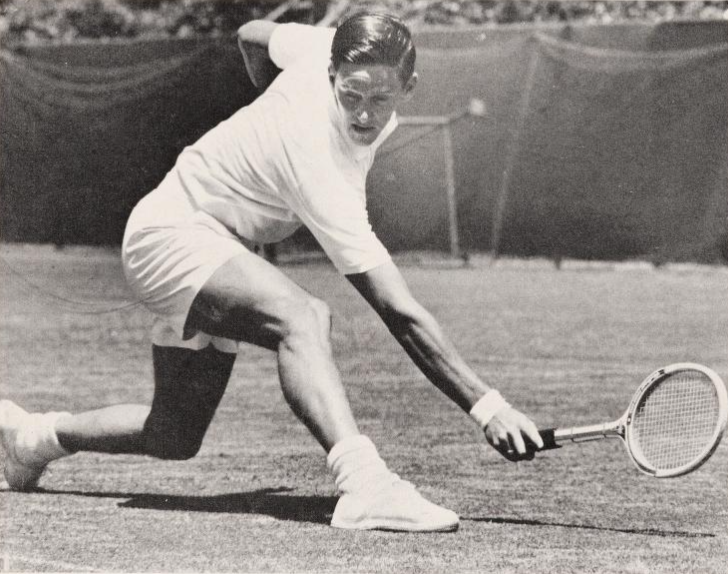
The Tennis 128: No. 52, John Newcombe

John Newcombe in 1969

In 2022, I’m counting down the 128 best players of the last century. With luck, we’ll get to #1 in December. Enjoy!

* * *

John Newcombe [AUS]
Born: 23 May 1944
Career: 1960-81
Plays: Right-handed (one-handed backhand)
Peak rank: 1 (1967)
Peak Elo rating: 2,209 (1st place, 1974)
Major singles titles: 7
Total singles titles: 76
 

* * *

John Newcombe was the last Wimbledon champion before Open tennis transformed the game in 1968. For a young man of 23, he was quite experienced, making his seventh trip to the All-England Club. Harry Hopman had spotted his talent early on, letting him tag along on the Aussie Davis Cup squad’s circuit around the world when he was only 17.

Newk was the king of the amateur tennis world in 1967. In addition to Wimbledon, he won the US Nationals at Forest Hills, led his nation to its fourth-straight Davis Cup championship, and picked up another ten titles besides. Out of 128 singles matches, he won 111. He had a “job” working for Slazenger, and it was only a matter of time before he’d sign on the dotted line and start collecting the big bucks in pro tennis.

By the time he dispatched Clark Graebner in the Forest Hills final, he and doubles partner Tony Roche had already come to an agreement with David Dixon, the promoter who, with billionaire Lamar Hunt, was putting together what would become the World Championship Tennis (WCT) tour. Newcombe and Roche were the anchors of what would become the “Handsome Eight.” They would play most of the year on the WCT circuit, and thanks to the revolution in tennis, they would be able to enter the majors, as well.

The bad news: Everybody else could sign up for the majors, too.

Fred Stolle turned up at Forest Hills in 1967 as a spectator. The defending champion, he was ineligible to play after joining the professionals. He joked he was there “to see how they pay the amateurs this year–under the table or over it.”

Before switching sides, Stolle had beaten Newk in 13 of 22 career meetings. Newcombe asked him, “[I]f I wanted to play the pros, what would I have to improve? My backhand and my second serve, would you say?” Stolle suggested the difference was more tactical, “which shots to try for winners off of.”

What strikes me about the exchange isn’t anything about Newk’s game, it’s that the superiority of the pros was taken as absolute truth. Newcombe lost only four games in the Wimbledon final that year, yet he recognized he was essentially playing in the minor leagues.

1968 would prove him right. Graebner and Arthur Ashe would stop him from reaching the semi-final at either Wimbledon or Forest Hills, and he’d lose 37 matches, including decisions to veterans Rod Laver and Ken Rosewall–men who the amateur-professional divide had long shielded him from. He lost five in a row in early February, another four straight a couple weeks later. He dropped six decisions that year to Dennis Ralston alone.

A lesser man would’ve accepted his new second-tier status in the game. The 24-year-old Newcombe, however, got back to work.

* * *

Here is the difference between the amateur game and Open men’s tennis, in one table. I’ve listed Newcombe’s match winning percentage, along with his age at Wimbledon, for each year from 1966 to 1974:

Year  Age  Win%  
1966   22   78%  
1967   23   87%  
1968   24   65%  
1969   25   70%  
1970   26   74%  
1971   27   77%  
1972   28   78%  
1973   29   73%  
1974   30   87%

All of these are good seasons, don’t get me wrong. Even 1968 isn’t as much an outlier as the table makes it appear. The first WCT circuit included several round robins, especially at the beginning when Newk was adjusting to his new life as a touring pro. My Elo ratings, which take into account strength of opposition, rate Newcombe as the fourth best player at the end of the season, behind only Laver, Rosewall, and Ashe.

Still, the ’68 and ’69 campaigns were a bit of a letdown for a player who was nearly untouchable in his last amateur season.

Newcombe’s running forehand, in 1969

1969 was marked by one near-miss after another. He beat Roche in a five-setter for the Italian title, then lost another five-setter to Tom Okker at the French. He upset Laver at Queen’s Club in the semi-final, then lost a heart-breaker of a two-setter to Stolle in the final, 6-3, 22-20. Laver beat him in four in the Wimbledon final, then dispatched him again in Boston two weeks later. At the US Open, he got past Stolle, 13-11 in the fifth, then lost to Roche–yet another five-set struggle–in the semis.

Newk and Roche were not just doubles partners, they were close friends. None of that mattered on the singles court. “Some of the hardest matches I’ve ever played, real blood and thunder five-setters, were against Tony,” Newcombe said.

The Elo formula credits him with another fourth-place finish, now behind Laver, Roche, and Okker. In the year of Laver’s Grand Slam, however, the glory that Newk had reached just two years before must have felt very far away.

* * *

With so much money on the line, there was now more to tennis success than simply piling up tournament victories. As Newcombe matured, he added to his appeal on the both the tangible and less-tangible sides of the ledger.

In 1967, the 23-year-old from Sydney was just another serve-and-volleyer, albeit the best of the amateur pack. He could boast a strong serve–both first and second–and a powerful forehand. His backhand was functional, and anyway, the rest of his game was strong enough to hide it. His game was even better suited to doubles than to singles; he won six doubles majors as an amateur (five of them with Roche) and eleven more in the Open era.

Many fans, understandably, saw Newcombe as little more than the latest Aussie. The parade of stars from Down Under had been winning most of the majors for 15 years, many of them with the same combination of fitness and big-game tactics that Newk offered. Frank Deford saw the potential for more:

Even now, Newcombe plays the net with his own special daring—on top of it, challenging, like a third baseman moving in close, defying a potential bunter to hit away. And his on-court peculiarities–shirttail out, tousled towhead, a large inurbane grunt that he dispenses with each serve–can become crowd-pleasing characteristics. The considerable charm of the private Newcombe is unlikely to remain hidden within the public one.

The Sydneysider would never become Ilie Năstase, but in time, he would cash in on his own brand of crowd-pleasing charm. First, he doubled down on the aspects of his game that made him an amateur champion.

It’s uncanny how many of Newk’s skills were described as the very best on the circuit. Jack Kramer said he had never seen a better second serve. In 1970, Sports Illustrated described his forehand as “perhaps the strongest in tennis.” Deford credited him with “a scrambler’s lob the equal of anybody’s,” and he emphasized that Newcombe’s head and heart were even better than his stroke equipment.

As for the backhand… In the first game of the 1968 Wimbledon doubles final, he smacked the hardest backhand winner of his life. Fred Stolle, on the other side of the net, wasn’t worried. “We don’t have to worry about that shot any more–now that you’ve hit your one for the year!”

* * *

In 1970, Newcombe returned to the Wimbledon winner’s circle. His opponent was the 35-year-old Ken Rosewall, part of the 1953 Davis Cup-winning team that inspired the nine-year-old John to pursue tennis in the first place.

The press box was pulling for the veteran, a sentimental favorite who would never win Wimbledon despite reaching four finals. Rosewall gave them hope, pulling out the fourth set after Newcombe took a two-to-one lead, but he couldn’t withstand Newk’s attack. The younger man won the fifth set, 6-1.

A later Rosewall-Newcombe clash, at Forest Hills in 1974

By then, Newcombe had earned a reputation as a man to fear in long matches. In the quarter-finals of the same tournament, he outlasted Roy Emerson after losing the second and third sets. It was a momentous struggle to finish the job, 11-9 in the fifth. An early proponent of advance scouting, Newk would keep an opponent guessing until the very end. He liked to keep a tactic or two in his back pocket, ready to spring something new if he ended up in a deciding set.

Most of all, he backed himself to the hilt when matches got tight. One journalist noted in 1970, “It is said in tennis that Newcombe is so tough when he is behind that you have to shoot him to win.” He could lose interest when he was winning, but never when there was ground to make up. “I’m at my best in a five-set match, especially if I get behind. My adrenaline starts pumping.”

One fellow player said in 1975 that Newcombe was “the cockiest guy around, cockier than [Jimmy] Connors.” Hard as that is to believe, his self-belief could reach staggering levels. For Rod Laver and Larry Writer’s 2019 book, The Golden Era, he told the authors that he won “80-90 per cent” of his five-setters. That is a truly impressive rate. Alas, it was not his. I count 86 five-set matches in his singles career, of which he won 52–a respectable but much more human win rate of 60%.

* * *

Fans could be forgiven for believing Newk’s hyperbole. He almost never lost a five-setter when the stakes were high. He won seven of nine Open era finals that went the distance, and between 1966 and the end of his career, he won 17 of 23 five-setters at majors.

One of those was his signature match, even more memorable than the Wimbledon final against Rosewall. In 1971, he waltzed past the veteran, 6-1, 6-1, 6-3 in the semi-final. His reward was a final against Stan Smith. Newk won more than half of his career meetings with the American, but it was never easy:

Stan tries to overpower you mentally. A certain amount of that is the way he plays–the steamroller, smothering you at the net. But I can deal with that. What is more tiring is his air–that smug confidence. You must concentrate all the time or you’ll give up. Nobody wears me out like Smith does, but it’s not from the tennis, it’s mental fatigue.

Newcombe lost the second and third sets. He won the fourth, but found himself one point away from dropping to 4-1 in the decider. From there, wrote Rex Bellamy, “Newcombe fought back with the fury of a wounded but indomitable lion who knew he had to kill or be killed.” In the end, mental fatigue got to the American, not the Australian. Smith double-faulted on the final point to give Newcombe the match.

The 1971 Smith-Newcombe final was the first all-mustachioed title match at Wimbledon

The two men faced off again in the 1973 Davis Cup Challenge Round in Cleveland. The United States had held the Cup since 1968, but many observers felt that it hardly counted. Contract pros were forbidden from the competition, so a veritable wing of the Hall of Fame–Laver, Rosewall, Emerson, Stolle, Newcombe, Roche, and more–was kept off the Australian side. The rules finally caught up with the times in 1973, and a “Dad’s Army” of veteran Aussies assembled for the campaign.

Newcombe-Smith was the first match of the tie, and it didn’t disappoint. Newk served big, and even his backhand chalked up winners. In a little over three hours, the Australian scored another five-set victory. The next day, he paired with Rod Laver to finish the job. Smith and Erik van Dillen didn’t stand a chance: The Aussies won the doubles with the loss of only seven games.

* * *

The 1973 Davis Cup represented the end of an era. Laver and Rosewall were getting old. Harry Hopman, the man who had guided generations of Australian stars, had moved on to work at an academy in New York. The increasingly global spread of the game meant that while you could still find Aussies in the draw of just about every tournament, it was no longer a lock that the final would involve two of them.

But John Newcombe still had something to prove.

By his mid-twenties, Newk sought a balance between tennis and life. A few grueling seasons–128 matches in 1967, the first WCT tour in 1968–drove him to establish a comfortable home where he could recover from the rigors of the road. He bought a ranch in New Braunfels, Texas, built it up to become a tennis mecca, and rarely missed a chance to spend extended stretches there.

With national pride on the line, he refocused for the 1973 Davis Cup. Before the triumph in Cleveland, he won his fifth singles major, beating Jan Kodeš in another high-profile five-setter. Now 29 years old, his self-confidence and approach to the game had hardly changed. “I knew that if I kept hitting the same shots at him,” he told Sports Illustrated, “he could keep it up for 50 minutes or an hour, but not for an hour and a half.”

The Cup in the bag, his target was to become number one on the new ATP computer ranking. He got there, in part, by playing more tennis than he had ever played before. By June, he had won six titles, and despite never crossing paths with the reigning top dog, Ilie Năstase, he gained the number one position in June.

Alas, he lost to the ageless Rosewall in the Wimbledon quarter-finals, and the tournament’s winner, Jimmy Connors, became king of the ATP computer a few weeks later. Newcombe couldn’t strike back, since he was busy playing the first season of World Team Tennis. At the US Open, he lost to Rosewall again.

As Connors solidified his status at the top of the game–he would hold the top ranking for more than three years–the come-from-behind champion still had one more triumph in his racket bag.

Newcombe’s lob was an underrated part of his game, and it served him well in the 1975 Australian final

Newcombe arrived at the 1975 Australian Open in mediocre form. He still ranked second to Connors, but in two months, he had lost to the likes of Phil Dent, Geoff Masters, and Ismail El Shafei. He hardly looked better in the second round when he needed five sets to get past Rolf Gehring, a German ranked outside of the top 200 in the world.

It would be an exaggeration to say he quickly played his way into form. He just squeaked past Masters in the quarters, losing a third-set tiebreak before sneaking out of a 10-8 fifth set. His opponent in the semi-finals was Tony Roche. As they had so many times before, the long-time partners and friends refused to give an inch. Newcombe advanced by nearly as close a margin as he had in the round before, 9-7 in the decider.

Connors awaited in the final. Finally, “six months of verbal warfare” would be settled on the court. Whatever the computer spat out, Newk still considered himself the man to beat. He had defeated Connors in their two 1974 meetings. In Melbourne, he made it three. Jimbo’s fearsome return of serve kept Newcombe pinned to the baseline, but the veteran still managed to come through in four, 7-5, 3-6, 6-4, 7-6.

* * *

The 1975 Australian title gave Newcombe seven major championships in singles to go with 16 doubles slams. He’d add a 17th in Melbourne the following year.

But his days of beating Connors were over. They faced off in a exhibition-style challenge match in Las Vegas a few months later. This time, Jimbo won in four, and he’d never lose to the Australian again.

Newcombe’s late-career resurgence, however, made him a rich man. He walked away with about $300,000 (about $1.6 million in today’s dollars) from the Connors match alone. By that time, he was endorsing rackets, resorts, watches, luggage, and shoes. His Texas tennis ranch, offering clinics to socialites, had spawned franchises.

While Stan Smith became a shoe, Newk became synonymous with his handlebar mustache. (And apparently, for marketing purposes, he had only the one eye.)

While he would never return to number one, he remained capable of testing the best players on the planet for years. In 1981, he entered the US Open with Fred Stolle, another man who had been winning majors since the days of amateur tennis. They made a surprise run to the semi-finals, falling only after they pushed John McEnroe and Peter Fleming to a fifth set.

McEnroe was the kind of doubles player he respected–a singles standout whose skills applied just as well to the doubles court. Long after his retirement, Newcombe told Rod Laver, “[Bob Bryan and Mike Bryan] play a nice game of doubles and best of luck to them. In our day they’d have been lucky to make the quarters. Look at the teams they’ve beaten in the grand slams, doubles specialists who wouldn’t be among the top 100 singles players.”

I suspect the Bryans would’ve done just fine in the 1960s, ’70s, or any other era. But Newk is entitled to his opinion. If anyone knows what it takes to win tennis matches regardless of context–singles, doubles, amateur, professional, exhibition, knockout, round robin, Davis Cup, Team Tennis, you name it–it is John Newcombe.

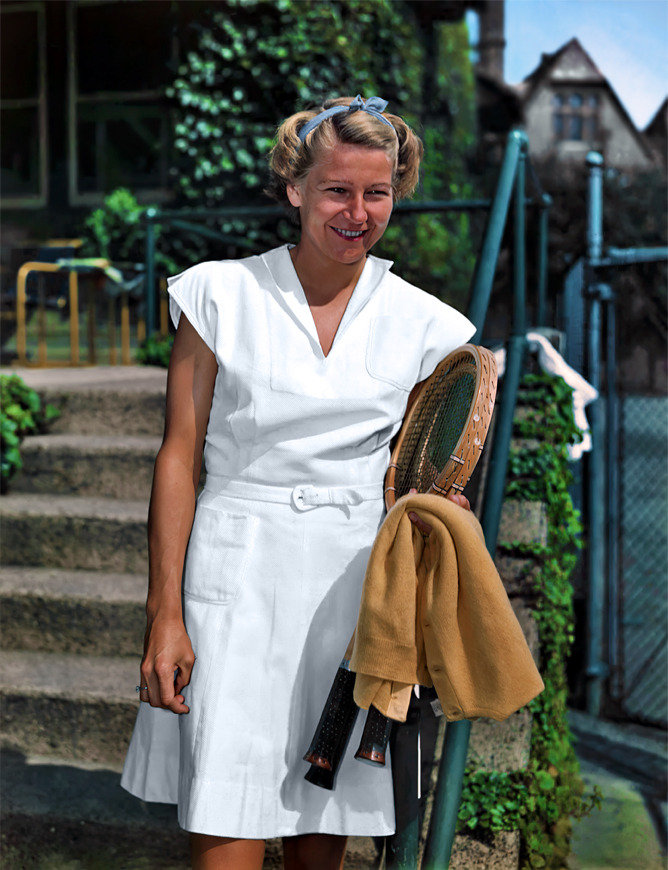
The Tennis 128: No. 53, Hilde Krahwinkel Sperling

Hilde Krahwinkel Sperling

In 2022, I’m counting down the 128 best players of the last century. With luck, we’ll get to #1 in December. Enjoy!

* * *

Hilde Krahwinkel Sperling [GER/DEN]
Born: 26 March 1908
Died: 7 March 1981
Career: 1929-50
Played: Right-handed (one-handed backhand)
Peak rank: 2 (1936)
Peak Elo rating: 2,306 (1st place, 1934)
Major singles titles: 3
Total singles titles: At least 106, perhaps 123
 

* * *

Hilde Krahwinkel Sperling knew she didn’t play the most exciting brand of tennis. At least she had a sense of humor about it.

Her 1935 Wimbledon semi-final against Helen Jacobs was typically protracted. Don’t let the lopsided score fool you. The 6-3, 6-0 defeat was hardly an easy day’s work for the American. Rallies with Sperling often went 30, 40, 50 shots or more. She chased down everything, and she forced opponents to generate their own pace.

One game ended with yet another gutbuster of a point, running past the 50-shot mark. Jacobs and Sperling stood at the umpire’s chair on the changeover–sitting wasn’t allowed back then–and Hilde smiled. “My husband and I have a dinner engagement. Do you think we’ll get there for coffee?”

We know it was a joke because Sperling and her husband, the Danish player Svend Sperling, were not stupid. If Hilde was scheduled to play a match, there was always the chance it would last all day. The New York Times characterized the 1936 Wimbledon final–another match Sperling lost to Jacobs–as a “hundred minutes of agony.” This in an era when a 30-minute set was an unusually long one, and top players often coasted through early rounds in 20 minutes or less.

When Hilde faced another woman capable of playing the same infinitely patient style, 100 minutes was just the start. On the French Riviera at Beaulieu-sur-Mer in 1937, Sperling faced defending champion Simonne Mathieu in the final. She had beaten Mathieu in their nine (or more) previous meetings, but this time, the Frenchwoman was prepared to wait.

And wait.

And wait.

Sperling took a 5-2 lead, and Mathieu scrambled back to 5-all. The first ten games took a full hour. Simonne broke for 6-5 in a 25-minute game, then needed 35 minutes to hold serve for 7-5. Finally in the ascendancy, Mathieu won the second, 6-1, but even that took another three quarters of an hour.

No one in tennis history has played the game of attrition better than Hilde did.

* * *

She was born Hilde Krahwinkel, in Essen, Germany. After marrying Svend Sperling in 1933, she became a Danish citizen as well. She joined a tennis club in her adopted country, and from that point on, she represented Denmark in international competition. Not that her opponents noticed–they were too busy catching their breath to worry about flags.

There are two more things you need to know about Hilde Krahwinkel’s life before she became a tennis champion. First, she was a cross-country runner. At the time, tennis players–especially women–weren’t expected to be the physical specimens they are today. Would-be stars generally trained simply by playing the game, perhaps with a bit of light calisthenics on the side. Hilde was, by virtue of her earlier avocation, one of the fittest women on the circuit.

Hilde (right) with Cilly Aussem in 1931

Second, she had a deformed right hand. She had injured the ligaments of her ring and little fingers, so she could not use them to hold a racket. It was even worse than that: They bent down toward her palm, so they got in the way of a traditional grip. In the days of one-handed backhands, tennis players really only used one hand, and apparently Hilde never tried to play lefty.

The end result was a game that made purists weep, spectators wait, and opponents wilt.

Ahead of the 1936 Wimbledon final, the Guardian sought to correct the misperceptions of readers who only knew Sperling by her dominant scorelines:

The ‘man in the street’ [who saw the scores] would doubtless credit her with a fine and impressive game, a fierce service, making use of her exceptional height, if a baseline game then savage hitting, if a volleying game then rapid rushes for the net and decisive volleying. The ‘man in the street’ would be wrong, but that would be nothing new, for he usually is.

Fru Sperling in serving makes a peculiar pawing-the-air action, much as [British Wightman Cup player Phoebe Holcroft] Watson used to make, and then sends over a tame ball, the second even tamer. Her forehand is a lifted stroke, with a poor trajectory and little pace. Her backhand is safer, sometimes well produced, sometimes not, because she is standing on her toes. She has no smash; she volleys confidently on the forehand and given an easy ball she makes the point. Where then is the quality or qualities that make of such unpromising material a champion?

Bill Tilden was even more direct:

She is one of the best yet most hopeless looking tennis players I have ever seen. Her game is awkward in the extreme, limited to cramped unorthodox ground strokes without volley or smash to aid her, yet she has been the most consistent winner in women’s tennis each year since 1934.

The first time Jacobs saw Hilde play, in 1931, she could only wonder, “If Hilde was number three in Germany, what could number four be like!” Then she looked on as the German defeated rising British star Dorothy Round in straight sets.

Jacobs, along with the rest of the tennis world, would spend much of the 1930s watching Hilde pick apart one standout player after another.

* * *

Sperling’s match record almost defies belief. She won at least 106 singles titles, perhaps as many as 123. Most of them came within a single decade, between her emergence as a first-rank player in 1929 and the beginning of World War II.

Her record at the majors is sparse, because she never traveled to either Australia or the United States. She probably never even considered a trip to the Antipodes, and the calendar made Forest Hills impossible. The North American swing clashed with the German Championships, held each year in late July or August. Still, she won Roland Garros for three straight years, 1935 to 1937, and reached the Wimbledon final twice. She made it to the semis on another four occasions.

The 1931 Wimbledon final

Her dominance came on the European continent. Those tournaments were primarily on clay, but she also excelled at indoor events held in the winter (usually played on faster wood or tile surfaces), and she cared enough about Wimbledon to skip the French in 1938 to better prepare on grass.

Our knowledge of her exact exploits is incomplete. For many of the tournaments she played, we know only the result of the final. Still, we’ve documented 331 match wins against only 39 losses, good for a winning percentage just short of 90%. Since the gaps in the record are generally early-round matches, the true figure must be even higher. Simonne Mathieu, her most frequent opponent and one of the best players of the era, beat her only once in at least 15 tries.

From May 1933 to June 1936, Sperling won an incredible 33 straight finals. She actually claimed 36 titles in that span; three of her final-round opponents withdrew. Seven of the victories came indoors; another five were contested on grass. Hilde scored the last 23 of those wins in straight sets.

* * *

How did she do it?

So far, I’ve mentioned Hilde’s injured hand and near-total lack of proper technique. The Guardian pointed out her awkward and ineffective service, then hinted at poor footwork. Yes, the 1930s were a different time, but should this woman have been competing at Wimbledon at all?

Adding to Sperling’s oddity, she was unusually tall. She stood close to six feet tall, towering over opponents who were often six inches shorter. We tend to see height as an asset on court, but Helen Jacobs called attention to the other side of the ledger. “Without a sense of anticipation, natural court position and a knowledge of tactics and strategy, a very tall player can be tied into knots on the tennis court.”

Though Hilde sometimes looked a bit knotted up on the baseline, it rarely stopped her from getting yet another ball back. Her height–combined with her fitness–meant that there was nowhere on the court she couldn’t reach. Jacobs wrote:

Where the average woman player covered the baseline in five strides, Hilde covered it in three. To lob against her required a shot of sufficient height and depth to evade the reach of the average man; and to pass her along the sidelines meant eluding a racket that appeared to extend across the alley.

She got to the ball, and she put it back in play. Sometimes that meant running, but just as often, she barely needed to move at all. “[O]ne noticed how little the long lady ran, how she just stood for the most part,” wrote the Guardian. “At one time on a short high lob she waited for the bounce and then slowly walked forward and hit it out.” No tiny adjustment steps for Hilde.

The Sperling backhand

She relied on her opponent’s pace, so rallies were often as slow as they were long. However unorthodox her technique, she had her own version of every shot. You could drag her to the net and she might not put the ball away, but she wouldn’t miss.

Sperling’s contemporaries might have failed to grasp what was going on with her forehand. The Guardian called it a “lifted stroke.” Jacobs described it in more detail: “Her forehand drive began at approximately the level of her knees, the racket head dropped well below the wrist, continued upward and over the ball.” Few observers thought such a motion was a good thing.

To a modern reader, though, that sounds an awful lot like a topspin forehand. If you’ve ever tried to hit topspin groundstrokes with a primitive racket, you know that she wasn’t Rafael Nadal out there. It’s hard work for modest gains, and the attempt can look awkward. Still, if that’s what she was doing, the result would have been particularly challenging to opponents who rarely saw anything like it. It would’ve fit seamlessly into her baseline-warrior game.

* * *

Sperling’s peers didn’t need anyone to explain why Hilde was so good. (Though Jacobs wished her non-playing friends could better empathize with “the physically and mentally exhausting experience” of facing her.) The pressing conundrum on the circuit was how to beat her.

There was a prevailing theory. A would-be giant killer must patiently (very patiently!) wait for her chances, then strike aggressively, taking every chance to hit past the gangly German, especially on the forehand side.

Then again, from 1932 to 1939, Hilde lost an average of two matches per season. For all its logical soundness, the conventional wisdom didn’t work.

The 1936 Wimbledon final

The actual winning strategy was even more demanding than the standard advice. Against the few players who could manage it, Sperling would lose when the woman across the net simply outlasted her at her own game. As we’ve seen, that’s how Mathieu scored her single, marathon victory in 1937.

It’s also what Helen Wills Moody was forced to do in her final meeting with the German. Wills Moody had long struggled with Hilde’s slow-motion steadiness. In 1932, the American edged her way through a Roland Garros semi-final, 6-3, 10-8. She hadn’t lost a set in five years, and no one else had gotten so close.

In 1938, Sperling finally pulled off the upset, ousting Wills Moody at Queen’s Club. They met again at Wimbledon two weeks later, in the semi-final. Helen discarded the conventional wisdom entirely, generated her own pace, and refused to be dislodged from the baseline. She rarely tried for winners, even when the German coaxed her to the net. Wills Moody was the best player of the era, the hardest hitting pre-war woman. Nonetheless, Hilde gave her an epic struggle, one that finally ended 12-10, 6-4 in the American’s favor.

* * *

There was one more component of the formula for defeating Hilde Sperling. Of the five women who ended her ten attempts at a Wimbledon crown, only one–her countrywoman Cilly Aussem–was European. Three were Americans who rank among the all-time greats (Wills Moody, Jacobs, and Alice Marble), and the last was the talented Australian, Joan Hartigan.

The Europeans knew her too well. They were exhausted before they stepped on court. Only Aussem escaped the curse. When they met for the 1931 championship, Hilde’s game wasn’t yet the soul-crushing machine it would become. Her fellow German had beaten her on multiple occasions as she matured.

Like so many Continental players of the 1930s, Sperling’s career was left incomplete. When World War II began, Sperling was 31 years old. Her results at the All-England Club were going in the wrong direction since her runner-up finish in 1936, but she had still won seven smaller titles in the last twelve months.

Her decision to settle in Denmark turned out to be prescient. The Sperlings were able to sit out the conflict and play as much tennis as they wanted. Hilde even picked up a couple more trophies. The calm was briefly pierced in 1944, when a Danish newspaper accused Svend of spying for the Germans. Even that crisis didn’t linger. The couple relocated to Sweden, the story was retracted, and recreational tennis continued apace.

While no one ever called Hilde’s game “graceful,” it was the sort of style that aged well. She could lose a step or two, and her brilliant anticipation would still allow her to keep a rally going until her opponent collapsed with frustration or fatigue.

Hilde (left) with Jadwiga Jędrzejowska

She remained capable of making a pest of herself on the international circuit into her forties. When top players trekked to Northern Europe, she was waiting. At the 1950 Scandinavian Indoors in Copenhagen, she beat the British player Joan Curry, ten years her junior. In Oslo for the Norwegian Championships the same year, she dispatched ranking Americans Betty Rosenquest and Dorothy Head. Both women were born when Hilde was 17.

The most memorable final of Sperling’s post-war career, though, came two years earlier. This one was against a contemporary. Jadwiga Jędrzejowska had suffered through the war years in occupied Poland. At the 1948 Swedish International, the two old foes were delighted to see each other again. Both women reached the final, where Jędrzejowska proved to be as dogged a competitor as she had been a decade earlier. She took the first set, 8-6.

“But when I was hitting the winning ball,” the Polish woman wrote, “I understood that I was very exhausted.” The match ended quickly, 6-8, 6-0, 6-1 to the German.

Hilde had done it again.

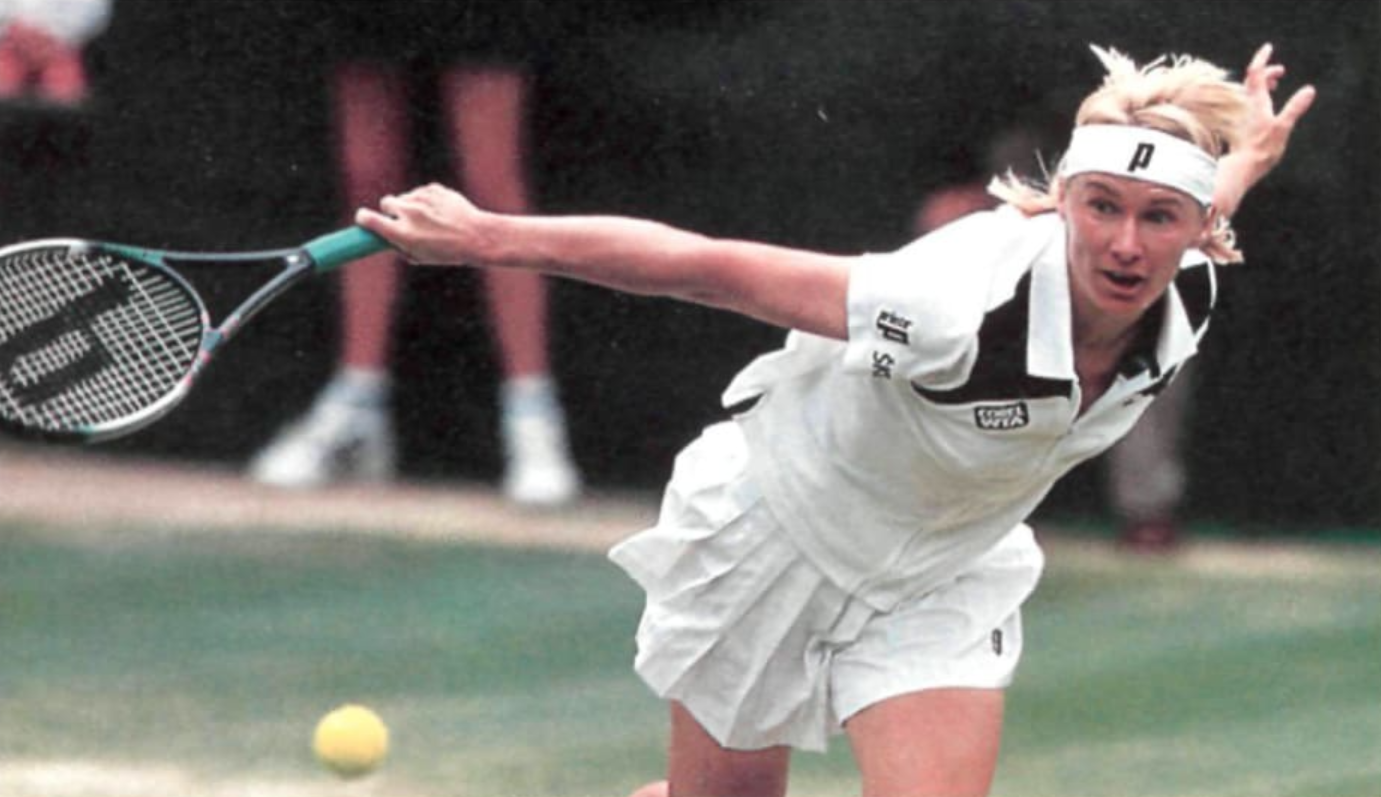
The Tennis 128: No. 54, Jana Novotná

Jana Novotná in 1998

In 2022, I’m counting down the 128 best players of the last century. With luck, we’ll get to #1 in December. Enjoy!

* * *

Jana Novotná [CZE]
Born: 2 October 1968
Died: 19 November 2017
Career: 1987-99
Played: Right-handed (one-handed backhand)
Peak rank: 2 (1997)
Peak Elo rating: 2,295 (2nd place, 1998)
Major singles titles: 1
Total singles titles: 24
 

* * *

In making this list, I’ve picked up a couple of tricks for identifying all-time greats who have been unfairly neglected. These aren’t things I actively sought out, just trends that have emerged as we go through the list.

First, many of the best doubles players in history were stronger singles competitors than we give them credit for. A few names that come to mind are Rosie Casals, Tony Roche, and Pam Shriver. The skills that make singles and doubles champions aren’t that different from each other, and that was even more true before the increased specialization of the last couple of decades.

Second, if a player is better known for losses than wins, history has probably done them a disservice. We remember David Ferrer for his valiant, failed attempts to dislodge Rafael Nadal. Vitas Gerulaitis is the guy who needed 17 tries to beat Jimmy Connors. What the capsule summaries miss is the sustained excellence required to earn one’s way onto the biggest stages.

Jana Novotná emphatically ticks both boxes. With Helena Suková, she won five major doubles titles before her 23rd birthday. The Czech duo came within one match of completing the Grand Slam in 1990. In 1998, Novotná three-peated again, playing three slams with Martina Hingis and winning the lot.

And of course, if you know one thing about Novotná, it is that she gave away the Wimbledon title in 1993. Upon her untimely death from ovarian cancer five years ago, the New York Times obituary began with her losing the final. The headline called her a “Czech Champion,” but the lede had her crying on the shoulder of the Duchess of Kent.

Her name has become a byword for choking in tennis. When I wrote about Serena Williams’s collapse to Karolína Plíšková at the Australian Open a few years ago, I managed to get through a draft without mentioning Jana’s name. By the final edit, she was in. Apparently it’s not optional.

Had Novotná lost in the quarter-finals that year, we would remember her more for the Wimbledon title she did win, in 1998. Had Steffi Graf made quick work of the title match, Jana would be just one more of the excellent players who weren’t quite up to the Steffi standard. Instead, she got so close–4-1, deciding set, game point–and then looked terrible as the biggest match of her career slipped away.

* * *

Novotná’s member page at the International Tennis Hall of Fame website makes a gallant effort to focus on the positive. There’s no mention of the 1993 Wimbledon final until the fourth paragraph, about halfway through the biography.

Alas, if you’re reading that page, you probably know what happened. The attempt, well-intentioned as it is, feels a bit like an ashen journalist pointing and yelling, “Don’t look! Don’t look at the double-faulting server!”

Jana insisted that she didn’t choke–she was playing her usual high-risk game. It takes a very charitable eye, however, to watch the replay and agree.

Graf pulled out a squeaker of a first set, 8-6 in the tiebreak. Novotná came out more aggressive in the second and capitalized on Steffi’s errors to quickly force a decider, 6-1. She kept the momentum going, breaking Graf twice to reach 4-1 in the third.

A textbook serve-and-volley point gave Jana game point for 5-1. Then it all came apart. She double faulted, missing her second serve by a mile. Two unforced errors at net gave the game to Graf. Steffi still wasn’t playing well: Novotná generated two break points in the next game but couldn’t convert. At 4-3, she double faulted three more times. After a hold to love for the German, Jana made three unforced errors and won only a single point in her final service game.

She told the Independent later that year, “That’s the way I play. It had worked in the semi- finals and quarter-finals. OK, I gave her a chance with the second serve and the easy volley. But I’ve looked at the tape of the final and I would play it like that again.”

A lot rests on what Jana meant when she said like that. She had a reputation for double faulting more than the typical player, since she often came in behind her second serve and opted for a more aggressive delivery. Serve-and-volleyers accept that while they’ll get passed and they’ll miss the occasional easy volley, the percentages are on their side.

Embed from Getty Images

Rushing the net, like Jana did, was a high-risk endeavor

Still, they are percentages. My win probability model says that Novotná had a 95.6% chance of victory from her most favorable point in the third set. The average odds of winning from match point are 97%, and Serena’s position before her 2019 tumble came in at 98.9%. Give any player–let alone a make-or-break netrusher like Jana–two dozen leads like the one she held against Graf, and she’s bound to blow one of them.

Unfortunately, the one she blew was on Centre Court, title on the line, with the whole world watching.

* * *

Before the fateful Wimbledon, Novotná was known as a good-but-not-great singles player. She had reached the final at the 1991 Australian, where she upset Graf and took a set from Monica Seles. She was a top-tenner, but just barely.

Afterwards, her ranking didn’t matter. Her reputation as a choker was set. Sue Barker said, “[S]he does rather have that label now, and she’ll have to work twice as hard to lose it.”

Twice as hard. If only it were so easy.

Jana might have been deluding herself about having played out the Wimbledon final the right way. Still, her attitude was the right one for a quick recovery.

Jana’s second major semi-final, at the 1991 Australian

When the tour returned to Europe for the indoor season in September, she reached the final in Leipzig (losing to Graf quickly this time) and picked up a title in Brighton. Quarter-finals in Australia and Miami got her into the top five on the WTA computer for the first time, and in the fall of 1994, she ran off a 16-match win streak indoors, including titles in Leipzig, Brighton, and Essen.* She joined forces with Arantxa Sánchez Vicario to win the doubles at the 1994 US Open and the 1995 Australian.

* She once said, “I could win three straight tournaments, and people would still say, ‘Yes, she’s playing well. But remember the Wimbledon final when she choked?'” Fact check: True.

One might even say that she had been working twice as hard. With her coach, countrywoman and former grand slam champion Hana Mandlíková, she developed an increasingly well-rounded game and slowly discovered what it took to become a top player.

Sometimes, that meant gutting out matches that should’ve come more easily. The 1994 Leipzig championship required two come-from-behind victories, each decided at 7-5 in the third. At Melbourne Park in 1995, she battled into the fourth round with a 9-7, third-set win over Lisa Raymond. Whether she should’ve let those matches get so close is beside the point. She repeatedly worked her way into situations where chokers choke, and she didn’t.

And then she did. At the 1995 French Open, less than two years after the Wimbledon debacle, Novotná wasted six match points in a third-round loss to Chanda Rubin. Three of them came at 5-0 in the deciding set. Any hope the 26-year-old had of ditching the choke-artist label was gone for good.

* * *

Even with another indisputable disaster on her résumé, the Czech star kept bouncing back. While she might have been “too smart for her own good,” as Franz Lidz wrote in Sports Illustrated, she had no problem marshaling the selective memory that separates champions from the rest. She was able to forget the collapses, even if no one else could.

Her ranking fell as low as 14th in early 1996, but she quickly turned it around. She won the trophy in Madrid in May, picking up her first title on clay since in seven years. The fall indoor season was once again her best stage, where she won three straight tournaments, beating Martina Hingis and Jennifer Capriati twice each.

Novotná finished the season at a career-best ranking of number three, and in another six months, she edged into second place. At long last, she returned to the Wimbledon final, where an abdominal injury–combined with the pitiless Hingis–ended her title hopes in another three-setter. The Duchess of Kent reminded her that the third time could be the charm.

Stories about Jana’s runner-up finish in 1997 invariably mentioned her first near-miss at Wimbledon. But anyone who was paying attention could tell that the fragile, too-smart, pick-your-choke-narrative Novotná was a thing of the past.

Embed from Getty Images

Medal winners in the 1996 Olympics singles event. L to R: Arantxa Sánchez Vicario, Lindsay Davenport, and Novotná. Jana would win doubles majors with both of her fellow medalists.

The 1997 campaign continually tested her mettle. 28 of her 68 singles matches went to a third set. She won 19 of them, and her 9 losses included the injury-marred Wimbledon final. Even the most uncharitable observer could call only one of the defeats a choke job: a US Open quarter-final loss to her doubles partner, Lindsay Davenport. No one could blame her for that one. Gusty winds made for conditions so extreme that both players were laughing at points throughout the 84-minute deciding set.

Novotná’s final three-set victory of the season, over Mary Pierce, sealed a title at the year-end championships, the most important non-major event of the year. She was a 29-year-old surrounded by teens, but she was playing the best tennis of her career.

* * *

1998 was Jana’s 13th Wimbledon. Since the famous final in 1993, she had never failed to reach the quarters. She was stopped only by the best: Graf, Hingis, or Navratilova.

Finally, Novotná peaked at the perfect time, against the right opponents. In the quarter-final, Venus Williams was the one who crumbled, losing focus when line calls went against her. Jana played even better in the semi, avenging her 1997 defeat to Hingis. She rarely dared to serve-and-volley against the sharpshooting 17-year-old, but she came to net 65 times in two sets, finishing the job in her favor 29 times. Novotná won, 6-4, 6-4.

Jana even received something even rarer than a victory over the testy Swiss–she heard comments from Hingis that might be interpreted as praise. “[S]ometimes it seems like the older the better.” (Hingis’s generous spirit wouldn’t last. After winning three doubles majors with Novotná, Martina ditched her partner, saying she was “too old and slow.”)

https://www.youtube.com/watch?v=sF1NaNXZdtI
Jana’s final major doubles championship, at the 1998 US Open

With Graf upset early and Hingis out, that left the unlikely figure of Nathalie Tauziat standing between Jana and Wimbledon glory. Tauziat, another veteran serve-and-volleyer, was playing her first grand slam final, despite being a year older than Novotná. It showed. Both women were cautious, and errors piled up in the early going.

The Czech didn’t silence her nerves entirely, but she came through when it counted. After breaking at 3-all in the first set, she held serve comfortably to run out the frame. While a slew of unforced errors prevented her from serving out the match at 5-4 in the second, she commanded the ensuing tiebreak, landing her first serves and keeping the pressure on Tauziat’s delivery. She completed the victory, 6-4, 7-6(2).

The Duchess was right: the third time was a charm. Novotná, appropriately enough, capped the victory with yet another doubles triumph. She won her fourth Wimbledon doubles title in eight finals, her 11th major championship in the discipline. She’d tack on another at the US Open two months later.

Back in 1993, Jana had posed a rhetorical question: “How many chokers get to the Wimbledon finals?” Five years later, she might ask, “How many chokers get to the Wimbledon final three times–and win one of them?” To Novotná, the answer was clear. “It comes down to this: You have to depend on yourself, you have to know who you are, how good you are,” she also said.

There is a difference between winning a title and falling five points short. But Novotná, unlike so many pundits and fans, recognized that the gap between the two was slim. She believed in herself at a time when the world knew her only as the one who fell apart when the stakes were highest. She never shook the choke-artist label, and apparently she never will. But she persisted until she won the title that had so narrowly eluded her, securing a place among the greats of the game.

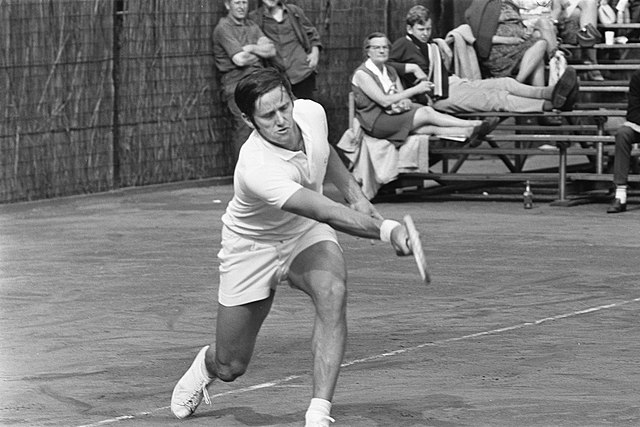
The Tennis 128: No. 55, Roy Emerson

Roy Emerson

In 2022, I’m counting down the 128 best players of the last century. With luck, we’ll get to #1 in December. Enjoy!

* * *

Roy Emerson [AUS]
Born: 3 November 1936
Career: 1953-77
Plays: Right-handed (one-handed backhand)
Peak rank: 1 (1961)
Major singles titles: 12
Total singles titles: 119
 

* * *

In September 1962, Rod Laver completed his first Grand Slam with a 2–6, 4–6, 7–5, 4–6 defeat of his fellow Australian, Roy Emerson. It was the tenth meeting between the two players that year, every single one of them in a final. In less than four years, the two men had faced off a whopping 30 times. Laver led the series, 19 to 11.

That year, Laver beat Emerson in seven title matches–at the Australian Championships, the Altamira International in Venezuela, the River Oaks tournament in Houston, the Italian Championships, the French Championships, Queen’s Club, and now the US Nationals. Emerson fell short at Wimbledon only because of a freak injury in the doubles. “He has beaten some great players in the finals,” joked Emerson to the Forest Hills crowd.

Finally, there was light at the end of the tunnel: Laver was likely to turn pro. For the last fifteen years, the professional game had steadily chipped away at the amateur ranks. Wimbledon champions received particularly lucrative offers. Of the six winners there between 1955 and 1962, only Neale Fraser chose to remain an amateur.

“It will be nice playing someone else in these finals,” Emerson said.

Even Emerson probably didn’t realize how true that would prove to be. Between 1963 and 1967, the six-footer from Queensland would reach ten more major singles finals, and he’d win them all. He won 12 titles overall in 1963, and he rode a 55-match win streak to an astonishing 19 titles in 1964. He did all this while playing doubles–usually winning–almost every week. Laver called him “the best men’s doubles player of our era,” with 16 major titles to prove it.

After Laver turned pro, there was little incentive for Emerson to follow. Roy’s brother-in-law, 1957 Forest Hills champion Mal Anderson, said, “Top amateurs nowadays make more than the average pro anyway. Emerson collected a healthy paycheck from a sinecure at Philip Morris*, and the best amateurs collected several hundred dollars per week in “expenses” when they played tournaments.

* Few celebrity endorsers have ever been so ambivalent. “Part of my job was to smoke my employer’s product at company functions and store appearances. I took tiny puffs and tried not to inhale because I didn’t want smoke in my lungs…. I was the most uncool smoker ever.”

There was a heavy downside risk in joining the professional ranks, as well. Even apart from the money, he might have struggled against the different standard of competition. Even Laver had a tough time when he first switched. Frank Deford wrote in Sports Illustrated that Emerson “would not be an immediate pro success and, as un-colorful as he is, he would be absolutely veiled in defeat.”

Roy wouldn’t turn pro until 1968, when Open tennis removed much of the decision’s gravity. He was the last great amateur champion.

* * *

It is easy to overrate Emerson. His 12 grand slam singles titles were the most of any player until Pete Sampras won his 13th at Wimbledon in 2000. Even now, Emerson’s haul is good for fifth place on the all-time list.

It’s an impressive tally, but it’s hard to avoid the conclusion that he benefited from a particularly weak era. Most of the top players of his generation had defected to the pros. There was also a dearth of men’s tennis talent coming of age in the 1960s. The next great players to come along after Emerson, Arthur Ashe and John Newcombe, were seven and eight years younger, respectively.

Laver wrote, “Roy rose to the top on the back of natural attrition,” though he adds, sportingly and probably correctly of Emerson’s peak, “Emmo was on fire in those years, and he’d have given me some tremendous matches had I still been around.”

The 1962 Roland Garros final

An even more skeptical view comes from pro tennis majordomo Jack Kramer. For his 1978 book, The Game, Kramer imagined a world in which men’s tennis had never been separated into amateur and pro ranks. He listed his hypothetical Wimbledon and Forest Hills champions for each year from 1931 to 1967. His counterfactual gives every single 1960s title to Laver, Ken Rosewall, or Richard “Pancho” González. In reality, Emerson won four of those majors; all Kramer will say is that Roy (or one of several other contenders) might have “sprung a surprise.”

Still, it’s easy to take all of this too far. Emerson did win those dozen majors. You can only beat the guy on the other side of the net, and from 1961 to 1965, he did exactly that–about 500 times.

Emmo–the Aussies weren’t very creative with nicknames–was two years older than Laver, and the pair reached the top of the amateur game at about the same time. Emerson won his first two majors in 1961, both with final-round triumphs over Rocket Rod. He beat Laver in five title matches that year, and some journalists placed him first in their year-end rankings.

My retrospective Elo ratings aren’t quite so rosy, but they demonstrate how competitive Roy was with the rest of the field–even including the professionals. Here are his year-end Elo rankings from 1961 to 1967:

Year  Elo rank  
1961         3  
1962         2  
1963         4  
1964         1  
1965         2  
1966         2  
1967         3

Emmo was one of only three players–along with Laver and Rosewall–to hold the number one position in that seven-year span. He topped the Elo list for 57 weeks between mid-1964 and mid-1965, and he had brief spells as number one in 1962, 1963, and 1966. He wasn’t the best player of his generation, but the numbers suggest that he would’ve been a contender for every major title–even if his countrymen from the pro ranks had been around to stop him.

* * *

Emerson was a fitting apex to Australia’s great run of world-beating amateurs, a star who would wipe you off the court in the afternoon and buy you a beer in the evening.

Arthur Ashe spoke for a generation of players:

Everybody loved Emmo as a man and respected him as a player. I’ve never heard anyone say they didn’t like him. Everywhere on the circuit, he’d be the last one to leave the bar at night and the first one on the practice court next morning. He’d stay there longer too. Emmo closed more bars and practice courts than anybody I’ve ever known.

The stories of hyper-fit Aussies get a bit repetitive, but Emerson was the fittest of them all. He took coach Harry Hopman’s advice to heart, running circles around his teammates–sometimes almost literally. When the Davis Cup squad ran ten kilometers to the beach, the rest of the group stopped to take a dip while Emmo ran straight back.

The physical training paid off on court. In one stretch between 1961 and 1967, Emerson won 44 of his 64 five-setters. Even in short matches, Emmo pushed his opponents to the limit. He played fast, knowing that most of his peers couldn’t recover as quickly between points.

Still looking fit in 1969

Emmo’s fitness ameliorated the effects of his full-tilt lifestyle, as well. Bud Collins described Emerson’s and Fred Stolle’s system as “snooze and booze.” One of them would go out, and the other would rest up for the next day’s tennis.

All that time in the gym also helps explain his relatively late peak. He was 24 years old when he won his first major, at the 1961 Australian Championships, after seven years of experience at grand slams. His best years came later still. While dynamic shotmakers like Laver and Lew Hoad could break through earlier, grinders tended to take more time to develop. Laver’s defection to the pros opened the way for Emerson to dominate the amateur tour in 1963, but it’s possible he would have emerged as a superstar around that time no matter what.

* * *

Emerson’s development on clay courts was even slower than his growth into an elite player on grass. In time, though, it was as complete as the rest of his game. He reached the French Championships final in 1962 and won it all in 1963.

When the American team chose clay as the surface for the Davis Cup Challenge Round in 1964, Emmo won both of his singles matches. By then, the home team didn’t dare hope for anything different. The Americans figured they would lose the two points to Emerson; they aimed to win the other three. (They didn’t.)

Embed from Getty Images

Emerson at the 1967 French Championships

Perhaps Roy started with a bit of an advantage. The Emerson family lived on a farm in tiny Blackbutt, Queensland. They laid out their own tennis court by spreading out anthills for a playing surface and stringing up chicken wire for a net. The resulting court was probably closer to clay than anything else.

Nonetheless, Emmo wasn’t prepared for his first outing at Roland Garros. Hopman brought him along on the Aussie Davis Cup squad’s world tour in 1954, and the 17-year-old got a early taste of European tennis:

In the French Championships I was drawn to play a bloke I’d never heard of, a Hungarian named József Asbóth, in my first match. The kid fresh out of Blackbutt was overjoyed to be up against a nobody. I raced into the dressing room and I said to Ken Rosewall, “Muscles, I’ve a great chance of winning the first round.” He asked who I was playing. “József Asbóth.” Ken held up three fingers. I said, “What’s that?” He said, “That’s how many games you’re going to win against József Asbóth in three sets.”

Next day I’m waiting on court two at Roland-Garros and out walks this gentleman in long creams. I thought he was the umpire, so I introduced myself. He said he was pleased to meet me and his name was József Asbóth. We started playing. Muscles was watching in the stands, a big grin on his face. It was a slaughter. Józseph, who was 37 and a clay specialist who had won the French singles crown in 1947, had the ball on a string. Seemingly without hardly moving he was always in the right place to return my shot. His clever lobs and chips and drop shots all played with control jerked me all over the court. I was drenched with sweat and his creams weren’t even creased. Ken’s prediction was wrong. I won more than three games, I won nine. József carved me up 6–4, 6–1, 6–4.

Thirteen years later, Emerson was the one doing the carving. At Roland Garros in 1967, he lost only one set in his last four matches, and he beat Tony Roche for the title. The championship completed Emmo’s second career Grand Slam, making him the first player to accomplish the feat.

* * *

By the time Open tennis arrived in 1968, Emerson was 32 years old and past his peak. The 1967 French was his last time reaching the semi-finals at a major. Still, he continued to excel in doubles. Emerson and Laver won the doubles at the first Open tournament, at Bournemouth in 1968. They also teamed up to win the Australian Open in 1969 and Wimbledon in 1971.

Emmo held his own against Laver on the singles court, as well. In 1968, they split ten meetings. In 1969, the year of Rocket Rod’s second Grand Slam, he still snuck off with a victory over his old rival in Japan.

1967 was Emerson’s last Davis Cup campaign, wrapping up a remarkable nine-year run in which the Aussies won the Cup eight times. Roy won 34 of his 38 matches in that span, serving as the anchor of the team for the last five seasons. His reign ended in 1968 only because he signed as a contract pro, making him ineligible. His country could’ve used him; they didn’t win the trophy back until 1973.

Nonetheless, he was a tireless fighter for the green and gold. At the 1973 Aetna World Cup, an international team event for professionals, Emerson came up with a surprise win over Arthur Ashe. He hadn’t beaten Ashe since defeating the American for the 1967 Australian title. Ashe, a Davis Cup veteran, recognized what motivated the players from Down Under. “When Emmo puts on the Australian jock or shirt or whatever it was he wore tonight, he does well.”

Most of the what-ifs of Emerson’s career end up casting a bit of doubt on his legacy. What if Laver and Rosewall had remained amateurs? What if Emmo had turned pro and failed to make the grade?

The 1964 Wimbledon final (from 0:50)

One lingering hypothetical works the other way. In 1966, Emmo was the two-time defending Wimbledon champion. In his quarter-final match with Owen Davidson, he chased down a ball, slid on the grass, and crashed into the umpire’s chair. He hurt his shoulder, and though he continued playing, he lost the match.

With Emerson out of the picture, Manolo Santana won the tournament. But Santana recognized his good fortune. “Everyone knows Roy Emerson is the true champion.”

The Tennis 128: No. 56, Tracy Austin

Tracy Austin

In 2022, I’m counting down the 128 best players of the last century. With luck, we’ll get to #1 in December. Enjoy!

* * *

Tracy Austin [USA]
Born: 12 December 1962
Career: 1977-83 (and brief comebacks until 1994)
Plays: Right-handed (two-handed backhand)
Peak rank: 1 (1980)
Peak Elo rating: 2,369 (1st place, 1980)
Major singles titles: 2
Total singles titles: 30
 

* * *

Everything Tracy Austin did, she did younger than anyone else. She was on the cover of World Tennis when she was four years old. Sports Illustrated announced that “A Star Is Born” in 1976, when she was 13. She won her first pro tournament a year later.

Somehow, the barrage of age records aren’t what sets Austin apart. Women’s tennis has seen prodigies come and go for a century, from Suzanne Lenglen and Maureen Connolly to Jennifer Capriati and Coco Gauff. Tracy was part of a particularly precocious charge, leading a generation that included Pam Shriver, Andrea Jaeger, and Kathy Rinaldi, among other teen starlets.

The striking, unusual aspect of Austin’s career is that, when she arrived on tour as an eighth-grader, she was already essentially a pro. She didn’t take any prize money in 1977 for her debut victory at the Avon Futures of Portland, as she was technically an amateur. But I mean “pro” in the figurative sense. She was tactically sound, mentally prepared, and PR-savvy, at least as much as any 14-year-old could be.

She was the first child star of the big-money WTA era. Within a decade of her appearance on tour, the women’s circuit would put age rules in place to protect young players. (Ironically, Wimbledon lifted its rule to allow Tracy to play in 1977.) Yet at first, Austin made those regulations look unnecessary. Until her body began to betray her, there was no sign she needed to be shielded from anything. Plenty of teens would do too much, too soon, but Tracy insisted to Bud Collins in 1994, “It wasn’t burnout. I’ve never been burned out.”

She set the tone for the millionaire prodigies of the decades to follow. Her mother traveled with her full-time, so she made few friends on the tour. She fearlessly stared down women she ought to have idolized, like Chris Evert. Others, such as Martina Navratilova, she annoyed into submission.

Most of all, Austin played like an adult, no matter how much her pinafores and pigtails made her look like a child. For about a year, she was a curiosity, a five-foot-nothing retriever with nothing but potential. After that, though, the rest of the tour had to grapple with a new reality. The unprepossessing highschooler in braces was a killer.

* * *

Austin came by her precocity honestly. Her mother, Jeanne, took up tennis with a vengeance as an adult, and she dragged her five kids to the club with her. Tracy was the youngest, and three of her siblings–Pam, Jeff, and John–also played at the pro level. Growing up in Southern California, they could practice year round.

Based at Jack Kramer’s club in Los Angeles, the Austins had access to some of the region’s best coaches. Tracy’s first coach was Vic Braden. Braden told a reporter in 1976 that, even before her first birthday, he would roll a ball inside her crib. “Back then she sliced the backhand,” he quipped.

Tracy, age 4

A few years later, Robert Lansdorp took over. Lansdorp became known for his groundstroke expertise, a reputation he owes at least partly to Austin’s prowess from the baseline. He would remain in Tracy’s camp, with only short breaks, for the rest of her career. He considered her a “mental giant” from an early age, and in 1980, he predicted, “[S]he can be the greatest ever.”

It became increasingly difficult to find anyone to argue with him. Austin reached the quarter-finals of her first US Open, in 1977, upsetting Virginia Ruzici and fourth-seed Sue Barker. In nine WTA events as a 14-year-old, she lost in the first round only once. A year later, she won two top-level tournaments and recorded her first upset over Navratilova. In 1979, she won the US Open, knocking out both Evert and Navratilova to become the youngest ever to hoist the trophy there.

The aspect of Austin’s game that everyone noticed–opponents in particular–was her sheer determination. “Tracy obviously had something, especially mentally, almost better than just about anyone else,” said her one-time rival Shriver. “She didn’t break down under pressure.”

When Tracy beat Barker, Billie Jean King said, “Wait until she learns how to choke.” Billie Jean was still waiting nearly three years later. In the semi-finals of the 1980 Avon Championships, the teenager beat her for the fifth time in a row.

* * *

There was a lot of waiting in Austin’s game. Broadly speaking, she was a Chrissie clone. Both women sported a two-handed backhand and the doggedness to use it until the woman on the other side of the net missed. Neither had a strong serve–Braden described Tracy’s as a “baby-puff” delivery–but the rest of their games were so airtight that it didn’t matter.

In Austin, Evert met her equal. The Match Charting Project has logged two of their clashes, each of which averaged an astonishing nine shots per point. The battles themselves could be soporific, but the outcomes–which the pair split almost down the middle–were of critical importance.

How you rate Tracy depends a great deal on how much weight you give to her victories against Evert. Austin scored her first upset at the 1979 Avon Championships, in their fourth meeting. She won again at the Italian Championships two months later, breaking Chrissie’s 125-match win streak on clay. The US Open final later that year was the first of five consecutive wins for the younger woman, including three in the space of ten days in January 1980.

The first Evert-Austin meeting, at Wimbledon in 1977

Evert won only ten games in the last three of those matches–combined. She declared she was burned out, and she took a three-month break from the tour. Sarah Pileggi, writing for Sports Illustrated, was ready to mark the end of an era. For Pileggi, Evert and Evonne Goolagong had defined the previous epoch; Austin and Navratilova were the stars of the future.

It didn’t work out that way, of course. Chrissie returned from her sabbatical with something to prove. She won the French Open (Austin wasn’t there–it conflicted with exams), reached the Wimbledon final, and won the US Open, beating Austin in the semi-finals there.

Still, Tracy was far from ready to concede the spotlight to her elder. She beat Evert in the Toronto final the next year. At the 1981 season-ending championships, the two women met at the round-robin stage, where they fought for 3 hours and 18 minutes. A single 26-point game required more than 500 shots. Evert won in a third-set tiebreak, but it was a pyrrhic victory. They met again in the semi-finals, where Austin proved relentless. The teenager reeled off nine straight games, getting her revenge, 6-1, 6-2.

* * *

Chrissie wasn’t the only giant that Austin had to slay. When Tracy arrived on tour, Martina Navratilova was nearly as fearsome. The transplanted Czech had won a major every season since 1975, and she lost only 10 of her 90 matches in 1978.

Navratilova, with her lefty serve and attacking game, posed a very different sort of challenge to the newcomer. Fortunately for Tracy, her own style would prove to be particularly irritating to Martina.

Austin broke through in her fourth match against the left-handed star. In the quarter-final of the 1978 Virginia Slims of Dallas, when Tracy was still only 15, she halted a 37-match win streak of Navratilova’s. The generational clash went to a third-set tiebreak. At the time, breakers were best of nine points. The ninth point was for all the marbles, if it came to that–no need to win by two. Austin was fearless even by her own standards, serve-and-volleying at 4-3, only to see her opponent pass her with a diving forehand. On the deciding point, she rushed the net again, and this time she put away a volley to finish the upset.

Their encounters weren’t always so thrilling, especially not for Martina. Austin delivered another upset at the Avon Championships of Washington, the first tournament of the 1979 season. Chasing down yet another lob en route to a 6-3, 6-2 loss, Navratilova said aloud, “It’s so boring I can’t stand it!”

Highlights from the 1979 US Open semi-final

In one two-and-a-half-year span, from July 1979 to the end of 1981, Austin won 11 of 17 meetings. (Overall, Navratilova finished the career series ahead, 21-14.) The matchup never got any more interesting for Martina. After winning a three-setter at Filderstadt in 1981, Tracy excitedly told her coach, “Once I lobbed three times in a row and she yelled, ‘Boring!’ right in the middle of the point. I couldn’t believe she did that! I decided right then I would do it some more.”

Austin wouldn’t be around to grapple with Martina much longer, but her influence would linger. Navratilova’s struggles with pesky, determined opponents like Tracy played a big part in her early-1980s decision to devote herself even more wholeheartedly to training and become the fittest player that women’s tennis had ever seen.

* * *

It’s possible to tell a story of late-1970s tennis in which Austin was just lucky, coming along at the right time. Evert was distracted by her marriage to John Lloyd, and Navratilova had yet to fully dedicate herself to the game. If you can’t think of Tracy as more than a pigtailed moonballer, it’s a convenient narrative to hold onto. It’s true that Chrissie wasn’t quite as deadly as she had been a few years before, and Martina wasn’t as overpowering as she’d become.

But we need to be careful not to get the cause and effect backwards. In 1980, the season when Austin took over the number one ranking and knocked Evert off the tour entirely, Chrissie won 72 of 79 matches. Navratilova won 91 out of 104. Even slumping, the duo was nearly untouchable.

Over her entire two-decade career, Martina lost more often to Austin than she did to anyone else except for Evert. Only two women–Navratilova and Goolagong–tallied more career wins against Chrissie than Austin did. With only a bit of exaggeration, we can compare Tracy’s achievement to that of the early-career Novak Djoković, who forced another dominant twosome to make room at the top.

Tracy, age 9
Credit: Los Angeles Times

Unfortunately, the similarities between Novak and Tracy go only so far. By the time the 19-year-old Austin won her second major at the 1981 US Open, she was already coping with the injuries that would end her career. Sciatica sidelined her for the first four months of 1981, and it caused her to miss the same span in 1982. She sputtered through a 1983 campaign, and aside from a few brief comeback attempts, her career was over.

Her remarkable mental strength probably disguised a fragile, growing body that wasn’t ready for the rigors of full-time training and tournament play. Evert played nearly as much as a youngster, but she grew up on clay courts, while the Austins developed their games on more punishing cement surfaces. And Tracy, with the determination of a player twice her age, rarely paced herself in competition. We might remember her for her moonballs, but when she hit for winners, she gave it all she had. When Austin was hitting at full force, moonballs were what came back.

While it’s tempting to speculate on what might have been, Austin’s teen years showed us, more or less, what she was ever likely to accomplish. Yes, she could’ve won dozens more tournaments, perhaps even another several majors. But what we saw was, more or less, what we would’ve gotten. At age 21, the veteran’s game was not that different than the one that made her a pre-teen champion, an imperfect but complete package. In 1973, the Austin family asked for advice from the legendary Australian coach Harry Hopman. Seeing the 10-year-old play, he demurred. “What do you tell a genius?”

The Tennis 128: No. 57, Louise Brough

Louise Brough at Wimbledon in 1948.
Colorization credit: Women’s Tennis Colorizations

In 2022, I’m counting down the 128 best players of the last century. With luck, we’ll get to #1 in December. Enjoy!

* * *

Louise Brough [USA]
Born: 11 March 1923
Died: 3 February 2014
Career: 1940-57
Played: Right-handed (one-handed backhand)
Peak rank: 1 (1955)
Peak Elo rating: 2,254 (1st place, 1949)
Major singles titles: 6
Total singles titles: 57
 

* * *

In one article celebrating the Wimbledon centennial in 1977, the author admitted that he had forgotten about Louise Brough, a four-time singles champion between 1948 and 1955. It’s a recurring theme when you start talking about Brough, who also won nine doubles titles at the All-England Club. Everyone has seen her name on the honor roll; few modern-day fans have given her a second thought.

Ask a hundred spectators at this year’s US Open, and you won’t even find many who are sure how to pronounce her name. It’s “bruff.” As the New Yorker explained in 1942 after she scored a memorable win over Pauline Betz, it rhymes “with stuff, of which she has plenty, and with enough, which Miss Betz had more than.” Louise and her long-time doubles partner Margaret Osborne duPont were, uncreatively, “Broughie” and “Ozzie.”

Even during her heyday, Brough was often the forgotten woman. She couldn’t compete with the pizzazz and personality of Betz in the mid-1940s. In 1948, she won all three events at Wimbledon, and the New York Times reported on how well Doris Hart played in defeat. When Maureen Connolly came along in the early 1950s, Little Mo pushed Louise out of both the headlines and the winner’s circle. A half-decade later, when fans might have celebrated Brough’s remarkable staying power, they were instead drawn to the powerful, history-making Althea Gibson.

There was a generous stretch between the Betz and Connolly years when Louise should’ve held center stage. From 1947 to 1950, she won five major singles championships and another 16 in doubles. In one run of 111 grass-court matches, Brough won 102, losing only to Hart and Osborne duPont. She beat her doubles partner in eight of ten meetings in that span, but most tennis writers preferred to give the year-end number one ranking to Margaret.

The same newsmen were also thoroughly distracted by Gussie Moran, a far inferior player. Moran and Brough had competed as juniors in Southern California a decade earlier, but Gussie never developed into a star as an adult. Her fame came from a pair of lace panties designed by Ted Tinling to be worn at Wimbledon in 1949. The women’s game typically got the short shrift in news coverage anyway; now, Louise remembered, “[T]hey didn’t write up the tennis.” You could be sure to read about what “Gorgeous Gussie” was wearing under her skirt, though.

For the most part, though, Brough didn’t mind staying out of the spotlight. The pressure of big moments–especially at Forest Hills–had a tendency to get to her. More attention would’ve made it worse.

She also agreed with the pundits who thought that she could’ve played better. Decades after retirement, she could still say of her missed opportunities, “What a waste!” Any player who spends a decade and a half at the top of the game will lose some matches they should have won. Most players would agree, though, that 35 major titles hardly qualify as a waste.

* * *

The pressure that Brough felt came from high expectations. Her mother was a demanding tennis parent, at least by the more relaxed standards of the 1930s. “She was so supportive,” Louise said. “But she didn’t understand sports at all. She didn’t understand that you could lose.” Life was easier for the teenager if she won, and she usually did.

In 1942, the 19-year-old collected her first adult tournament trophies on the Eastern grass court circuit. She won five straight titles in July and August, beating both Osborne and Betz multiple times. She came within a set of the national title, losing the Forest Hills final to the more experienced Pauline.

Broughie at net, where she did the most damage

After a season like that, it wasn’t just Louise and her mother. Now everyone had high expectations of the young star. She had come so close to the most prestigious title on offer during World War II, and many spectators thought she should’ve won it. Even her opponent recognized how close it was. Betz challenged the fearsome Brough smash, repeatedly lobbing into the sun. “I think her nerves finally got to her,” she said.

Brough, at her best, was untouchable. She built her game around a big American twist kick serve, the best of its kind in the women’s game since Alice Marble. Former champion Helen Jacobs observed just how devastating a weapon it could be. At the Longwood Bowl in 1942, the kicker sometimes pushed Osborne “twenty to thirty feet out of court, opening the way for severe drives to the opposite side.”

The effectiveness of Louise’s game lies in her driving power and the decisiveness of her net game. When she hits out, planning her strategy around the net attack, using her twisting service initially to open the court, there is little answer to her game and the opponent, to win, must wait for errors.

Alas, the wait often paid off. Jacobs thought that Brough played the 1942 Forest Hills final “without a vestige of confidence.” With the finish line in sight, Louise would give up her aggressive game in favor of baseline retrieving. Many women could compete with her on those terms. Against a fighter like Betz, a defensive strategy was suicidal.

Brough wouldn’t win at Forest Hills until her ninth attempt, in 1947. Even with that monkey off her back, she continued to struggle at her national championship. She held the women’s doubles title for a whopping nine consecutive years, twelve overall. She reached six singles finals in 19 tries, getting to championship point in three of them. But she took the singles trophy only once.

* * *

Louise came of age just as World War II put a halt to tennis in Europe. It feels wrong to say that she suffered too much from the conflict, since American women were able to play an almost-normal schedule in those years. Brough won 19 career singles titles before V-J day.

But as it turned out, the Californian would feel most at home on Centre Court at Wimbledon. She made her first trip to the hallowed grounds in 1946, getting a taste of the atmosphere at the All-England Club during the Wightman Cup. The Americans dominated the US-versus-Britain competition in those years, led by “Amazons” Louise and Margaret. In her debut Wightman Cup appearance, Brough made quick work of both her singles and doubles matches. They were the first two of 22 contests she’d win in the competition without suffering a single loss.

She was nearly as good at Wimbledon itself. She reached the singles final, defeating Osborne in a close semi-final before losing to Betz. She collected the best consolation prizes on offer, winning the doubles with Osborne and the mixed with fellow American Tom Brown.

The championship match against Pauline was one of only seven defeats Louise would ever concede at Wimbledon. In eleven appearances between 1946 and 1957, she amassed a record of 56-7, including four titles and another three finals. In 1948 and 1950, she won the triple crown, taking the singles, women’s doubles, and mixed.

She missed a triple-triple by only the narrowest of margins, losing a marathon mixed doubles final in 1949 with John Bromwich. We can forgive her that one. All three finals were played on the same day, and she began by winning the singles final by the all-time-great score of 10-8, 1-6, 10-8. By the time the 9-7, 11-9, 7-5 mixed doubles clash reached its conclusion, she had spent five and a half hours on court.

Osborne (left) and Brough, one of the greatest doubles teams of all time

The secret to Brough’s success was, paradoxically, the peace she found on the sport’s biggest stage. Billie Jean King and Cynthia Starr wrote in their history of women’s tennis, We’ve Come a Long Way:

Enclosed by the dark green walls of Wimbledon’s Centre Court, despite the thousands looking down on her, Louise Brough was comforted by feelings of solitude and individuality that she found nowhere else on earth. She could not wait to go onto the Centre Court, she once said, so that she could be alone.

At Forest Hills, by contrast, the corridors were narrow and the paths between courts unprotected. The crush of the crowds and other indignities were half the challenge of winning a US national title. As a result, Louise enjoyed her greatest triumphs abroad.

* * *

From 1947 to 1950, Brough was probably the best player in the world. My Elo ratings give her the year-end number one ranking in 1948 and 1949. Pauline Betz had beaten her eleven times in a row, but Betz turned pro early in the 1947 season. That left only Doris Hart and Margaret Osborne duPont as serious rivals.

While Louise failed to defend her Forest Hills crown in 1948, it could’ve gone either way. She and Margaret fought it out to 15-13 in the deciding set, battling through rain delays and a noisy crowd that was impatient for the men’s final. The near-miss is more impressive in retrospect, as she wasn’t playing at full strength. A month later, she spent six weeks in bed after a cyst-removal operation.

Jacobs thought that she had the operation “to correct a condition that explains the tendency she had to tire in long matches.” That’s not my understanding of what a cyst removal is capable of, nor was it likely to have been a long-standing condition. But it is my policy never to question Helen Jacobs. In any case, the recovered Brough was nearly unbeatable in 1949. Her only losses came at Roland Garros, where the clay never suited her game, and twice on the Eastern grass to Hart.

Decades later, Louise would still call Doris Hart “that devil.” As Wightman Cup teammates and frequent opponents, they were “friendly enemies.” In 31 career meetings–more than Brough played against anyone save Osborne duPont–Hart got the better of her, 16 to 15. Count a semi-final at the National Girls’ Championship in 1940, and they finished their careers in a dead heat.

Brough and Hart in the 1948 Wimbledon final (from 2:20)

The two women traveled together to Australia in 1950. It was Brough’s only trip down under. In one of the least surprising developments in tennis history, the two women plowed through the local opposition at the Australian Championships, neither one dropping a set on the way to the final. Hart had won the year before, but this time, Louise came out on top in three sets. Without Osborne and Doris’s pal Shirley Fry, their usual partners, they joined forces in the doubles and won that too.

The doubles victory completed Brough’s career grand slam in doubles. Despite her ineffectiveness on clay, she and Margaret had won the French three of the previous four years.

* * *

It all went downhill from there. Sort of. The story of Louise’s last seven years on the circuit is one of the stranger narratives I’ve encountered in this tour through a century of tennis history.

She picked up a nasty case of tennis elbow around the time of her trip to Australia. It might have stemmed from an attempt to overcompensate for windy conditions at the tournaments Down Under. Or it may have come from lugging around a heavy suitcase. Whatever the cause, she played a shortened season in 1951, missing Forest Hills entirely.

Around the same time, she began struggling with her service toss. In Louise’s retelling, her ball-toss woes started on the Aussie sojourn, possibly another malady to blame on the wind. It couldn’t have been too bad that first season–after all, she went on to win the triple at Wimbledon six months later–but she occasionally had trouble executing the simplest things. A newsreel of an unnecessarily complicated 1950 Wightman Cup match shows her double faulting and missing an easy smash.

Louise took the scenic route against Betty Hilton

It’s tough to get a sense of just how much errant tosses affected Brough’s results. Between her age-29 campaign in 1952 and her last full season in 1957, she won another Wimbledon crown and reached the title match at four more majors. The toss was a factor in her 1955 Wimbledon final against Beverly Baker Fleitz, but she gutted that one out for a 7-5, 8-6 victory.

She had always been a nervy player, and she felt even more pressure as the years went by. On bad days, it was tough to watch. Shirley Fry told King and Starr that she “was saddened by the sight of Broughie tossing the ball up on her serve with a quivering hand and catching it, again and again.” Osborne duPont said that, on occasion, “she would be so tight or tense that she actually could not throw the ball in the air to serve. Her arm would become palsied.”

For her part, Louise said, “I just played too long.”

Doubles remained a refuge. Broughie and Ozzie won another three straight titles at Forest Hills from 1955 to 1957. The partnership was ideal, as Osborne duPont kept the stress off her partner. Fry thought that Louise was the “crew” to Margaret’s “captain.” It didn’t hurt that they had two of the biggest kick serves in the game. As long as Brough’s toss stayed on track, you could wait all day and never break them.

* * *

It’s odd to hear Brough say that she played too long, because the women with the best reasons to complain were the ones that had to face her.

From 1952 to 1957, Louise won 203 matches against only 38 losses. She added another 16 titles to her career haul. At the 1956 Wightman Cup, her last appearance in the competition, she pulled out three-set wins against two players a decade younger than herself, Angela Buxton and Angela Mortimer. Brough teamed with Fry for a routine doubles victory as well.

She was a refreshing interview after retirement, because her memories of her playing days never became rose-tinted. She told King and Starr:

I try to remember what it was like playing, and all I can think of is how does anyone go through this? The waiting and the weather and the noise and the crowds–I can remember how awful it was. We’d have to wait almost all day for the rain to clear up, and we’d be on pins and needles waiting for that match to happen. It just seems like it would be too much, just not worth it.

Yet in the same conversation, she’d quickly change the subject to her missed opportunities. She played too long, it wasn’t worth it… but if she’d just tried a little harder, she could’ve won even more!

The Tennis 128: No. 58, Pancho Segura

Pancho Segura

In 2022, I’m counting down the 128 best players of the last century. With luck, we’ll get to #1 in December. Enjoy!

* * *

Pancho Segura [ECU]
Born: 20 June 1921
Died: 18 November 2017
Career: 1939-74
Played: Right-handed (two-handed forehand, one-handed backhand)
Peak rank: 1 (1950, among pros)
Major singles titles: 0
Total singles titles: 66
 

* * *

It is difficult to properly rate amateur-era players who spent most of their careers in the professional ranks. They often played long tours against a small number of opponents, never getting the chance to face the majority of their contemporaries. The conditions under which they worked, stopping in a different town every night and coping with the quirks of a portable canvas court, also make comparisons difficult.

Pancho Segura was not the greatest professional in the era between World War II and Open tennis. That honor goes to Jack Kramer or Richard “Pancho” González, two men who Segura faced at least 150 times apiece. But Segura–“Little Pancho,” standing eight inches shorter than González–is the one whose fame relies entirely on his pro exploits.

Kramer won Wimbledon. He and González combined to win Forest Hills every year from 1946 to 1949. Both men starred for Davis Cup-winning American teams. Segura, on the other hand, failed to reach the final at Forest Hills in seven tries. He was even less successful in his two appearances at Wimbledon.

By the traditional grand-slam accounting, Segura doesn’t merit a spot on a greatest-of-all-time list, let alone a place in the top 60.

Most players struggled when they made the transition from the relaxed atmosphere of amateur tennis tournaments to the exhausting pressure-cooker of the pro game. Segoo was one of very few who thrived in front of a new crowd every night, outsmarting opponents he’d face for weeks on end. As the conditions and the competition got tougher, he just kept improving.

Because of that unique career trajectory, Segura posted more than enough results to prove that he belonged among the very best. I’ll bombard you with numbers in a minute, but let’s start with an example. At the end of 1949, Frank Parker turned pro. He was the reigning Roland Garros champion, and in 1947, when Pancho was still an amateur, Parker won five of their seven meetings. For his first professional tour in the winter of 1949-50, he’d face Segura every night.

Segoo won the first eight matches they played. Parker hung in there, winning six of seven in one stretch. But after that, the five-foot-six-inch Pancho took over. One source says he won 59 matches in a row. The best reconstruction I can come up with gives him 41 out of the last 42. Either way: See ya later, Frankie.

By amateur standards, Parker finished 1949 as one of the best players in the world. By March of 1950, by my count, he had played Segura 75 times and lost 63 of them.

Little Pancho never won a major title, but he won an awful lot of tennis matches against the men who did.

* * *

As early as 1943, when the 22-year-old Segura was learning English and playing tennis at the University of Miami, he said, “I like to play tough guys.” It’s a good thing, because he’d spend most of the next two decades doing just that.

I promised I’d give you some numbers. I can’t promise that you’ll believe them. Combining the tournament records at TennisArchives.com with the pro tour results listed in Chris Jordan’s book, The Professional Tennis Archive, I come up with a career record for Segura of 1,110 wins against 762 losses. That’s more match victories than any active player except for Roger Federer, and it’s more total matches played than anyone in the last half-century. It’s possible that only Bill Tilden has ever played so much competitive tennis.

Segura at Wimbledon in 1968

That isn’t even the impressive part. Segura played the vast majority of his tennis against the best players of all time. He faced Kramer at least 180 times, González 150. He played more than 100 matches with each of Ken Rosewall, Frank Sedgman, and Tony Trabert. He played 87 against Parker and 59 against Lew Hoad. (Next time you hear commentators raving about Nadal-Djokovic LXII or whatever, come back and read this paragraph again.)

All told, Little Pancho played 954 matches against men in The Tennis 128 and another 456 against opponents who won major championships but didn’t make my list. That’s good for a total of 1,410 matches across the net from the toughest guys of all. He won 729, or 52%.

(Some context: The closest thing to a Segura-like ironman in the Open era is Jimmy Connors. Jimbo played about 1,560 tour-level matches, 254 of them against Tennis 128ers, plus another 94 against other slam winners. Segoo played three-quarters of his matches against the elite of the elite. The equivalent number for Connors is 22%.)

Eye-popping as Pancho’s totals are, even the win-loss record doesn’t fully communicate what he accomplished. When Segura turned pro at the end of 1947, he was 26 years old. My estimate is that he played his best tennis in 1949 and 1950. In those early years, he won 117 of 190 matches against 1947 Australian champ Dinny Pails, and he held his own against Kramer and González. Pails and Kramer were the same age as Segoo, and González was seven years younger.

Most stars didn’t last more than a few years on the professional barnstorming circuit. So as each new recruit joined the tour, Pancho had younger and younger opponents to contend with. He won nearly half of his matches against Trabert, who was nine years younger. He came one match short of splitting his career series with Hoad, who was thirteen years younger. He won 42 of 49 matches against 1959 Wimbledon champ Alex Olmedo, who was fifteen years younger.

Rosewall was also thirteen years younger than Segura. He joined the pros for the 1957 season, right after reaching the Wimbledon final, winning Forest Hills and leading Australia to another Davis Cup title. The 23-year-old Rosewall faced off against the 36-year-old Segoo more than anyone else that year. The two undersized champions split their 50 meetings right down the middle.

* * *

Despite the thousand-plus wins, no one remembers Segura for his victories. Bow-legged Pancho, a head shorter than the competition, sharp-shooting with his unorthodox two-handed forehand, was an instant fan favorite everywhere he went.

Pro tours depended on one or two headline names to sell tickets. Since Segoo had never won Wimbledon or played Davis Cup, he would never draw crowds on his own. With names like Kramer, González, and Bobby Riggs on the marquee, Segura was consigned to the “animal act”–a warm-up match before the big guns game out.

For patrons who showed up on time, the opener was often the highlight of the evening. Kramer wrote, “The fans would come out to see the new challenger face the old champion, but they would leave talking about the bandy-legged little sonovabitch who gave them such pleasure playing the first match and the doubles. The next time the tour came to town the fans would come back to see Segoo.”

Embed from Getty Images

Pancho reaching for a forehand at Wimbledon in 1946

Segura was the ultimate underdog, and not just because he was a five-foot-six mestizo amid a troupe of strapping blonde Americans and Australians. He was born to a poor family in Guayaquil, Ecuador. By the time he was a teen, he had suffered through a double hernia, rickets, and recurrent bouts of malaria.

Young Pancho had just one advantage. His father worked at a tennis club. The boy was too weak to play football with his peers, so he spent most of his time hanging around the club. Trying out a discarded racket, he could only manage it with both hands. He would eventually learn to hit a one-handed backhand, but the two-handed forehand would persist, ultimately becoming one of the greatest shots in the game’s history.

Combining some natural gifts with sheer persistence, Little Pancho became one of the best players at the club, even though he could only play in the evenings after the members went home. He graduated from ball boy to hitting partner, then became a ringer for the club against arch-rival Quito. Before long, he was competing–and winning–all over South America.

However, Ecuador remained a tennis backwater. The country wouldn’t sponsor a Davis Cup team until 1961. The only hope for a would-be champion was to go abroad. Plans were made to send Segura to France, but World War II put European tennis on ice. It was, he later said, the luckiest break of his career. The Ecuadorian Sports Ministry scraped together the money to send him to the United States in 1940, and he never looked back.

* * *

The path from Ellis Island to professional stardom was hardly a straight line. Segura barely spoke a word of English when he arrived, and he lost his first match in the States. At least he had a good excuse for the defeat–it was the first time he had ever seen a grass court.

His results steadily improved, but his circumstances did not. The Sports Ministry had promised a $100 monthly stipend that rarely turned up. Pancho worked as a waiter and sometimes slept in clubhouses. Eventually, new patrons emerged. Arturo Cano, the Bolivian consul, funded his career for awhile. Then Gardnar Mulloy, one of the country’s best doubles players, arranged for Segura to come to the University of Miami, where he coached the tennis team.

By 1943, Segura was increasingly fluent in North American language and culture. He remained shy around Miami’s co-eds, but he won the first of three consecutive national intercollegiate championships. Many experts pegged him as the man to beat at Forest Hills.

The promise didn’t immediately pan out. At the 1943 US Championships, he lost to Kramer in the semi-finals. He would lose to Billy Talbert at the same stage in each of the next two years. Even without a title, he was already a distinctive, popular character on court. Alison Danzig wrote for the New York Times in 1943:

Segura stands as the most colorful figure to pull the crowd into the stadium. To watch Pancho in action is to get an eyeful of a human dynamo giving off sparks of nervous energy. He thirsts to hit. Every ounce of him is grimly concentrated on making the kill, and while crouching to receive service he waves his racquet like a tiger lashing his tail before springing on his victim.

More than a few fans–not to mention the entire population of Guayaquil–were disappointed each time he came up short. Only one group cheered against him: the old-fashioned coaches and administrators who were skeptical of his unorthodox strokes. One of them told Arthur Daley of the Times, “It would be bad for the sport if Pancho won the nationals, because then everyone would start copying his two-fisted forehand.”

* * *

The coaches had little to worry about. Everything about Segura’s game was unique, and though he would one day become one of the sport’s most effective coaches, nothing he did could really be copied.

Pancho’s legs–deformed by rickets–eventually became something to joke about. Harry Hopman called him the “most pigeon-toed tennis champion.” A chiropodist who examined him in the early 1940s concluded, “It would be a physical impossibility for anyone with feet like that to play tennis.” Yet he ran more than anyone, often in order to create another opportunity to hit a two-handed forehand.

The forehand was so deadly that it was worth the extra work. Not only did Segura wear himself out running around his weaker backhand, he had to slide his right hand up and down the racket when switching grips.

No matter. 1932 Wimbledon champion Ellsworth Vines called the forehand the “most outstanding stroke in game’s history; unbeatable unless [an] opponent could avoid it.” Kramer considered Don Budge’s backhand to be the best “pure stroke,” but “Segura’s forehand was better, because he could disguise it so well, and hit so many more angles.”

Pancho in 1949. Good view of a forehand at 0:25

People said that Pancho’s forehand was so accurate, he could knock down a nail anywhere on the other side of the court. It was such a dominant weapon that opponents had no choice but to alter their game plan. Hopman wrote:

The professionals who play against Segura for percentages rarely hit to his two-hander. They take the risk of giving him a sitting shot from his backhand rather than take a chance of hitting the ball out of his reach on that two-hander. … [W]hen they volley for an opening on his two-handed side they don’t relax until the ball has bounced for the second time or Segura stops running for the ball.

Make the mistake of hitting to the forehand, and in Alex Olmedo’s memorable phrase, Segoo would “turn you into a windshield wiper on the baseline.” The rest of Pancho’s game was solid enough, but that one shot is what continued to win matches for him well into his forties.

* * *

Behind the forehand was one of the greatest tennis minds in the game’s history. Segura hated to lose, and every defeat was an opportunity to find a weakness he could exploit in the next match.

As early as the 1950s, Kramer relied on Pancho as a kind of finishing school for new professionals. Trabert, Hoad, and others learned finesse and tactics from the Ecuadorian that they had never needed to win Wimbledon against the amateurs. Even players he didn’t work with directly ended up using him as a model. Rod Laver said, “When I was in a match, I always used to remind myself how Pancho did it.”

Supportive as he was of his fellow professionals, Segoo wasn’t above a bit of gamesmanship. For years, he led his tour-mates to believe that he couldn’t drive. Someone had to get the troupe from one city to the next, but he preferred to rest. When they finally discovered that he was capable of piloting a vehicle, Pancho proved to be the world’s worst navigator. One night, Frank Sedgman put him behind the wheel for the trip from Tallahassee to Tampa. Sedgman promptly fell asleep, and when he woke up, they were still in Tallahassee. Segura hadn’t found his way out of the city. That’s what he said, anyway.

Segura (with Trabert) in 1958, looking good even without hitting a forehand

Segura retired from the tour in the mid-1960s and became a full time coach, first at the Beverly Hills Tennis Club, and later at the La Costa Resort in Carlsbad. He worked with some of the greatest players of the 1970s. One of his charges, Stan Smith, considered him “maybe the best tactician that I’ve ever met.” Billie Jean King called him the “Ph.D. of tennis.”

Of course, Pancho wasn’t training his students in the ways of the two-fisted forehand. He could teach technique just fine, but his genius worked at a higher level. Gamblers loved to eavesdrop, because he could quickly identify who was likely to win a match. Kramer, no dolt himself, said, “If you sit next to Segoo watching a quality match, he’s analyzing for you why one guy’s winning and the other guy’s losing in a brilliant running commentary. He’s uncanny that way.”

Segura’s greatest student was Jimmy Connors. Connors had learned the game from his mother, Gloria, who realized that Pancho–another smaller-than-average guy who won points from the baseline–was the voice her son needed to hear. Under Segura’s eye, Jimbo won all three majors he played in 1974. In 1975, his shock loss to Arthur Ashe at Wimbledon came–perhaps not coincidentally–after Gloria took back the coaching reins.

Pancho kept playing as long as his body would allow it. At the first Open Wimbledon in 1968, he and Olmedo faced the South Africans Abe Segal and Gordon Forbes, taking one set by the record-setting score of 32-30. When Billie Jean King won the Battle of the Sexes in 1973, Segura wanted a crack at her–he was sure he was a better player than Bobby Riggs.

Segura’s enthusiasm for the game was unflagging, and for more than six decades, it was infectious. In 2006, Pancho’s biographer, Caroline Seebohm, interviewed his former college coach, Gardnar Mulloy. The 92-year-old Mulloy could only say of the joyous player he once sponsored, “I want to be like him when I grow up.”

The Tennis 128: No. 59, Evonne Goolagong

Evonne Goolagong hits a forehand volley in 1971.

In 2022, I’m counting down the 128 best players of the last century. With luck, we’ll get to #1 in December. Enjoy!

* * *

Evonne Goolagong [AUS]
Born: 31 July 1951
Career: 1968-83
Plays: Right-handed (one-handed backhand)
Peak rank: 1 (1971)
Peak Elo rating: 2,259 (2nd place, 1976)
Major singles titles: 7
Total singles titles: 92
 

* * *

When Evonne Goolagong won Wimbledon the first time, in 1971, she did so ahead of schedule. She was only 19 years old, making her second appearance at The Championships after a second-round exit the year before. Her mentor, Vic Edwards, had long predicted that everything would come together for her three years later, in 1974.

Not only did Goolagong beat expectations, she did so in particularly convincing style. She lost only one set in seven rounds. Most impressive of all, she beat Billie Jean King and Margaret Court, back-to-back, in the semi-finals and final. The two women had won six of the last eight Wimbledon titles, and King would bounce back to win three of the next four.

One way to put Evonne’s achievement in context is in the form of a trivia question. How many players ever defeated both King and Court in the same tournament?

Answer: 3. Darlene Hard did it twice in 1963, before Billie Jean was the dominant force she’d become. Ann Jones upset both to win Wimbledon in 1969. Goolagong was the third.

Now, here’s the truly impressive thing. Once Court and King had faded, women’s tennis had another equally dominant duo in Chris Evert and Martina Navratilova. Between 1974 and 1989, only seven players beat that pair in the same event.

Rosie Casals did it in 1974, when Martina was still a chubby teenager. Tracy Austin and Andrea Jaeger each managed it as they moonballed their way to superstardom. Hana Mandlíková defeated the pair at events in both 1981 and 1985. Steffi Graf and Helena Sukova each accomplished the feat at the tail end of the Chrissie-and-Martina era.

The seventh woman to beat both Evert and Navratilova at the same tournament was–you guessed it–Evonne Goolagong. She ran the gauntlet to win the 1976 Virginia Slims Championships. Two years later, she once again stared down the most difficult of draws at the 1978 Slims of Boston.

All four of these all-time greats–Court, King, Evert, and Navratilova–won the majority of their meetings with Goolagong, most of them by a wide margin. But on a good day, Evonne could beat anybody. Throughout the 1970s, she had a lot of good days.

* * *

Goolagong reached 18 major singles finals, including 16 in one 20-event span. Yet tennis writers at the time tended to focus on Goolagong’s lapses. She once let it slip that she and Edwards referred to her off-moments as “walkabouts,” and from that moment on, no story about her was complete without the w-word.

Evonne’s path to stardom was an unusual one. An Aboriginal Australian raised in the tiny country town of Barellan, she was encouraged by a local man named Bill Kurtzman from the age of nine. Edwards, an accomplished coach with his own tennis school in Sydney, heard about the young talent and whisked her off to the city. Edwards’s eye was not flawless–he passed on a young Margaret Smith–but it would have been tough to miss Goolagong’s potential.

Even as a twelve-year-old, Goolagong’s backhands–both the volley and the slice groundstroke–were essentially the same weapons that would bedevil a generation of tour players. Edwards needed only to build a game around that.

A Goolagong backhand slice in 1971

The young woman’s game still looked like a natural gift after years of training at the Edwards academy. Fellow player Julie Heldman told the journalist Grace Liechtenstein in 1973, “She doesn’t seem conscious of her body at all, it just works for her.” Dress designer Teddy Tinling dubbed her “Nature’s child.”

Chris Evert said, “Evonne plays tennis the way black people dance.” While that one–like most comments about her athleticism and natural gifts–was intended as a compliment, there was often a tinge of racism. Goolagong didn’t face nearly as much bigotry away from Australia as she had at home–apartheid South Africa made her an honorary white so she could play tournaments there–but she was frequently reminded that she was a little different.

Other observers found more creative ways to describe Evonne’s talents. A male player told Liechtenstein, “She’s the only one of the girls who wears a jock”–that is, the Australian played an athletic brand of tennis that would have been more at home in the men’s game.

Billie Jean King said after a loss to Goolagong in 1974, “She was like a panther compared to me. She had more mobility and she played beautifully. I started watching her, and then I’d remember all of a sudden that I had to hit the ball.”

* * *

What made Evonne’s gifts that much more vexing to her opponents was that she hardly appeared to be trying. She rarely got frustrated; a mistake was more likely to trigger a grin than a show of frustration.

Goolagong was an adept net-rusher, though rush isn’t quite the word for it. Navratilova said in 2005, “She didn’t serve-and-volley; she would sort of saunter-and-volley.”

Evonne’s first match at Wimbledon, in 1970. The first point in this clip is a good example of the saunter.

Most players raced to the net to avoid needing to hit a first volley from deep behind the service line in no-man’s land. Goolagong didn’t appear to care. In the 1971 Wimbledon final, she serve-and-volleyed 35 times, winning 25. Even with her lack of urgency, she put away nine of her first volleys for clean winners, and Court passed her only twice.

As celebrated as her backhand volley was, Evonne could win from the baseline as well. Her career winning percentage on clay, 83%, was identical to her mark on grass. She took the Roland Garros title on her first appearance there. She may well have won it again, but after the French Open banned World Team Tennis players in 1974, Goolagong skipped the event until 1983.

The Australian could beat most of the women on the circuit without much effort at all. In 1973, she hesitated to join the fledgling Virginia Slims circuit, playing federation-approved events instead. Against the divided competition that season, she won 106 matches, including 13 titles. She beat nearly everyone except for Evert, Court, and Virginia Wade.

The only way to get Goolagong fully engaged on court was to play well enough to challenge her. She wrote that “the most fun is catching up with and hitting a ball that looks impossible to reach.” Like the balletic Maria Bueno, to whom she was often compared, her “greatest high was to hit a ball well, to try to do it perfectly.”

* * *

Evonne’s easygoing quest for excellence allowed her to rack up victories and titles, but it left her peers wondering if she could ever become a truly dominant player in the mold of King and Court.

Some fellow players questioned whether Goolagong had the necessary killer instinct. (“Uh, you know, I won Wimbledon without the killer instinct,” Evonne replied.) Billie Jean thought that she hadn’t fully committed herself, and she wouldn’t be a “real champ” until she did.

Goolagong and Veronica Burton in 1971
Colorization credit: Women’s Tennis Colorizations

These were strange things to say in 1973 about a player who had reached the final of seven of the previous nine majors. (And she skipped one of the other two!) Yet from 1972 on, Goolagong was never ranked number one by the journalists who published their year-end top-ten lists. She only briefly held the top position on the WTA computer, in 1976. My historical Elo ratings are even harsher still, setting her peak ranking at number two. By the Elo formula, her most common year-end status was fourth place.

Coach Edwards told Grace Liechtenstein that Evonne’s “mind hasn’t matured. When it does, she could be on top for years … except that I reckon one of these days she’ll meet some handsome guy, run off and get married.” Edwards didn’t have a lot of faith in the doggedness of his charge, figuring that she couldn’t manage both tennis and a family.

He got that wrong. Goolagong married Roger Cawley, a former British junior player, in 1975, and she quickly ditched Edwards’s coaching and all-encompassing management in favor of her husband. In 1976, her first full season with Cawley, she lost only six matches, five of them to Evert. She reeled off one winning streak of 26 matches, including two victories apiece over Evert and Martina Navratilova.

Joe Jares of Sports Illustrated reported the consensus view of why Evonne was suddenly winning so much. “[T]hese days Goolagong … is actually paying attention.”

* * *

In 1977, Goolagong and Cawley had their first child, a daughter, Kelly. Evonne missed a year, but continuing to defy Edwards’s forecast, she had her eye on a comeback from the day she discovered she was pregnant. She trained throughout the pregnancy, and she came back five pounds lighter than she left.

She struggled with injuries throughout the early days of her comeback and again a couple of years later, but when she made it on court, she usually won. She reeled off 20 straight victories on the Australian circuit at the end of 1977, culminating in a title at the Australian Open. It was her fourth championship there and her sixth major overall. She added three titles in North America in early 1978, including her second tournament win with victories over both Evert and Navratilova.

In her absence, though, Chrissie and Martina had tightened their stranglehold on the game. In 1978, Navratilova stopped Evonne in the Wimbledon semi-finals. The next year, Evert straight-setted her at both Wimbledon and the US Open.

Goolagong later said, “Everyone had written me off and I was determined to prove a point. I had to show myself and everybody else that I was still competitive.” Winning a few titles on the Slims circuit was one thing, and she did pile up 17 tournament victories in the three years after Kelly was born. But majors were another story. While Margaret Court won three slams the year after her first child was born, no mother had been crowned Wimbledon champion since 1914.

https://www.youtube.com/watch?v=R0P-AsmiDrw
The 1980 Wimbledon final

The first half of 1980, when Evonne was 28, didn’t offer much hope. She struggled with illness and injury, and even worse, she couldn’t solve the riddle of Navratilova, who beat her four times in a span of three months. At the Wimbledon warm-up in Chichester, she lost to Evert for the fourth straight time.

Fans tend to remember the 1980 Wimbledon championships for its Borg-McEnroe men’s final, but Goolagong’s feats at the tournament were nearly as impressive. She overcame one-set deficits against former finalist Betty Stöve and youngster Hana Mandlíková in the third and fourth rounds, then made quick work of sixth seed Wendy Turnbull in the quarters. Against 17-year-old Tracy Austin in the semi-finals, she endured a bona fide Goolagong walkabout, dropping the second set 6-0, but bounced back to reach the final.

Nine years after her first triumph at the All-England Club, Evonne did it again. Facing Evert just three weeks after the loss in Chichester, the veteran won in straight sets, 6-1, 7-6. She took 30 of 52 net points against the best baseline player of her generation, allowing Evert only four passing-shot winners. Killer instinct or no, she repeatedly slammed the door whenever Chrissie got close, saving 9 of 13 break points.

Goolagong proved her point. She is the only Wimbledon champion to beat four top-ten seeded players en route to the title. She remains only the second mother to claim the title. She will surely always be the only woman from Barellan, New South Wales to win the most coveted trophy in tennis.

The Tennis 128: No. 60, Frank Sedgman

The Frank Sedgman service pose

In 2022, I’m counting down the 128 best players of the last century. With luck, we’ll get to #1 in December. Enjoy!

* * *

Frank Sedgman [AUS]
Born: 29 October 1927
Career: 1945-78
Plays: Right-handed (one-handed backhand)
Peak rank: 1 (1950)
Major singles titles: 5
Total singles titles: 49
 

* * *

Rod Laver defines the “Golden Era” of Australian tennis as a 22-year span running from 1952 to 1973. Certainly the Aussies had a good run, winning the Davis Cup 14 times and the Wimbledon men’s singles title 13 times. They were even more dominant in doubles.

Yet Laver himself admits the fuzziness of the boundaries. He picked the starting point partly because of his fond memories of the 1953 Davis Cup Challenge Round, “although Frank Sedgman had been winning titles since 1949.”

Before Laver, Ken Rosewall, Lew Hoad, John Newcombe, and all the others, Australia had a superstar that brought the Davis Cup back to the Southern Hemisphere in 1950, gave his nation its first-ever men’s singles title at Forest Hills, and won every major doubles championship–men’s and mixed–twice. That was Frank Sedgman.

The economist Tyler Cowen coined a law: Most phenomena have origins earlier than you first think. Australian tennis dominance is no exception. Laver’s Golden Era would not have shined so brightly had Sedgman not gotten there first. We can trace the Aussie dynasty back even further, to Quist and Bromwich, to Jack Crawford, and even to 1914 Wimbledon champion Norman Brookes and his Kiwi teammate Anthony Wilding.

Sedgman didn’t create a national tennis culture from scratch the way that, say, Manolo Santana did in Spain. But after World War II, he was the man who gave Australian tennis a needed shot in the arm, adopting the techniques of the day’s top American players and setting a dizzying standard for the golden generation of Aussies to come.

* * *

In 1938, when Frank was 11 years old, he saw Don Budge and Gottfried von Cramm play an exhibition match. He set out to emulate each man’s signature stroke, so throughout his formative years as a tennis player, he was always trying to perfect a Budge-like backhand drive or a kick serve as devastating as von Cramm’s.

Unlike all the other boys in attendance who dreamed big dreams that day, Sedgman nearly got there. Australian writer Paul Metzler considered his backhand one of the best of all time, and his service–which he could spin in either direction–was the foundation of a tireless serve-and-volley game.

All of that was a long way off in 1938. Young Frank was small and slight. His parents were avid players, but they struggled through the Depression, barely able to put food on the table. While he had to borrow a friend’s football boots, he always had a racket. He found his way to a clinic run by Harry Hopman, and the Davis Cup veteran liked the young man’s work ethic and never-say-die attitude.

Sedgman makes another difficult volley

Hopman eventually became an elder statesman of the sport. He captained the Australian Davis Cup team throughout its reign in the 1950s and 1960s, guided countless Aussie youngsters to major championships, and coached prospects including John McEnroe and Vitas Gerulaitis at his academy in the United States. But in the late 1930s, when he first encountered Sedgman, he was a 33-year-old jack-of-all-trades–veteran doubles specialist, journalist, coach–with little more than a regional reputation.

From one perspective, Hopman made Sedgman. He sent the wiry boy to the gym, where Frank began a weight-lifting regimen he would continue for 70 years. When Sedge didn’t make the cut for the 1948 Davis Cup team, Hopman found a private sponsor to fund a trip to Wimbledon, where the 20-year-old won the doubles title with John Bromwich. Sedgman might have reached an international standard with another mentor, but Hopman played an important role.

Still, Rod Laver makes the fascinating point that the influence worked the other way around: Sedgman validated Hopman’s coaching instincts and helped him establish a place at the top of the Australian tennis hierarchy. In other words, it was the player who made the coach.

At a time when few tennis players went to the gym, Frank turned it into an obsession. He packed on 18 pounds of muscle in less than two years. He developed the stamina to withstand Hopman’s most demonic drills. The coach watched as physical training transformed a raw talent into a Davis Cup star and five-time major champion. The lesson was obvious: Find prospects who are willing to work and send the rest home. Take the survivors, send them to the gym, and turn them into the fittest young men in tennis.

Ken Rosewall wasn’t called “Muscles” because he was naturally so strong. Hopman picked the nickname as motivation for a particularly scrawny kid. Decades after Sedgman played his last Davis Cup match, Aussies were still outrunning, outfighting, and outlasting the rest of the circuit. That was the Hopman way, and Hop believed in it because he had seen it work.

While Hopman didn’t call the Australian dynasty a “Golden Era,” he knew it was something special. He thought his readers would date it to Sedgman’s first major title, the 1949 Australian Championships. But for him, the Golden Era began when he first sent Frank to the gym.

* * *

Another turning point came when Hopman sent his protégé to Los Angeles.

After World War II, the Americans quickly retook the Davis Cup. The team was led by Jack Kramer, a big-serving Californian brimming with confidence and tactical savvy. Any player worth their salt knew how to serve and volley, but Kramer–and his sidekick Ted Schroeder–took the strategy to its carefully calculated apex. He called it the Big Game.

No Australian had an answer. Quist and Bromwich were touch artists, and they were getting old. The Big Game required power and explosiveness, as well as an aggressive mindset on return that few Aussies possessed. Sedgman had the raw material for a Kramer-style attack, so after Frank’s first trip to Wimbledon in 1948, Hopman scraped together a little more money so that the youngster could go to California and learn the modern game directly from the source.

The trip paid off immediately. Sedgman returned home and won his national title, beating Bromwich 6-3, 6-2, 6-2 in the final of the Australian Championships. He reached the quarter-finals at both Wimbledon and Forest Hills, losing a pair of five-setters to Schroeder. He won eight consecutive Davis Cup matches against Canada, Mexico, and Italy to put his side in the Challenge Round. In the final, he lost straight-setters to both Richard “Pancho” González and–again–Schroeder, but he was clearly a man on the rise.

The 1952 Wimbledon doubles final

His serve–especially the second delivery–wasn’t quite up to the Kramer standard, but his net game was astonishing. As a kid, he practiced deep volleys against a brick wall until arm ached. Now, he could put away first volleys for winners that lesser players would struggle to even keep in play. Kramer considered him the quickest player he’d ever seen, and Laver compares his anticipation to that of Roger Federer.

Sedgman’s dazzling net play would soon translate into results on the singles court. But it was even better suited to doubles, and he enjoyed his first international success in the tandem game. As we’ve seen, Sedge won a Wimbledon title with Bromwich on his first attempt. Hopman later paired him with Ken McGregor, a South Australian who idolized Sedgman even though he was just 18 months younger. The pair won seven majors in a row, including the 1951 Grand Slam. Frank swept the mixed doubles field as well, pairing Doris Hart to win the French, Wimbledon, and Forest Hills in both 1951 and 1952.

* * *

The end goal of Sedgman’s development, especially in Hopman’s eyes, was to bring back the Davis Cup. After the 1949 season, González went pro, leaving the Americans with a mediocre team anchored by the aging part-timer Schroeder.

With one year more experience and a less imposing defender, Australia retook the trophy. Sedgman played every possible match, winning 11 of 12 rubbers in ties against Canada, Mexico, Sweden, and the United States. He straight-setted the American Tom Brown to kick off the Challenge Round, then partnered Bromwich to win the doubles and secure the victory.

The victory set the stage for the 1951 Davis Cup tie that would launch an era. Australia hadn’t hosted the Challenge Round since 1946, when the American visitors blew them away. This time around, they had Sedgman, the hero of 1950 and the reigning champion at Forest Hills. By the time the tie was played in December, Frank had established himself as the best singles player in the world, and Sedgman and McGregor had won the first four of their seven straight major doubles titles.

Sedgman dominates the 1952 Forest Hills final

What the Aussies didn’t have was a second world-class singles player. Lefty Merv Rose would eventually win two majors, but at age 21, he represented only the lack of depth on the Australian side. In front of a packed grandstand at White City Stadium in Sydney, he lost both of his singles rubbers, to Schroeder and Vic Seixas.

That left Sedgman to play the hero. He beat Schroeder in four sets on the first day to even the tie, then teamed with McGregor to make quick work of the doubles. He came back out for the deciding rubber against Seixas and denied the American any chance at drama. He dropped only eight games, sealing the Davis Cup defense, 6-4, 6-2, 6-2.

Rod Laver would remember the 1953 Challenge Round, but the 1951 victory inspired a generation. Roy Emerson said, “[T]here couldn’t be a better guy to emulate than Sedge.” Ashley Cooper: “For me it all started with Sedge.” John Newcombe: “Sedge was the trailblazer.”

1960 Wimbledon champion Neale Fraser: “Sedge was my hero, and I wanted to be just like him.”

* * *

After the triumphant 1951 campaign, Frank was the obvious man to turn professional and challenge the king, Jack Kramer. But Sedgman wanted one more crack at Wimbledon, and Aussie tennis boosters wanted to keep the Davis Cup. They raised $5,000 and bought a gas station in Frank’s wife’s name. He would remain “amateur” for one more season.

While Sedge somehow lost the Australian title to McGregor, everything else went according to plan. He won Wimbledon, so relentlessly attacking his opponent’s backhand in the final that in one reporter’s telling, he “reduced [Jaroslav] Drobný to a forlorn, bowed figure who had given up hope.” He was even deadlier at Forest Hills, defending his title without the loss of a single set. In the final, Gardnar Mulloy lasted only 47 minutes.

Just as the gas station sponsors hoped, Sedgman capped his amateur career with another sterling Davis Cup performance. This time in front of a roaring crowd in Adelaide, he and McGregor won the first four rubbers against Seixas and Tony Trabert. Hopman’s contributions were mostly limited to suggesting that his players drink more or less water, but with three straight Cup championships, his reputation as a mastermind in the captain’s chair was assured.

The 1952 Davis Cup Challenge Round

At the end of 1952, Sedgman’s value to the pro tour would never be higher, and with youngsters Lew Hoad and Ken Rosewall coming along, Frank was no longer quite so essential for a Davis Cup defense. He finally signed on to play Kramer, and he nearly got the better of the reigning pro champion. In a grueling 95-stop tour, he let an early lead slip away, losing 54 matches to 41. Both men fought through illness and injury, including the arthritis that would soon end Kramer’s career.

Sedgman would remain a key part of the pro circuit for another half-decade. He held his own against González and the steady stream of young challengers–Trabert, Rosewall, Hoad, and more–who Kramer brought on board to keep things interesting. He ranked second among the pros as late as 1960.

Everything the Australians did that made the Golden Era so special, Sedge did first. Even after he retired for the first time in the mid-1960s, his acolytes–direct and indirect–were everywhere, and they were usually winning. Fred Stolle called him “the perfect role model for a generation of starry-eyed kids.” A whole lot of those kids–along with Sedgman himself–are now in the International Tennis Hall of Fame.